help
collapse
Press one of the expand buttons to see the full text of an article. Later press collapse to revert to the original form. The buttons below expand or collapse all articles.
expand
collapse
Publicize your Case!
June 19, 2006 permalink
This British article should be a lesson to anyone who thinks secrecy is the way to protect your child. Publicity is the weapon child protectors fear most, and the one most likely to save your children from their abuses.
expand
collapse
In the shadows of justice
The government has announced plans to open up the opaque family courts system. John Sweeney reports on the parents who are caught up in the web of secrecy.
John Sweeney, Monday June 19, 2006, The Guardian (UK)
In Tom Stoppard's play, Night and Day, Guthrie, the old hack, questions whether any story is worth dying for. And then from the bottom of his cynicism out it comes: "I've been around a lot of places. People do awful things to each other. But it's worse in places where everybody is kept in the dark. It really is. Information is light. Information, in itself, about anything, is light."
Ask "the social". Social services departments have the power to go to the family courts and take all your children away, for ever, without a jury, the press or the public knowing about it. Hostile adoptions take place behind closed doors, to protect the child.
But what if the social gets it wrong - and its experts assert abuse without properly investigating natural causes? Then a family may lose all of their children on the basis of false accusation, and they cannot go public and protest without fear of prosecution for contempt or other retribution. For example, if the social has taken Child A, B and C, and the family protest that was a mistake, the social could take Child D, too, again to protect the child. If the family hold their tongue, they might get to keep Child D ...
The pressure to remain silent in the face of losing your children for good is great, perhaps too great. Too many people complain to me that social services are too powerful, and families accused of abuse are too powerless, for every complaint to be without merit.
Reporting this kind of nightmare is not easy. Living it is unspeakably worse. Nicky and Mark Hardingham are an ordinary, extraordinary working-class couple. He drives a forklift, she tests the prawns in the same little factory in Norfolk, and appears meek and shy until you get to know and appreciate her gentle, mocking wit. They used to have three children, who they have to call in public Child A, B and C. They lost all three behind closed doors in a hostile adoption, but the couple protest their innocence. The family could not satisfactorily explain sinister, metaphyseal fractures in their son, Child B. To no avail, they pointed to a long history of brittle bones in their family - 100 fractures over four generations - and the fact that Child B was lactose intolerant. If he could not drink milk, and was not given a dietician - even though the family had asked for one - could that have affected his bone growth? No: it was abuse. (During the family court case, which I cannot report, Nicky's then lawyer applied for and got a job with Norfolk social services. She and it deny any potential conflict of interest.)
When Nicky became pregnant last year - an accident - she became terrified that Norfolk social services would take her fourth child away, too.
Last November I reported on their case for Radio 4's File On Four and also investigated that of Ian and Angela Gay, who had been convicted in the open, criminal court of poisoning their adopted child with salt. Last year, we could not identify Nicky and Mark because A, B and C had not been permanently adopted and we gave them fake names. The contrast between the two cases - one in the open and the other in the dark - was shocking.
We found fresh evidence of natural causes in both cases. The story of the Gays caused something of a national outcry. As well as the File On Four, I covered it for Newsnight, BBC TV news and the Daily Mirror, and it was followed up by the Mail, the Telegraph and others. The convictions against Ian and Angela Gay were quashed. Although they face a retrial, they are out of prison now. The story on Nicky and Mark died. They can never get A, B and C back.
I first came across the family court "black hole" in 2001 when, working for 5 Live, I started investigating the claims of people who said they were victims of Professor Sir Roy Meadow's law, that the more cot deaths you suffered, the more likely it was that you were a murderer. He gave evidence against cot death mothers Sally Clark, Angela Cannings and Donna Antony in the open criminal courts. We could report his evidence, find other experts who said it was "barbaric" "like stamp-collecting" and "just plain wrong" and report the belief of friends and families that the mothers had been wronged.
Meadow also gave evidence in the family courts. His victims could not appear on camera, they could not speak out under their own names. We could only report Meadow's evidence by risking contempt actions, which we did, time and again. Slowly, the net tightened. Blobbing out a mother's face, as she mourns the loss of a child taken from her at 25 minutes old, on the say-so, in part, of the evidence of Meadow, may have been in the interests of the child. It felt like censorship.
Back to the Hardinghams, who still protested their innocence. In April this year, Norfolk finally told them that A, B and C had been permanently adopted. By mistake or design - who knows - they had sent round a video, advertising the couple's children to adopting strangers, to Nicky and Mark. For BBC1's Real Story, broadcast last month, we filmed them watching that video and we filmed Nicky in her daughter's bedroom. We filmed, too, Nicky's grandmother, Joyce, talking about being falsely accused of child abuse in 1946 because she could not explain a mystery fracture in her daughter, Nicky's mother. And then their whole family standing by the couple.
Our film could go out because Norfolk had no children to protect: A, B and C had gone for ever and the one in Nicky's womb was not yet born and legally did not exist. Two and a half million people watched Nicky and Mark tell their side of the story.
After the show went out, the family met Norfolk and they say that a chance remark by a council officer implied that Norfolk planned to take the fourth child - an allegation Norfolk denies. The couple went to Ireland to try to keep the fourth.
When the baby was born, Norfolk arrived in Ireland the very next day. Nicky and Mark were confronted with a cruel choice: stay in Ireland, and face the Irish authorities, or go back to England, to the people who had already taken the first three children, where their parenting skills would be assessed. They chose England and drove to Dublin airport. However, at the check-in desk they were told that the new baby was too young to fly - and so the next night we were able to broadcast our second Real Story on the case.
Lisa Christensen, head of Norfolk Children's Services, has repeatedly reproached the couple for going public because it was "inappropriate".
Professor Carolyn Hamilton of the Children's Legal Centre told Real Story: "We have real concerns about more transparency and more access to the family courts because obviously children need to be protected, and so do parents from very intrusive press reporting or from gossiping about their case in the locality where they live. I don't see why having the public or the press in the courts would make it any fairer or less fair."
But others disagree. As a result of going public, 100 people supported Nicky and Mark by attending a local meeting, a thousand have signed a petition declaring their innocence and 3.7 million people watched the second Real Story - a quarter of everyone watching the telly at the time. Fresh experts have come forward, including a bone surgeon and a professor of medicine, gravely unhappy with the original medical opinion against the couple. One member of the public came forward showing that his family had gone through a second genetic test, for the LRP5 brittle bone mutation, which Nicky and Mark did not know existed. Going public to protest against claimed injustice may be inappropriate. It is certainly inconvenient. But it does help.
Information is light
After the first Real Story went out, Norfolk changed tack. Christensen wrote to Harriet Harman, the minister of justice, saying: "We would actually welcome more information being made public in this case ... allegations can be made against public bodies, but because of the confidentiality of proceedings in family courts, the full facts cannot be revealed."
The moment the couple arrived back in England, Norfolk went to court, to get an injunction requiring further reporting restrictions in the case. The injunction stated: "If you disobey this order you may be found guilty of contempt of court and may be sent to prison or be fined or have your assets seized." It is not even clear whether I can ask Nicky or Mark "how are things going?"
A website in support of the couple is in the line of fire from the council, and local reporters are now anxious about covering what happens next. For example, if Norfolk does take the fourth baby from the couple, can we report that? Or would that be against the interests of the child? 3.7 million people might like to know.
Perhaps Norfolk and other social services might care to reflect on what the constitutional affairs minister Harriet Harman said on our Real Story when she set out plans for allowing the press in to the family courts: "For justice to be done, it must be seen to be done."
I asked if she was going to change the law, and she replied: "yes".
Source:
Guardian (UK)
More Snitches
June 19, 2006 permalink
Add your barber to the list of people not to trust. The state of Maine is enlisting hair stylists as snitches for the social services system.
expand
collapse
Salons join effort to stop violence
Maine hairstylists to help eliminate abuseWATERVILLE - Maine is enlisting hairstylists in the ongoing effort to eliminate domestic abuse.
The idea is that women often open up to their hairdressers, so they should be alert and report problems.
"You build a trust with your stylist. They are the ones who are looking out for you," said Debra Krasniak of Cosmotech School in Westbrook, where a training session was held last month. "You tell your stylist a lot of things, and it becomes a safe place at times."
The second phase of training for beauty salon workers was being held Tuesday at Pierre's School of Cosmetology in Waterville, building on the earlier session in Greater Portland. Additional training will be offered next month in Bangor.
Attorney General Steven Rowe called domestic violence an "insidious problem" and pointed out that a domestic assault occurs in the state at the rate of once every 97 minutes. In the last two years, 38 Maine people died in domestic violence homicides.
The training program for beauty salon workers is similar to efforts in Florida, Idaho, Oklahoma, Virginia and Ohio, said Nicky Blanchard, spokeswoman for the Maine Coalition to End Domestic Violence.
It is based on a key finding of a report by the Maine Domestic Abuse Homicide Review Panel: Many people recognized abuse in relationships that ended in homicide, but did nothing.
"By familiarizing ourselves with potential warning signs of domestic violence and educating ourselves on the resources available, we increase our society's ability to help victims," said Assistant Attorney General Lisa Marchese, who led the panel.
The report by the Maine Domestic Abuse Homicide Review Panel said inaction by bystanders allows abuse to continue. "Bystanders often observe abusive and controlling behavior but do not talk to the victim," the report said.
Sometimes controlling behavior can be spotted by a stylist, Krasniak said.
"You might start offering a change [of hairstyle] and she says, 'No he would not like that,' or 'He would kill me if I cut my hair,"' she said. "You start to think there might be some control issues."
Over the years Krasniak has suspected that some of her clients were victims of abuse. Some of them opened up and described their partner's behavior.
"I would just listen to what they told me," she said. "I told them there were programs out there and just advised them to seek help."
The new program trains stylists to steer people who may be abused toward one of the state's nine domestic violence projects, Blanchard said.
Stylists are supplied with literature to post in their shops, as well as nail files that have an organization's contact information.
Similar training efforts have been conducted with state employees, law enforcement officers, clergy and schools.
"The duty to learn more and do more extends well beyond police and prosecutors," Marchese said. "Everyone in the community can help."
Source: Bangor Daily News
Rally Threatened
June 18, 2006 permalink
We have received a photocopy of a letter from Children's Aid, threatening participants in the upcoming rally on June 20. We have heard of other threats of retribution, but so far this is the only one in writing.
The parents are being threatened for violating a law intended to prevent newspapers and broadcast media from publicizing the names of vulnerable children. We do not know of any case in which courts have dealt with a parent naming his own child. Since the parents lack the means to hire appellate lawyers, it will not be dealt with in this case.
To keep this family out of further trouble, we will not disclose their names or identify the Children's Aid Society involved. We use the mark ▉ in places where our copy has material deleted.
expand
collapse
The Children's Aid Society ▉▉
▉▉▉
▉▉▉
▉▉▉▉▉
It has come to the attention of the Society that you ▉ are involved in the United Family Front rally set for Tuesday, June 20, 2006, and that you will be making public information regarding the various children of ▉▉▉▉ and the child protection proceedings. As you ▉▉▉ amply aware, the current laws provide that the publication or public release of information regarding, and that would tend to identify, children involved in child protection proceedings is prohibited and a breach thereof would open you up to legal repercussions. Accordingly, you are not to release such information in any way.
In particular, Subsection 45(8) of the Child and Family Services Act states:
No person shall publish or make public information that has the effect of identifying a child who is a witness at or a participant in a hearing or the subject of a proceeding, or the child's parent or foster parent or a member of the child's family.
As you have been advised in the past, breaching the prohibition against publishing or making public any information about any of your children, yourselves or any other family members, could give rise to the penalties under subsection 85(3) of the Child and Family Services Act, which states:
A person who contravenes subsection 45(8) (publication of identifying information) or an order prohibiting publication made under clause 45(7) (c) or subsection 45(9), and a director, officer or employee of a corporation who authorizes, permits or concurs in such a contravention by the corporation, is guilty of an offence and on conviction is liable to a fine of not more than $10,000.00 or to imprisonment for a term of not more than three years, or to both.
In particular, ▉▉▉▉ can speak at the June 20, 2006 rally about the situations relating to your children, or speak about your "story" and the children.
You are also directed to deleted (sic) any website information relating to the child protection proceedings and also any information (such as, but not limited to, the names or part of the names of any of the children, or the names or part of the names of ▉▉ you as a parent, or the names or part of the names of any other relatives, any and all photographs of the children or either of you as a parent or of any other relatives, and any other details or comments) "that has the effect of identifying" any of your children. Obviously, information regarding a parent or other relative, a foster parent, or a worker in turn can enable the public to identify which child or children are being spoken about, so that no such information can be published or spoken about or released to the public in any form or manner whatsoever.
Kindly confirm that you have taken the necessary steps to correct or cancel any and all such breaches or potential breaches so that any further legal action will not be necessary.
Yours truly,
▉▉▉▉
Source: email from aggrieved party
Dead Girl Walking
June 15, 2006 permalink
Here is the story of a father who paid child support for eleven years after the death of his daughter, without knowing she was dead. It is not the first concealed death in family law. The fathers group FACT has found cases of fathers who paid child support for years to a deceased mother. At least the Texas father by rights ought to have been notified of his daughter's death. Parents of crown wards have no legal right to notice of the death of their children.
expand
collapse
Girl's death lost in the system
Dad paid support for 11 years after child killed
A check in the mail led Daniel Davenport to a terrible discovery.
The Wichitan had lost his daughter, Ashley,when he and her mother broke up in 1988. Ashley stayed in the Golden State with her mother. Davenport left California in 1990 and returned to Wichita Falls.
Davenport lost Ashley again - this time to a fatal car accident in July 1995.
But he wouldn't know about the wreck until 11 years later after, receiving a refund check for child support, arrears and medical insurance from the Texas Attorney General's office.
Davenport pulled the check from his mailbox one day in April - of this year.
When Davenport and his fiancee Kelly Reece contacted the office to question the refund, they were told "the child is deceased and no more payments are required."
A check for $2,160 was all that remained of Ashley's life.
Davenport is sickened by the fact that his daughter's life was shuffled away, lost in 11 years worth of paperwork, like a file on a messy desk.
"I thought they meant she had been dead six months since that was how much child support the check was for," Davenport said. Davenport said the Texas office told him he'd have to contact the Stanislaus County Department of Child Support Services in California to find out more.
The Stanislaus County office told him Ashley had died in July 1995.
A news story Davenport obtained, published in the Modesto Bee, stated that Ashley, then 6 years old, was killed in a car accident on July 3, 1995. Her mother was driving and accelerated through a red light. The car was broadsided on the front passenger side.
Ashley was riding in a passenger's lap in the front seat. She was ejected from the vehicle and suffered fatal chest and head injuries, according to an accident report from the Modesto Police Department.
A later article in the Bee stated that Ashley's mother stayed one day in jail and received three years probation as a result of the accident.
Janece Rolfe, a spokeswoman for the Texas Attorney General's office child support division, said Texas was notified of the death in September 2005 by the Stanislaus County office - 10 years after Ashley's death.
Rolfe said Texas is in discussions with California at this time about the Davenport case.
"We're going over everything with a fine-toothed comb," Rolfe said.
In Texas, "we routinely match our case load with death certificates issued by the Vital Statistics Unit through the Texas Department of State Health Services," Rolfe said. Rolfe said the systems differ state by state, and the same procedures might not be in place in California.
Neal Selover, public information officer with the Stanislaus County Department of Child Support Services, said he was not able to speak about specific cases, citing privacy laws in California. He did not comment on any safeguards the office has to ensure clients are paying child support on live children and directed calls to the complaint division at the Stanislaus office.
In 1993, California opened a case on Ashley, and Texas was enlisted to collect the money from Davenport, who is now working as a mechanic in Wichita Falls. He said he did get behind a few times on the support payments and owed arrears.
He said he had been called to court numerous times, after 1995, and his bank account was even frozen in 2004 by the Texas Attorney General's office to pay arrears - nine years after Ashley's death.
He said he spoke with the Stanislaus office Tuesday, and they offered to send him a check for $2,000. But Davenport said he will not accept the money until they answer his questions, namely, how could both Texas and California lose a child for 11 years.
"I've got a bunch of questions they still have not answered," Davenport said. "The money is not the deal. I just want somebody to take responsibility for this."
He said he was considering obtaining legal counsel to deal with the agencies and get the story straight.
"They knew how to find me to take me to court, but they couldn't find me to tell me my little girl was dead."
Davenport and Ashley's mother had separated shortly after Ashley was born in 1988, and Davenport hadn't seen Ashley since she was 6 weeks old.
"We didn't get along," Davenport said of his former girlfriend. I was young and crazy, and one day I left to go to work and when I came home, she and Ashley were gone," Davenport said.
Davenport said he did a three-month stint in jail in California in 1988, and, by the time he got out, he had lost track of both Ashley and her mother. He said he decided to come back to Wichita Falls, his home, in 1990.
"I've tried to contact her all these years, and I haven't been able to find them," Davenport said.
Davenport has had a checkered past with the law, according to the Web site PublicData.com. He admitted his criminal history.
"My past is my past. This isn't about me. This is about the state of Texas and the state of California losing my daughter for 11 years," Davenport said.
He said he was looking forward to this fall, when Ashley would have turned 18, so that he might be able to establish a relationship with her. Now, Davenport must deal with Ashley's death.
"Nobody should have to go through this, to send payments every week on current child support only to find out their daughter died all these years ago," Davenport said. "I don't know how to even express how I feel about this."
He just found out two weeks ago where his daughter is buried.
But Davenport is not ready to mourn.
He is preparing letters to send to every Attorney General's office in the United States. He said he's written letters to Gov. Rick Perry and Gov. Arnold Schwarzenegger and has contacted Sen. Craig Estes' office.
"I'm too upset to mourn right now. I am very mad. It sounds like to me, the system is the deadbeat," Davenport said.
Source: Times Record News
Fetus Damned
June 15, 2006 permalink
Removal of babies from their mothers at birth sounds like a science-fiction horror story. In this real-life case Anne Marsden reports on an unnamed mother-to-be who anticipates that her baby will be seized at birth. We have encountered two other mothers, neither close to being dysfunctional, who gave birth to three babies at home to avoid baby seizure in the delivery room.
expand
collapse
The Auditors
The Canadian Family Watchdog
#308 – 1425 Ghent Avenue, Burlington, Ontario, L7S 1X5
Tel. 905-639-5684 E-mail: watching@cogeco.caBEST INTERESTS
By Anne MarsdenExpecting a baby is supposed to be a time of anticipated joy and usually is for most mothers and fathers- to-be.. However, for a mom-to-be in Brantford the anticipated joy has been put on the back burner because she is afraid that the joy that comes after the inevitable pain of giving birth will, in her case, be very quickly replaced by the pain of grief as she watches her baby whisked away to give another the joy she cannot allow herself to anticipate. She is allowing herself to anticipate the privilege of spending just one hour with her baby, scheduled to be delivered at the Brantford General, but nothing more. I can well understand the questions from readers that will follow reading the first three sentences of this publication given the mandate of the Childrens Aid Society of Brant is to ensure the best interests of children and many believe there is no smoke without fire when it comes to involvement of child protection agencies. However, there is an issue that should concern us all associated with the concerns (to put it mildly) presently facing mom-to-be at a time when contemplating this type of scenario with its associated fear and anxiety is not in the best interests of her health or that of her baby.
We are hearing a lot about security certificates lately and how they allow for the subject of such a certificate not to be informed of the case against them. This Brantford mom-to-be, believes, and we would agree, that according to rule of law she is entitled to know the case that Childrens Aid Society of Brant has against her that would precipitate plans for her child’s apprehension she understands to be in place. There has been much effort on her part to determine the case against her and, plenty of time for papers to be served and a child protection hearing to be held before a judge, the only person according to our legislation who can make the decision that this newborn is a “child in need of protection” and order the legislated means to protect the child’s best interests to be put in place.
CAS of Brant Executive Director, Andrew Koster refuses to respond to any requests from mom-to-be for due process regarding any concerns CAS of Brant may have so she can do her best to ensure no such concerns are valid. The Criminal Code of Canada depicts those who take a child under 14 years of age from the supervision of a parent without lawful cause as abductors. Brantford police and its Police Services Board recently refused to deal with the consequences of what the evidence, including an affidavit of the CAS of Brantford, shows is police involvement in the taking of a three year old Brantford child (the circumstances are set out in our retrospective audit report Shining a Light) out of the court ordered custody of her mother without lawful cause. Deputy Chief of Police Jeff Kellner was very much involved in the retrospective audit and the lack of consequences and has been kept up to date on this new concern. It will be interesting to see whose “best interests” are considered as he and Brantford Police in general carry out their duties after mom gives birth. A June 14, 2006 Auditors Publication.
New Rally Leadership
June 15, 2006 permalink
The rally for Queens Park in Toronto on June 20, 11:00am to 12:30pm, has new leadership. The original rally organizer will be unable to attend. John Dunn is assuming some of the leadership functions, along with another person who prefers to remain nameless.
One of the rally objectives is to support Andrea Horwath's bill 88, providing for the Ontario Ombudsman to look into complaints against children's aid societies.
The last rally was unsuccessful owing the the small turnout. Dufferin VOCA has enough readers (even apart from cops and social workers) that if all readers attend with a friend or a child, it will have an impact. Bring as many people as you can.
Creative Baby-Stealing
June 14, 2006 permalink
The following article, told with an anti-mother bias, gives a creative method of baby-stealing. When Jennifer Liehne gave, birth, social services pulled out the record of a long-ago crib-death, reclassified it as the now-discredited Munchausen Syndrome by Proxy, sentenced her to jail and took her baby. The mother found it impossible to find exculpatory witnesses to events over twenty years ago.
expand
collapse
TRULY WICKED MUM
'High risk' killer mum is caged for 10 years
A MOTHER who killed her baby daughter nearly a quarter of a century ago was branded "truly wicked" yesterday as she was jailed for 10 years.
A court heard Jennifer Liehne was a continuing danger to children and young people physically, emotionally and psychologically.
Liehne, whom the court heard had smothered her daughter Jacqueline repeatedly over two months before she died, broke down in tears as sentence was passed.
Because of the danger she poses, the judge, Lord Hardie, told Liehne that she would be strictly monitored for a further five years on her release.
He told her: "Your actions can only be described as truly wicked and it is impossible for any decent human being to comprehend your persistent abuse of your baby."
The High Court in Glasgow heard Liehne, 42, was not suffering from any mental illness, although medical tests suggested it was possible she might have the personality disorder Munchausen's syndrome by proxy.
The condition makes sufferers seek attention and sympathy by inducing illness in someone close to them, usually a child, so that they require medical care.
Nurse Beverly Allitt, who killed four children and was jailed for life in 1993, is also believed to suffer from the untreatable condition.
The judge told Liehne: "You were responsible for your actions and you will have the death of your baby on your conscience for the rest of your life, whatever penalty I impose.
"You are a danger to children and young people and pose a high risk of harm to the public."
And he said Liehne had to be deprived of access to children in the future.
He added it was probable if she had further children they would be taken away from her.
He said: "On her release it may be that people she lives beside might be unaware of her history and might invite her to babysit."
And passing the five-year monitoring order, he said: "The issue of the protection of children and young people from you is too important to leave to any uncertainty."
Liehne was found guilty last month of the culpable homicide of her daughter Jacqueline, who died in December 1982 aged seven months.
She had originally been charged with murder.
The court heard yesterday she was still claiming she didn't harm her child.
It was originally thought Jacqueline was the victim of a cot death but the case was reopened when social workers discovered Liehne was pregnant again in 2001. She went on to have a baby girl who is now in care.
After re-examining the case, medical experts concluded foul play was involved.
Lord Hardie said: "There is no greater bond than that of a mother and child. Throughout the seven months of her short life Jacqueline depended on you and trusted you to care for her.
"For some reason you chose to abuse that trust and that abuse manifested itself in criminal activity during the last two months before her death."
As she was led away, Liehne of Craigmillar Court, Peffermill Road, Edinburgh, burst into tears and had to grab railings to stop herself from falling.
'Your actions can only be described as truly wicked and it is impossible for any decent human being to comprehend your persistent abuse of your baby' LORD HARDIE.
Source: Glasgow Daily Record
Pointed out by a Dufferin VOCA reader
Who's the Kidnapper?
June 12, 2006 permalink
A mother has been arrested and charged with a crime for caring for her own children. Police pretend to be astonished that the children were unharmed. Here are two news articles on the case.
expand
collapse
Children found safely
Deborah Farrell and her two children (Cody, 6, and Nicole, 2) were located at the Valens Conservation area by Hamilton Police on June 11, 2006. The two children were safe and unharmed and have been turned over to Family and Children Services.
Deborah Farrell, 45, of Guelph and Suzanne Craig, 45, of Allenford have been charged with Assault Level I in relation to an assault on a Family and Children Services caregiver on Saturday June 10th 2006 in the Zellers parking lot at 175 Stone Road West in Guelph.
Farrell will be in court on June 12, 2006 charged with Assault Level 1 and Breach Probation, while Craig will be in court in July charged with Assault Level 1.
The investigation is continuing. Anyone with information regarding this incident is asked to contact Constable Manfred Hoyer of the Guelph Police Service at 519-824-1212 ext.345 or CrimeStoppers at 1-800-222-TIPS.
Source: The Fountain Pen
Children located 'safe and sound'
Police allege mother, accomplice seized her kids from foster parent
A Guelph mother who eluded police over the weekend after allegedly taking her two young children from a foster mother was arrested late last night in Hamilton.
Her two children, aged two and six, were taken into custody and were to be transported back to Guelph after midnight, Guelph Police said.
On Friday, the boy and girl had been taken away from their mother by children's aid workers. They will be returned to the custody of the Ministry of Community and Social Services.
Guelph Police say on Saturday, their 45-year-old mother somehow found and confronted a foster mother in the middle of a busy Zellers parking lot and with the help of an accomplice reclaimed her two children.
They made off in a green older North American model station wagon that police across Ontario spent the next 30-plus hours trying to locate.
Police said throughout the weekend they were concerned for the safety and well-being of the children, who were found unharmed with their mother by Hamilton police last night.
Earlier in the day, police had requested the public's help in finding her.
"They're safe and sound," Guelph Police Sergeant Derek McNeilly reported last night, after a media alert was issued.
Police said charges are pending against the woman, who isn't being named to protect the identity of her children.
A woman described as an accomplice, who turned herself over to police earlier yesterday, will also be charged, police said.
The children's grandmother, who also lives in Guelph, said she isn't surprised her daughter would have run off with the two children.
Her daughter lost "a good guy" in her life when he died in a car accident, she said. He was the father of the young girl.
Now her children are all the woman has, the grandmother said.
"Her kids are her life. If they're trying to take her kids away, I could see her doing something drastic," she said.
"She'll try anything to keep them, I'm sure. She'll live and die for her kids."
The incident made for a few tense days for the grandmother.
She said she reached her daughter by cellphone yesterday afternoon and spoke with her grandson. Her daughter doesn't own a car and she doesn't know where she got the vehicle.
"She told me they were camping in Collingwood. I said 'You know the police are looking for you?'" she said. "I didn't get an answer."
Before that, the last time she spoke with her daughter was June 10 at a birthday party for her grandson.
Constable Manfred Hoyer, the officer leading the investigation, said it was not likely a coincidence the woman ran into the foster mother with her two children on the lot of the Zellers store on Stone Road.
The grandmother said she had no idea why children's aid workers would take the children away from her daughter.
"If it wasn't for bad luck, she would have none at all," she said of her daughter.
Source: Guelph Mercury
Addendum: What is the difference between a mother and an axe murderer? None, according to this editorial in the Guelph (Ontario) Mercury.
expand
collapse
Questioning alert criteria
When two Guelph children were snatched from a foster care provider last weekend, the incident set off a 30-hour search by police across Ontario until the children were found safe and sound by Hamilton-Wentworth Regional Police at the Valens Conservation Area Sunday night. Even though the children, a six-year-old boy and two-year-old girl, were found safe and healthy, questions remain about the way the case was handled, including why an Amber Alert was not issued by police, especially when the children were missing for well over a day.
When family members spoke out against an Amber Alert issued in April after a sick man took his two children -- of whom he had custody -- to northern Ontario following a fight with his estranged wife, we supported the police decision to issue an Amber Alert to encourage the public to phone police with any information. Authorities, we argued, should always err on the side of caution when it comes to child safety. It is hard to understand then why police would not issue such an alert in this most recent case. A woman -- whose children had been taken from her by children's aid -- allegedly confronted a foster mother in a crowded parking lot and, with an accomplice, made off with her children. It is hard to see what differentiates these cases and caused police to issue an Amber Alert in one and not the other.
There are very specific criteria for when an alert is to be issued in Ontario, including the age of the child, whether officers believe the child is in danger of serious bodily harm or death and whether there is enough descriptive information to believe the alert will help to find the child.
Police may have well weighed these criteria and felt an alert was not warranted last weekend, but the decision raises the question of whether the same protocol is being followed in every case.
Source: Guelph Mercury
Sentence in Jeffrey Baldwin Case
June 10, 2006 permalink
The killers of Jeffrey Baldwin (or scapegoats) have been sentenced. Here are two articles and commentary.
Georgia Child Protection
June 10, 2006 permalink
A Georgia newspaper has reported in depth on maltreatment of children by the child protectors in Rabun County Georgia. Child protection in Georgia seems to be no different from Canada, but the press there is more diligent.
expand
collapse
DFCS probe: Violations rampant
The Clayton Tribune (Georgia), By Blake Spurney Editor, Thursday, June 8, 2006
Stories of overzealous Department of Family and Children Services employees prowling for referrals and using people's children as tools of extortion were true, according to the Georgia Department of Human Resources investigative report.
Such stories had been circulating for months before the watershed moment nearly a year ago when Melinda "Mindy" McCoy was charged with reckless conduct for not removing children from a home.
Her downfall, brought about by co-workers seemingly targeting her for reporting questionable practices to the state, shed light on a rogue outfit operating behind a cloak of confidentiality.
After McCoy was suspended, her case and mileage documents were found in a shredding container at the DFCS office.
Some of the more shocking revelations listed in the 64-page report compiled by DHR investigators and obtained by The Clayton Tribune include:
- According to Rabun County Sheriff's Chief Deputy Mike Carnes, "deputies were sent by DFCS to schools to pick up children from schools; no reason was ever given for the directives and no court orders were ever issued."
- Police Chief Tony Free told DHR in January that he heard Cpl. Donna Terry, and a former sheriff's DFCS liaison, "bragging that she broke the record last month by picking up" 28 or 38 children.
- Former DFCS employee Sabrina Ritchie "knew there were times when staff discussed a case plan for a family and included everything they could to make the plan nearly impossible to complete," the report said.
- Children were removed from the FAITH shelter, and clients said they were forced by DFCS to get a temporary protective order or risk losing their children, according to FAITH executive director Caroline White. Furthermore, her shelter held women "hostage" at times to help them keep their children.
"This is DFCS' investigation," said lawyer Brian Rickman. "This is their investigation and this is what they found, and it appears to verify virtually all of the allegations."
The report alleges improprieties against the four employees terminated by DFCS since the investigation began in December, and the transfer of a fifth to another office. Findings substantiated by DHR investigators include children removed from homes without just cause, excessive drug screening, lack of proper supervision and a culture of violations that were permitted in a day-to-day environment.
Former director Linda Gragg, former social services supervisor Lynn Justus, Nicole Allen and Ritchie made false statements to investigators, among other violations of department policy, the report said. Most notably, the office was guilty of numerous conflicts of interest that violated DHR's policy for Standards of Conduct and Ethics in Government.
Gragg declined to comment on the report until she had a chance to speak with her lawyer. Allen and state DFCS Director Mary Dean Harvey did not return phone calls seeking comment. Regional director Sid Jessup, who also is acting director of the local office, referred all questions to a DHR spokesman.
Rickman, the first person to publicly raise questions about the conflict involving DFCS and its drug testing contractor, was asked for a possible motive in the scandal.
"You can't help but think there was some type of financial motive in all of this," he said.
Creative Consulting Services of Northeast Georgia Inc., conducted drug screens for DFCS from October 2003-January 2006. The company is owned by Judith Mendoza, whose daughter, Allen, started working for DFCS in March 2004.
Allen's friend and roommate, Officer Terry, and sister, Andrea Phelps, also worked for the company. Between January 2005 and this past January, DFCS paid the company $83,510 for 742 drug screens. Lumpkin County, with a population 50 percent larger than Rabun's, paid out less than a third of that amount for 733 screens.
Gragg signed the agreements with Mendoza even though she was required to solicit a bid for anything costing more than $5,000. Gragg told investigators it was the only place in the county that could perform the screens.
But Mountain Lakes Medical Center Administrator Ben Busbee refuted that assertion and said he knew of no reason why the hospital would refuse to do screening for DFCS.
The drug screening process has elicited the most criticism since clients, lawyers and law enforcement started coming forward with their complaints last year. Investigators determined that people were continually tested even if they had repeated clean screens.
Justus, among others, gave Juvenile Court Judge Joanna Temple credit for the aggressive drug screening that ran afoul of state policy because of Rabun's methamphetamine "epidemic." Temple, a former DFCS lawyer, "wanted them to take it seriously," the report said.
Sonya Neely, who was transferred to the Towns County office amid the investigation, told investigators Temple considered a refusal a positive test, and that the judge wanted children removed immediately if a parent tested positive. The state manual requires a court order to get a urine sample if a parent refuses a screen.
Neely also said, "Temple wanted her verbal orders complied with the same as her written orders." The so-called verbal orders led to case workers, while accompanied by officers, picking up children based on one's word of mouth.
Carnes and Free blamed Temple for much of the problems with the office. According to the report, Free "thought Judge Temple was responsible for much of the trouble because she was power hungry and out of line." Carnes also thought "Temple was the problem. He did not understand what verbal orders were and how they were legal."
Neither Temple, nor the person who appointed her, Chief Judge Ernest "Bucky" Woods, returned phone calls seeking comment.
To help pay for the excessive screening, Gragg approved pulling money from Prevent Unnecessary Placement funds, typically used to help people clean or repair their homes.
Several other conflicts were revealed during the investigation. Mendoza and Phelps got paid $20 an hour to do paperwork for DFCS and Terry was paid for respite care by DFCS. Respite care typically is when an officer stays with a child in a hotel room when the child can't be placed with a foster parent.
According to DFCS receptionist Linda Brown, Mendoza had an office at DFCS where she conducted drug screens. Phelps previously had a day care in her home and received referrals from DFCS, some of which were from Allen, according to Terry Salemi, a former DFCS worker.
Justus' husband, Cory, owned a vending machine in the DFCS lobby. It was removed Jan. 16. Gragg gave him a soft drink machine because RC Cola never came to pick it up.
According to Neely, Justus was "closer than friends" with Ritchie and let her go on home visits even though she wasn't qualified to do so.
Terry went on most calls with Allen while Terry was the sheriff's liaison. Terry also performed drug screens while on duty as a Clayton police officer, according to the report. Ritchie told investigators the conflict wasn't discussed around Allen because she was "protective" of her family. Terry, who was considered part of her family, told investigators she went inside homes to make decisions; "she didn't just sit in the car and let them make the decisions."
Some DFCS employees had covered for each other, at least until the investigation got under way. A DFCS investigator was going to look into a referral concerning Neely, but Justus screened out the referral on Gragg's instruction.
When previously questioned by The Tribune about her office, Gragg routinely brought up how she was short staffed and that her employees were overburdened with a heavy caseload. Justus told investigators that Gragg "went through the newspaper to look for situations in which DFCS had not received a referral, but she would not call it shopping for referrals. Director Gragg was making sure that all the cases were being addressed."
DFCS workers also went through reports at the sheriff's office to make sure nothing was missed. Dispatchers complained that Terry questioned every call that came to the 911 center.
Neely acknowledged that people in Rabun knew the best way to get even with someone was to make an anonymous call to DFCS accusing someone of using drugs. Even when no evidence of drug use existed, "she knew the policy was to do a drug screen."
Even people without children were not immune from running afoul from an apparent culture of vindictiveness at DFCS.
A review of one case file showed Cory Justus, a sheriff's office employee, reported to his wife, Lynn, that someone had a filthy house, possibly abused drugs and had an unsupervised child. Neighbors, including Lynn's ex-husband, also made allegations to DFCS about the person.
Case worker Steve Gates found the reports unfounded because no child was living in the residence.
Police often went to the house on barking dog complaints. Cory Justus told an officer that his wife "wanted to get something" on the family and suggested that the officer report a dirty house. Gates did not turn in a report regarding his conversation with the officer because he feared retaliation from Lynn Justus, his supervisor.
One of the most telling signs of how out of control the situation became comes from the small number of referrals DFCS has seen since January. Jessup said no child had been placed in state custody since mid-January. He said DFCS had worked hard with family members in cases where it appeared a child might have to be removed. In the worst cases, children have been left with a relative or neighbor.
Case manager Kim Bell reported in January that the number of referrals had declined in recent months. She had heard schools were afraid to make referrals because of the media coverage.
White said FAITH had seen a decline in the number of calls it received on its crisis line and in the number of people coming to its shelter for assistance.
"That's what we were hearing from people who walked through the door, that they would never call 911 again or FAITH because they didn't want to lose their children," White said last week.
In her six years at FAITH, White had never before had a child removed from a shelter. "I wouldn't ask for help either," she said. "We have a lot of healing to do."
When asked who the victims were, she said it was the community at large. "It's every social service agency in this community, but it's also those workers who were fired because they were misguided and mismanaged. All those people were dedicated to social services."
Allen and Ritchie told investigators Gragg and Justus signed off on every decision they made.
"Nicole truly cared about children and was just misguided and mismanaged. I don't think she tried to hurt anybody, personally," White said.
Rickman said a bigger issue than the financial motives needed to be addressed.
"It was a crusade. That's a more complicated thing to address. People who honestly thought they were the only ones who know what's best for kids ... and were going to do whatever it takes," he said. "I don't think it was just about money. I think they truly believe nothing wrong has been done."
Rickman also said no objective person could come to a conclusion other than that some serious instances of wrongdoing occurred. The real tragedy, he added, would be if nobody learned from it.
Source: Clayton Tribune (Georgia)
Alabama Rejects Gay Marriage
June 10, 2006 permalink
On June 6 voters in Alabama approved a constitutional amemdment banning same-sex marriage. The vote was 81% in favor of the ban.
Birth Records Falsified
June 7, 2006 permalink
The following article promoting the rights of lesbian parents, overlooks the fact that children are being denied the right to know who their parents are. In the future, it will do people little good to look at their birth certificate for knowledge of their parents, because the certificates will be falsified from the start. Forty years from now, how will the grown child fare when he discloses to his colleagues that he has two legal mothers, no dad?
expand
collapse
Two mothers should be allowed on birth document, judge says
Found in breach of Charter, Ontario told to alter rules to include lesbian parents
An Ontario judge struck down a birth registry provision yesterday that prevents lesbian couples from being registered as parents of babies conceived through artificial insemination, saying that the regulation causes them unjustified "pain and hardship."
Mr. Justice Paul Rivard of the Ontario Superior Court ruled that the province violated the litigants' right to equality by stopping them from adding their names to the Statement of Live Births after their babies are born.
Lesbian mothers live in an atmosphere of homophobia that only is exacerbated when rules and conventions leave an impression that "there is something wrong or unnatural about their families,'' Judge Rivard said.
"Likewise, for children of lesbian mothers -- who are even more vulnerable than their parents to the lack of symbols of their families in popular culture -- exclusion of their parents from birth registration furthers this vulnerability."
Lawyers Martha McCarthy and Joanna Radbord, who represented the applicants, said yesterday that the case held enormous symbolic value for the gay and lesbian community.
"Although the case addresses one of the very last issues of discrimination against gays and lesbians in Ontario law, it is also probably the most important of all to lesbian mothers," Ms. McCarthy said in an interview.
"Indeed, I venture to say that our applicant couples would have traded all of their employment benefits, spousal support rights -- even marriage rights -- in exchange for the basic recognition that they are parents to their children. It is, in many ways, like we left the most important issue to the last."
The legal clash stemmed from the fact that the province's Vital Statistics Act specifies the terms "father" and "mother" when it comes to filling out a Statement of Live Birth.
The government insisted that the "father" has to be a biological father, and that it would be illegal to include both members of a lesbian couple on a Statement of Live Birth, since that would be tantamount to including two mothers.
About 4,500 non-biological parents are listed in Ontario each year. Judge Rivard noted in his judgment that non-biological fathers are not impeded when they attempt to register their names, yet efforts are routinely made to "target lesbian co-mothers."
Evidently moved by many of the litigants' accounts of suffering discrimination and being made to feel that their relationships and families could not measure up to those of heterosexual families, Judge Rivard said this amounted to unacceptably unequal treatment.
He noted that in the case of one couple, the birth mother was diagnosed with breast cancer shortly after having her child.
The couple feared that if the mother were to die before they could get a proper declaration of parentage, the child "would be left without any certainty as to parentage."
Judge Rivard suspended the effect of his ruling for one year to allow the province time to legislate a solution to the Charter breach.
Source: Globe and Mail
Death concealed
June 6, 2006 permalink
Alberta conceals a death with confidentiality laws.
Just the meager information in the article, shows that the police are misleading the mother, and the public: SIDS is the death of a child under one year old. We are a lot less likely to find the true cause of death as long as the press conceals the names of the persons involved.
expand
collapse
Toddler dies in foster care
Girl found dead in crib
Instead of celebrating her youngest daughter’s second birthday Tuesday, a Hobbema mother will be laying flowers on the toddler’s grave.
On May 28, the 26-year-old mother was at home waiting for a visit from her four children – ages nine, five, three and one – who were placed in foster care in December.
But the children never arrived. In their place came a group of RCMP officers and social workers who told her that her baby was dead.
Now, the mother says she wants answers on how her child died in the Innisfail foster home.
“I don’t know what happened,” said the mother Monday. “She was happy and healthy and she was just starting to talk. She was just innocent and sweet.”
Sgt. Lyle Marianchuk of the Innisfail RCMP confirmed police responded to an Innisfail home at about 8:30 a.m. on May 28 for a report that a two-year-old girl had been found dead in her crib.
“An autopsy was conducted which led to the conclusion that no foul play was involved in the child’s death,” he said.
However, Marianchuk said police will not close their investigation until they receive the results of toxicology tests on the child, which normally take six to eight weeks.
Marianchuk said it appears the little girl may have died from Sudden Infant Death Syndrome (SIDS)-related causes.
The mother freely provided her name and the name of her late child to the Sun. However, provincial law prohibits the Sun from publishing any information that would identify children in foster care.
The mother said her children were taken from her due to her alcohol problems. But she questions why the children had to be sent to Innisfail rather than be placed with their grandmother, her mother.
“They didn’t even take my kids to family. They just shipped them out there.”
Mel H. Buffalo, spokesman for the Indian Association of Alberta, said he’s troubled by the death of the little girl, buried by her family June 1.
“They take our kids away, send them to non-native families and then send them back in coffins,” he said.
Alberta Children’s Services spokesman Mary Lou Reeleder refused to comment on any aspect of the case, citing confidentiality laws. She said a “case review” is conducted whenever a child dies or is seriously injured in foster care.
Source: Edmonton Sun 1615922.html
Easter Grinch Arrested
June 2, 2006 permalink
Here are two more stories of theft within York Region CAS, from Canada Court Watch. Canada Court Watch amended its story later to include the name of the Grinch, Donna Lennon.
expand
collapse
York Region Children's Aid Society supervisor BUSTED and arrested for stealing from a child in care!
(June 2, 2006) Just to keep readers updated, in follow-up to an earlier Court Watch exclusive, a York Region CAS supervisor, Donna Lennon, was arrested by York Regional Police today for stealing from a child in the care of the York Region CAS. This CAS worker who was labelled as the Easter Grinch (see earlier post) has been nabbed officially after reports that York CAS was not cooperative in helping police to nab the chocolate-loving Easter Grinch culprit.
Readers should stay tuned for other developments. Those in the area may be interested in attending court when the York Region CAS worker appears in court which is likely to be sometime next week. Court Watch also has information to support other charges against the York Region CAS and these are being investigated as well.
More thieving of children's money by a worker with the York Region CAS
(June 2, 2006) Just after Court Watch reported the story of the Easter Grinch, more news has been passed to Court Watch about the York Region CAS. This time it is a story about more children's money being stolen. The parent who contacted Court Watch says that she has documentation to show that a worker with the York Region CAS took almost $1500 from her which was supposed to be for expenses for her child but it appears that the worker did not deposit the money with the CAS. According to the parent, MPP David Peterson has tried to get through to the York Region CAS to straighten out this mess for this parent but that the CAS will not answer questions from the MPP or even return Mr. Peterson's calls. Seems like the agency has something to hide. Court Watch will be gathering documents and publishing a full story and assisting the parent to see that charges are laid by police.
Source: Canada Court Watch
Addendum: Here is the same story from the York Region Era-Banner, giving the name of the family, but not the Grinch:
expand
collapse
CAS worker charged after cash stolen
A York Region Children's Aid Society case worker has been charged with theft after a former Queensville resident claimed an Easter gift for her son was missing.
Alexandra Stuart assembled an Easter basket with chocolates, candies, a new bank card and a card containing the PIN number for her 12-year-old son's first bank account. The boy, who has severe emotional and psychological problems, has been in a group home for three years.
Just days before Easter, Ms Stuart took the basket to a CAS office and left it for a case worker to deliver to the boy.
"I went in to the bank for an update ... and I could see the money had been withdrawn on Good Friday," the mother said.
"Now why would my son be in the bank withdrawing the money on Good Friday? It just didn't make sense."
When she asked her son why he had withdrawn the cash, he told her he never received the gift. "He was just crying. He was inconsolable," she said.
When Ms Stuart first confronted the case worker about the missing gift, Ms Stuart said the woman accused her of taking $40 from the account.
"I called the police right away and filed a report," she said.
Police charged the case worker with theft and possession of stolen property under $5,000 Thursday.
York Region society executive director Martin McNasaid "immediate and swift" action was taken, but would not elaborate.
However, Ms Stuart claims she was told the woman, a society case worker for 22 years, had been fired.
She also said York Region CAS has returned the $40 to her, but other than that, the organization has been less than co-operative.
"That's why I am really upset. CAS has been so unco-operative," she said. "They claim it is an internal matter and confidentiality and liability issues come into play."
Source: yorkregion.com
Addendum: EkaterinaEthier has a letter on the letterhead of the York Region Children's Aid Society dated February 20, 2006, signed by Anthony W Snider, Senior Counsel, stating:
We have been advised by our Area Office of the Ministry of Children and Youth Services that you have recently written to the Minister and a number of Ministry officials, expressing concern that when you reviewed a package of disclosure material that had been provided to you, relating to your own file with this agency, you discovered that you had received an e-mail that was not part of your file, but related to another family. Apparently, the memo found its way into the disclosure you received by some inadvertence or accident at our end.
(material omitted)
While the e-mail in question does reference a person's surname, the surname is a common one, and the information in the e-mail does not, in and of itself, identify who the children or family in question is. This is fortunate, as it means that, without some context or other knowledge of the family in question, it would not be possible for someone who has no knowledge of the specific family to read the e-mail and determine the identity of the family in question.
(material omitted)
Mr Snider's letter clearly states that disclosure of the email by itself is not in violation of the disclosure prohibition in the Child and Family Services Act, and since it is now evidence in a criminal case, we reproduce it below. For those not familiar with social worker procedures, it is an example of the technique of disrupting visitation, then blaming the family for not attending. The other circumstances in this case show that the mother was trying to care for her child as well as possible.
expand
collapse
Margaret Osmons/YCAS
03/08/2005 05:57PM
- To
- Martin McNamara/YCAS@YCAS
- cc
- Sue Clarke/YCAS@YCAS
- bcc
- Subject
- Stuart Response
Hi Marty
Attached is a draft response as discussed.In terms of the facts of the matter, briefly they are as follows:
1) The court order states that mother may initiate telephone access on reasonable notice, and not more than twice monthly; physical access is quarterly, again with mother to request. The children's wishes are to be considered in arranging access.
Mother has cancelled agreed on telephone access, or has not sought to arrange them. Many times, especially of late, the children have refused telephone access because of mother's cancellation of phone and physical access. Matters have been increasingly problematic as a result of the "no shows"; one of the children in particular has entered into crisis and requires frequent physical restraints as a result. The Society is contemplating making adjustments to the access scenario in order to better support the children.
2) Ms. Stuart was provided with a schedule of quarterly access in writing on January 25, 2005. Mother had a court hearing pertaining to the civil suit involving the Society on February 25, but did not advise us that this was the case. She did, however, advise counsel to the parties in the suit that she could not attend at court due to a visit. Counsel was concerned as she has regularly prevented the matter from being resolved by non attendance, and contacted Tony. On February 24th we advised Ms. Stuart not to attend the visit but to attend court instead. A make up visit was arranged.
As her court dates pertain to a civil matter and not a child welfare matter, we have no notice of court dates. Ms. Stuart wuld have to advise us of any conflicts, and we would work with her to accommodate.
Thanks,
MargMarch 8 letter re Alexandra Stuart.doc
Margaret Osmond, MSW
Director, Residential Services
York Region CAS
905-895-2318 Ext. 2261Source: EkaterinaEthier
Addendum: Canada Court Watch has spoken to the mother at length, and issued a full report on the theft by Donna Lennon, dated June 5, 2006.
More on Membership Denial
June 2, 2006 permalink
The following letter shows the latest frustration in John Dunn's effort to get a membership in the Children's Aid Society of Ottawa.
expand
collapse

503-1218 Meadowlands Drive East ● Ottawa, ON ● K2E 6K1 ● 613-228-2178
Friday, June 02, 2006
Pierre Viger – Director, Professional Standards
Children’s Aid Society of Ottawa
1602 Telesat Court, Gloucester, Ontario, K1B 1B1RE: Letter Regarding Conduct of John Dunn with Pierre Viger
Dear Pierre Viger,
I have applied for a membership with the Children’s Aid Society of Ottawa and at this time my membership application has been denied by the Board of Directors or a sub-committee thereof without an explanation of the reason(s) for their decision. I am currently attempting to have a meeting with the Board of Directors or a sub-committee thereof for the purpose of clarifying with them the reason(s) for their decision and to see how I can work to meet the eligibility requirements for membership with the Society.
Having said that, I would like to request from you a letter which either confirms or denies -- with detailed explanations of your responses and/or observations -- my conduct with you during the events as laid out in the paragraphs below. I will use this letter during a meeting with the Board of Directors in my attempt to have a fair hearing for the purpose of clarifying to the Board that I have not in fact acted in a vexatious or malicious manner toward you.
Client Support Person – Complaint Review Meeting
During a complaint review meeting between yourself, Marion Roberts and a Children’s Aid Society client (Client Name Was Here in Original Letter) at the Society’s office, you will recall that I was there in the capacity of a “Client Support” person. When you entered the room, I stood up, shook your hand, and greeted you politely, and did the same with Marion Roberts. As the meeting progressed, at one point I offered a suggestion to the client, and was quickly quieted by Marion Roberts who told me that my role as a support person was to be in attendance, but not to talk openly during the meeting, and that if I wanted to talk I had to ask that the staff leave the room and that I could then proceed to communicate with the CAS client of which I was there to support. After doing so, I could then ask the staff to return and reconvene the meeting. Upon being informed of this protocol I agreed to remain silent and sat quietly during the meeting. When the meeting was over, I left without incident what so ever.
Complainant – College of Social Workers and Social Service Workers
As you will recall, I also launched a complaint naming you as the defendant with the College of Social Workers and Social Service Workers regarding the fact that you did not send me a copy of the Society’s complaint procedure after I had made three requests from you for a copy of it, which was in violation of the Child and Family Services Act, 1990, c. C-11, ss. 68(1) prior to the proclamation of Statues of Ontario, 2006, c. 5, ss. 26. During the investigation of this complaint, I was courteous, fair and professional with you as evidenced in the complaint materials and correspondence, and even offered positive words in the written complaint regarding the professional and courteous manner in which you conducted yourself towards me while we were in the room together during our initial meeting mentioned above. Once the investigation was completed and the College deemed it to be outside of their jurisdiction, I did not harass or bother you any further regarding this or any other matter.
Sincerely,
/signed/
John Dunn
Executive Director
The Foster Care council of CanadaSource: email from John Dunn
Pathologist Avoids Responsibility
June 1, 2006 permalink
Dr Charles Smith has been responsible for the prosecution of several persons for death of children with testimony that is now under suspicion. Here is our summary of the cases. A court has just excused him from civil liability for his testimony. A legal doctrine intended to encourage witnesses to testify truthfully is now being used to protect a witness from the consequences of untruthfulness.
expand
collapse
The Toronto Star
Mother not allowed to sue doctor
Wrongly charged in killing daughter based on initial autopsy results
Pathologist Charles Smith protected by witness immunity rule, court says
Jun. 1, 2006. 05:37 AM
HAROLD LEVY
STAFF REPORTERFormer Hospital for Sick Children pathologist Dr. Charles Smith cannot be sued by a woman once charged with murdering her daughter because of a centuries-old legal rule protecting witnesses from lawsuits, a court has ruled.
The decision blocks Louise Reynolds from pursuing the $7 million lawsuit she brought against Smith, after a second autopsy revealed that Sharon, 7, died after being attacked by a pit bull in the basement of her family home in Kingston.
Smith, who once headed the hospital's prestigious pediatric forensic pathology department, Ontario's largest facility for conducting autopsies on children, had concluded following the initial autopsy that Sharon's death was the result of more than 80 stab wounds made by a knife or scissors.
Reynolds spent two years in pre-trial custody, plus time in a halfway house, and was forced to put another daughter up for adoption before prosecutors withdrew the charge on Jan. 25, 2001.
Legal experts are concerned that the decision by Ontario's Divisional Court — described by a dissenting judge as the first of its kind in Canadian jurisprudence — could shield pathologists, such as Smith, from being made accountable for their actions in the courts.
Smith's work on 44 cases involving suspicious deaths of children — including the Reynolds case — is currently under review by a panel of independent experts as part of a probe ordered by Ontario Chief Coroner Dr. Barry McLellan to protect the integrity of the coroner's office.
Reynolds alleges in a statement of claim that Smith displayed "a reckless disregard for the truth" and was motivated by "improper purposes," such as "assisting the police in securing (Reynolds') conviction, self-aggrandizement, and to avoid professional embarrassment in having to reverse his prior report." A statement of claim contains allegations that have not been proved in court and Smith denies the allegations in his statement of defence.
Justices John O'Driscoll and John Jennings accepted Smith's argument that he could not be sued because of the witness-immunity rule, which was developed by judges over the centuries to encourage witnesses to testify freely without fear of lawsuits.
O'Driscoll said in his 16-page ruling that, although the witness-immunity rule does not exist to protect wrongdoers, "it will sometimes do so," and that "for the immunity to be effective, witnesses must be protected from all lawsuits, not only unmeritorious ones."
"This protection of witnesses from the risk of suit is seen as more important than righting a wrong in a particular case," he said.
However, in a dissenting opinion, Justice Janet Wilson found that Smith was not protected by the rule because the lawsuit was directed at the initial investigation of the death that he carried out for the coroner's office and not at his ultimate testimony in court.
"Counsel for Dr. Smith argue that a pathologist appointed by the coroner to conduct an autopsy is not conducting an investigation, but is rather conducting an examination in the course of preparing evidence for a possible prosecution," she said. "I do not agree."
Wilson noted that "there is no Canadian jurisprudence considering the scope of witness immunity in circumstances sufficiently similar to this case."
Professor Alan Young, who teaches law at Osgoode Hall Law School and the University of Toronto, said in an interview that witness immunity should be reviewed because "our legal system puts a premium on accountability and there was very little concern over accountability when the witness-immunity rule was developed centuries ago."
Toronto lawyer Cindy Wasser, a director of the Association in Defence of the Wrongly Convicted, said yesterday she hopes Reynolds' case can ultimately proceed to trial.
"Louise Reynolds deserves to have a jury of her peers decide whether Dr. Smith has committed the torts of bad faith and misfeasance," Wasser said in an interview. "And the public has the right to know whether Reynolds' allegations against Smith have been proven."
The Divisional Court decision was a setback for Brenda Waudby of Peterborough and other individuals whose lawsuits against Smith have been put on hold pending final resolution of the witness-immunity issue.
"All we ask for is the opportunity to present our claims against Dr. Smith in a court of law in which he would have a full opportunity to defend his actions," Waudby said in an interview. "That shouldn't be too much too ask."
Waudby had been accused of the 1997 murder of her baby but the charge was withdrawn after six experts disagreed with Smith's conclusions about Waudby's daughter's death.
Reynolds' lawyer, Peter Wardle, said in an interview that she "is in this for the long haul and she will appeal."
Niels Ortved, who represents Smith, declined comment.
The lawsuit can continue against other defendants, including the Kingston Police Services Board.
Source: Toronto Star
More on Chambers
June 1, 2006 permalink
On May 16, a debate in the Ontario Legislature dealt with the subject of oversight over Children' Aid. The next day Ontario's Ombudsman André Marin sent a letter to Andrea Horwath giving his position on the matter. A copy was sent to Mary Anne Chambers, Minister of Children and Youth Services. We have a photocopy of the letter (MS word format) and a legible html copy below. The timestamp on the photocopy is 05/17/2006 11:51.
Later that day, between 1440 and 1450 according to time stamps in the Hansard, Mrs Chambers spoke again in the legislature. In two responses to questions from Howard Hampton, she denied knowledge of the letter from André Marin, though the question shows clearly that the letter had been distributed earlier. It is hard to find anything truthful in her second response:
Hon. Mrs. Chambers: The Ombudsman has independent oversight jurisdiction over the Child and Family Services Review Board, and I am sure that the Ombudsman of this province -- and I know of his commitment, which we share, to kids -- I know that the Ombudsman would not be writing to the leader of the third party if he is in fact trying to impact policy-making by this government. I have a very constructive, very positive working relationship with the Ombudsman. I am sure that if the Ombudsman has had any difficulty with what I am doing, I will hear from him directly.
Here is the letter from the Ombudsman:
expand
collapse
André Marin
OMBUDSMANMay 17, 2006
Ms Andrea Horwath
M.P.P.for Hamilton East
Room 159, Main Legislative Building
Queen's Park
Toronto, Ontario
M7A 1A5Dear Ms Horwath:
RE: Bill 210, the Child and Family Services Statute Law Amendment Act, 2006
Upon review of Hansard yesterday, I noted references to my jurisdiction over the Child and Family Services Review Board under Bill 210, the Child and Family Services Statute Law Amendment Act, 2006. As you know, I have maintained that the ability to bring complaints about children's aid societies to the Board is not a substitute for independent investigative oversight of children's aid societies. The Board is an administrative tribunal. Its jurisdiction is limited to considering allegations against children's aid societies in the circumstances set out in the Act, and as eventually prescribed by regulation. This creates an adversarial and imbalanced process in which the resources of children's aid societies are pitted against those of individuals. There is no independent fact-finding done by the Board.
At present, only a few types of allegations trigger a mandatory obligation on the Board to hold a hearing. In many cases, the Board will have the discretion to determine whether to hear a matter.
Bill 210 does not introduce meaningful oversight of children's aid societies. While the Ombudsman has jurisdiction over the Board, our review would be limited to considering whether the Board acted in accordance with administrative fairness principles during its procedures and in issuing its reasons. An ombudsman investigation is not an appeal of the Board's decision, and would not involve an investigation of the underlying complaints about children's aid societies. These would continue to remain immune from independent investigative oversight.
Yours truly,
/signed/
André Marin Ombudsman
cc:
Minister Mary Anne Chambers, MPP Howard Hampton, Premier Dalton McGuinty, MPP Julia Munro, MPP John Tory
We thank a Dufferin VOCA reader whose persistence got the facts from Ontario's NDP.
Assistance Denied
June 1, 2006 permalink
In the huge workload of cases taking children from parents without cause, it is easy to overlook the occasional case of a child who genuinely needs help. In this case in New York City, that failure resulted in a tragedy.
expand
collapse
Help vow too late to save bus girl
 Albert James says letter from city agency pledging help for his son arrived the day Amber Sadiq died.
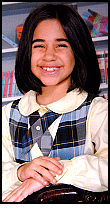 Amber Sadiq
The father of the boy whose school bus prank killed 8-year-old Amber Sadiq says he finally got a letter promising desperately needed help for his troubled son — on the day of the tragedy.
In an exclusive interview, Brooklyn dad Albert James said he had been trying for 16 months to get after-school day care help for his 8-year-old son, who has serious behavioral problems.
"If I would have gotten these vouchers before, maybe this would have prevented the accident from happening," said James, 25.
The dad also charged that the boy was improperly booted from school and that officials ignored his pleas just hours before the accident to let the child return — a contention a source familiar with the situation denied.
James spoke to the Daily News days after his son sneaked onto an empty school bus and released the emergency brake — sending the vehicle hurtling into his schoolmate as she walked home from Public School 161 in Crown Heights, Brooklyn, last Monday.
On Friday, city officials, in keeping with the wishes of Amber's forgiving family, declined to charge the boy.
James describes his son as shocked, sorry and uncomprehending of "what he has done."
"I just want my son to get the proper help and hopefully put this all behind me," he said. "I'm very sorry for the loss of Amber. Words can't express how I feel. ... It broke me down in tears."
The father of three said he got the long-awaited letter from the Administration for Children's Services approving him for "daycare services for the children so they remain safe" on the day Amber died.
In a statement, ACS acknowledged working with the father since January last year, providing parenting, medical and other aid, and said it was evaluating its services.
The single father said he's worked nine hours a day to support his sons since their mother, Sophia Morales, left last year for Florida. His 7-year-old lives with him, and his 5-year-old is staying with family in Trinidad.
On Friday, James and Morales agreed to put their 8-year-old son in a therapeutic foster home.
Lacking money for child care, James said, he had to depend on the boy's ailing great-grandmother to care for his active, uncontrollable boy during the day.
She was watching him last Monday when she fell asleep. He sneaked out of the house and onto the school bus shortly after 3 p.m. Why the boy wasn't in school is a matter of dispute. James said his son had been suspended — for trying to climb aboard another school bus three days before Amber's death.
James said that just hours before the tragedy, he went to the school to meet with PS 161 officials — and was told the boy could not return to school without a letter from the regional superintendent.
That would violate Department of Education policy, which forbids schools barring elementary school children. Suspended children are supposed to be assigned to detention rooms.
A Department of Education spokesman declined comment. But a source familiar with the situation denied that any official barred the boy from school.
Last year, officials at PS 161 diagnosed his son as needing special education, James said. At first he winced at the label and refused services. Months later, he said, he went back and asked for help.
"He had behavioral problems, it was never fights. Just not listening, and running around. They won't let him come on school trips," he said.
Among the boy's 40 absences this year are at least three week-long suspensions and other days he was told the boy couldn't attend unless a guardian could stay, James said.
"They say he just runs around and they're not going to chase him," he added.
James, who was born in Crown Heights, said he got his GED and finished a two-year business school program with a 3.3 GPA in January 2005, then began working as an office manager for a law firm. He hopes to become an engineer.
Next door to his building is Amber's home, where her aunt Lucy Caba recalled James as a mischievous, mean child who also pulled pranks — like sending false fire alarms.
"I can't remember that stuff," he said. "But look at me now. I've been paying taxes since I was 14. Everyone knows I'm a hardworking father. I don't hang out on streetcorners."
Heartfelt card is sent to grieving kin
Albert James said he had wanted to visit Amber Sadiq's family and apologize to them from the moment he learned his son was responsible for the 8-year-old Brooklyn girl's death.
But he was tormented by what the appropriate move would be — and whether the family would accept his message.
James, 25, finally bought an American Greetings card on Wednesday, and got it to Amber's family on Saturday.
"Our hearts go out to you in deepest sympathy," read the greeting. "Although it is hard to put into words what we would like to say, our thoughts of deepest sympathy go out with you today."
James added these words: "Our heartfelt condolences to your family. We are deeply sorry for your loss. ... To the Sadiq family, with lots of love."
Amber's stepfather, Wascar Herrera, offered this simple message to James: "Thank you for the card."
Nancie L. Katz
Source: New York Daily News
Death Concealed
May 27, 2006 permalink
The death of a foster child was concealed from his family according to Canada Court Watch, whose truthful reports stay within the law by withholding names.
The new Child and Family Services Act, enacted but not yet in force, says that a child protection order ends with the death of a child. [That was a proposal never enacted]. That will make it lawful for news sources to identify the child by name. We hope the reverend Dorian Baxter will provide the name of the dead child as soon as possible.
No social worker has been held accountable for harm to her ward, even fatal harm, and this case will be no exception. The Child and Family Services Act provides:
15 (6). No action shall be instituted against an officer or employee of a society for an act done in good faith in the execution or intended execution of the person’s duty or for an alleged neglect or default in the execution in good faith of the person’s duty. R.S.O. 1990, c. C.11, s. 15 (6).
A delay in reporting death results in the destruction of the most important evidence, the body. That can hardly be construed as "an act done in good faith". While there will be no criminal prosecution, a civil suit against the social workers involved might have some success.
Here is the unabridged account from Canada Court Watch:
expand
collapse
Family believes that CAS covered up death of child in foster care
(May 25, 2006) A family member called Court Watch today to report that they had just found out a few days ago that a child of this family who had been taken away by the CAS in Ontario had died while in the care of foster parents. The family was never informed of the death. At one time, family members reported seeing the child with dried blood in his ears and bruises on the child's body while in care and noticed other signs of trauma to the child but that their concerns were discounted by child protection workers. The family was told that this was only a case of sudden infant death syndrome (SIDS). The family believe that the death was a cover-up to protect the agency involved. An investigation by authorities into this death has been commenced in the aftermath of the death of little Jeffrey Baldwin while in care of the CAS.
Source: Canada Court Watch
Stop Horwath!
May 25, 2006 permalink
The Toronto Star, which has been sensitive to the views of the social services system, carries this article calling for the appointment of a Children's Ombudsman. While this sounds like an improvement, the proposed office would have no investigatory powers, and would be staffed by a young person unlikely to create serious political waves for the child protectors. Our guess is that Andrea Horwath's bill to allow André Marin to look at Children's Aid is gaining enough support that social services feels impelled to offer a neutered substitute. Look at the chosen photo and guess whether social services are trying to use the Jeffrey Baldwin tragedy to enhance their power.
expand
collapse
37 countries have one, why don't we?
Canada way behind in appointing a commissioner to represent our children
 Five-year-old Jeffrey Baldwin starved to death.
Who speaks for children? In Jeffrey Baldwin's case, no one did. Not his family, not other adults in his life and not the system designed to protect children like him.
When Jeffrey died, he was not yet 6 years old, weighed a mere 21 pounds and stood just 37 inches tall. Neglect was the killer. And the role his grandparents played in his death? The courts have decided they are guilty. But the fact that Jeffrey's case was flagged within the system and then remained untouched is at the heart of this tragedy.
He lived in a crowded home with his grandparents, placed there because his own young parents could not care for him and his three siblings. His grandparents labelled Jeffrey and one of his sisters "the bad ones," not worth caring for. He was locked in an unheated room with his sister, without food, for long periods of time until he died of starvation. The Catholic Children's Aid Society had a file on Jeffrey and his siblings, but apparently they missed all the signs.
He is the poster child for kids who fall through the cracks.
In March, Norway marked 25 years since it established a national ombudsman for children. The role of this individual? To exclusively promote the interests and welfare of children.
To protect kids like Jeffrey.
Canada needs its own ombudsman for children.
And there's no better example to follow than that of Norway. The Norwegian children's ombudsman works under three directives: children are equal to adults, children are competent individuals and opportunities for children are important.
Appointed by Norway's king, the ombudsman does not enjoy any executive powers but, since 1981, has succeeded in giving children's issues political prominence by creating public debate.
As the fourth and current commissioner in Norway, Reidar Hjermann is busy. He hosts a call-in television show that enables kids to air their grievances. Not only do the children learn about their rights, they also see they have someone speaking on their behalf. Of 2,700 letters and emails he receives each year, one-third come from children.
Another three dozen countries have followed Norway's lead. But Canada isn't among them.
If Canadian children had their own commissioner for children, they would have someone who would stand independently and have the power to name and shame those who stand in the way of children's rights.
Someone who would speak for the Jeffreys of this country. At the very least, a commissioner would be a very public reminder that someone would stand up for this little boy. At the most, any one of the many people who knew about Jeffrey's life could have alerted the children's commissioner to intervene with the assistance of other existing resources.
Using the United Nations Convention on the Rights of the Child (UNCRC) — which was introduced to the world in 1989 — as its cornerstone, the commissioner's sole purpose would be to represent and engage young people in the democratic process and educate youth about their rights and responsibilities under the UNCRC and as citizens of Canada.
But there is one stipulation: the commissioner must be a youth as defined by the Canadian government — that is, someone under the age of 30.
Why is this important? About 25 per cent of Canada's population is under 18. Yet, more than 7.7 million young Canadians have no formal role to play in the government. There is no single individual or federal department representing youth and no coherent or meaningful way for the opinions of young people to be heard and respected. With no voice, no vote and little economic clout, young people in Canada are one of the most disenfranchised groups in the country.
But youth have much to say about issues that affect them locally, nationally and internationally. Today, young people have the greatest access and exposure to information than any generation before them. In January, about 450,000 students aged 9 to 18 from across Canada took part in Student Vote 2006, a non-partisan parallel election experience for youth during an official election period.
And yet, youth voter turnout during elections speaks volumes about the fact that youth issues are not covered during campaigning. At the 2004 federal election, voter turnout among 18- to 24-year-olds was 38 per cent. And in 2000, it was 22.4 per cent among the 18- to 20-year-olds.
Of course children factor in every government's agenda, but in the context of "larger" issues, such as health care, housing or family support. Children's issues and youth portfolios are scattered across numerous government agencies and under different directives. But no single voice speaks for children alone.
A young commissioner would better understand and suitably create opportunities among young people to discuss government policies and ideas and issues of national importance. He or she would represent youth by forwarding to the federal government all recommendations on legislation relevant to youth. The commissioner would also stand for the voices, opinions and interests of the young people of Canada at a national and international level to represent and empower young Canadians across the country.
Over the years, the idea of a children's ombudsman in Canada has been considered, discussed and tabled numerous times. A new government delivered its inaugural Speech from the Throne on April 4, recognizing that youth are "looking to carve out their place and be heard." But youth issues failed to make it on yet another government's agenda.
To have done otherwise would have been a bold statement that the federal government is truly committed to listening to and representing the views of the young people of Canada.
It would have been a signal that the government is ready to be held accountable, perhaps by a young commissioner who only serves his or her constituents — children like Jeffrey who, in theory, had many guards on watch but no one to speak out for him.
Craig and Marc Kielburger are founders of Free the Children and co-authors of Me to We. Their column explores the impact of global issues on young people in developing nations and what it means to youth in the GTA.
Source: Toronto Star
Congressional Hearings
May 24, 2006 permalink
On May 23, the Subcommittee on Human Resources of the House Ways and Means Committee held hearings on child welfare. The witness list included many persons from the child protection industry, and two opponents, Richard Wexler and William Tower. Following are links:
Foster Care Begets Prostitutes
May 24, 2006 permalink
To understand the following article, you have to know that in social worker jargon, "place of safety" is a foster home, one where children are cared for by adults for hire. Teenaged girls are running away from foster homes to become prostitutes.
expand
collapse
Teen rescued from a life of prostitution
York Regional Police have rescued a 17-year-old girl from a life of prostitution after raiding a Richmond Hill home and arresting a couple for allegedly pimping the teen, police say.
"We received a call for assistance from the victim," said York Regional Police Insp. Tom Carrique. "She was reaching out to us and we were able to extricate her."
He said the teen, who is from southern Ontario, was plucked last Wednesday after heavily-armed emergency response unit officers were called to the home.
Carrique said three teens, aged 17, 18 and 19, were found inside the home. Police said one girl was charged, one a witness and the third a victim.
"She (victim) was very distraught and upset," Carrique said yesterday. "She has been returned home safely."
He said York's vice cops are seeing more younger teens being brought to work in the region's escort agencies and massage parlours and they're trying to locate other teen hookers working in the region.
"The 15- and 16-year-olds are coming here from the GTA and other areas," Carrique said. "The girls are being used to work as prostitutes to make money."
Police said the girls and alleged pimps travel from across Ontario to work in York.
"We know there is a problem in the GTA where young girls leave their places of safety and become susceptible to predators," Carrique said. "They come to work here."
Ruddyard Oliver, 21, and Sophia Park, 18, both of Toronto, have been charged with living off the avails of prostitution and assault with a weapon.
Source: Toronto Sun
found by John Dunn
Courthouse Bluff
May 24, 2006 permalink

Today Canada Court Watch reports that a sign is posted in the Oshawa Courthouse falsely warning that recording devices are forbidden in the courtroom. The laws of Ontario permit parties to a case to record their own proceedings.
Source: Canada Court Watch
Return of Fathers-4-Justice
May 20, 2006 permalink
Fathers-4-Justice is back in operation. After its disbanding, there was much exposure of faults within the organization. It appears that the problems have been corrected.
expand
collapse
PRESS RELEASE
20 May 2006 8.00pmBreaking News: Fathers Storm TV Lotto Show
Disbanded campaign group Fathers 4 Justice (F4J) tonight confirmed that activists from the group were responsible for storming the set of the BBC's National Lottery Jet Set Programme live on air this evening.
Protestors wore "Family Law Lotto — Next Time it Could Be You" T-Shirts and held up placards as security wrestled them to the ground in front of a studio audience. The six activists included the partner of F4J founder Matt O'Connor.
F4J is re-launching after a five-month cessation in its campaign. The group was disbanded in January when an extremist fringe were accused of plotting to kidnap the Prime Ministers. Tonight's protest marked the second anniversary of the Powder Bomb attack on the Prime Minister in the House of Commons and the resumption of a dramatic new high profile campaign.
The group say that future protests will use 'agitprop' tactics at high profile events and subversion of live TV as well as pranks and hoaxes to raise public awareness about the continuing crisis in family law.
F4J spokesman and activist Guy Harrison, who in 2004 threw condoms filled with self raising flour at the PM said, "tonight marks the dramatic return of Fathers 4 Justice. The lottery is a metaphor for what can happen to any parent, mother or father, and their children, at the hands of the secret family courts. It's our duty to warn parents about what is happening and send them this message: don't play family law lotto — don't gamble with your kids."
F4J say that the organisation has been radically re-structured and that it's founder Matt O'Connor is considering delaying the launch of his new civil liberties group Agents For Change to re-focus on the campaign for open courts and equal parenting. The change of heart is attributed to his partner's situation, the second such time in four years O'Connor has had first hand experience of the family court injustice.
ENDS
For further information please contact:
Matt O'Connor (Media Advisor): 07795 341 110
Guy Harrison: 07801 010 410
Michael Cox: 07884 260 656
Email: office@fathers-4-justice.org
Web Site: www.fathers-4-justice.org
Social Worker Excused
May 19, 2006 permalink
A Social Services Supervisor fired for misconduct has been reinstated in Connecticut, with back pay. This continues the perfect record of social workers never being punished for harming children, in this case by fabricating evidence.
expand
collapse
Social Worker Back On Job
State Labor Ruling Forces DCF To Rehire Employee Who Was Arrested
A state social worker who was fired following allegations of fabricating evidence and tampering with a witness in a child endangerment case has gotten her job back with back pay, officials and sources familiar with the case said Friday.
Valerie M. Miles returned to work at the Department of Children and Families last week. Miles is no longer handling abuse and neglect cases. She is currently doing research in the agency's central Hartford office after accepting a reduction in pay, said Gary Kleeblatt, a DCF spokesman.
Miles was making more than $100,000 a year as a DCF supervisor in the Hartford regional office. She was placed on administrative leave when the allegations surfaced on July 7, 2005. The agency conducted an internal investigation and fired her a short time later.
She was arrested by Hartford police on July 28, 2005, and charged with two counts of fabricating evidence and one count of witness tampering.
Police accused Miles of falsely insisting in a sworn affidavit that plastic bags of drugs were found during a raid of a Hartford home that resulted in four children being taken from their parents. Police said they never found drugs in the home. Police also accused Miles of forcing one of the family's neighbors to provide a false statement supporting her claim about drugs in the home. The neighbor later told police she felt pressured to lie, according to Miles' arrest affidavit.
Miles received a special form of probation that allowed her to avoid prosecution on the criminal charges. Under this form of probation, she was not found innocent or guilty; her prosecution was suspended pending completion of her probation.
Miles appealed her termination through her union, the American Federation of State, County and Municipal Employees, Council 4 of New Britain. Kleeblatt said the state labor relations office reviewed the case and decided not to refer the matter to a neutral arbitrator for resolution. Under state labor law, the agency was forced to reverse Miles' termination based on the labor relations' ruling, Kleeblatt said.
"She's back at work because she was able to persuade enough of the right people that she had done nothing wrong and she is innocent," Miles' lawyer, Leon M. Rosenblatt of West Hartford, said.
Rosenblatt said he is confident that Miles would have won her case had the matter gone to arbitration. He said Miles intends to sue the Hartford Police Department for damages.
Not everyone was pleased with the outcome.
"It's appalling that a government officer who has tampered with and fabricated evidence against an American citizen should be tolerated," said Thomas M. Dutkiewicz, president of Connecticut DCF Watch, an organization of parents who monitor state and national child welfare services. "They didn't just break the law; they violated someone's civil rights."
Source: Hartford Courant
Membership Denied
May 19, 2006 permalink
John Dunn follows up on his denial of CAS membership in a letter to Barbara MacKinnon. John Dunn is the most soft-spoken critic of CAS to be found. If he cannot get a membership, only cops and social workers can now become members.
expand
collapse
Friday, May 19, 2006, 10:50am
Barbara MacKinnon
Children's Aid Society of Ottawa
1602 Telesat Court
Gloucester, Ontario
K1B 1B1RE: Meeting with Board of Directors — Rejection of Membership Application
Dear Barbara MacKinnon,
Children's Aid Societies offer memberships to people in the community as a means of providing public accountability through the right of its members to vote for members of the Board of Directors and through the dissemination of corporate information to its membership. I believe that the Society or its Board is rejecting memberships to persons simply because they have attempted to provide emotional support and/or resources to clients or potential clients of the Society in a peaceful & non-disruptive manner.
As you are aware, I faxed a letter to you requesting clarification as to why my membership application was rejected by the Board of Directors and to find out what I could do to improve my chances of obtaining a membership with the Society in the future. It is my understanding that the Board would make their decision based on the advice of yourself and other members of staff. I am also keenly aware of the fact that members of your staff were at one time instructed not to communicate with me since I have in fact supported clients of the CAS. This was mentioned to me by a staff member of your agency in 2004.
The response I received from the Board President, Brian McKee, in answer to the first part of my request simply stated that the Board "recognizes that you (John Dunn) have acted in a manner inconsistent with, and contrary to, the interests of the Children's Aid Society. In its opinion, you (John Dunn) do not have a genuine interest in the objectives of the Society."
I have not been provided with any evidence or even any suggestion as to what exactly it is that I have done to invoke such a response from the Board of Directors and as such I would like to request, again, a fair hearing or opportunity to meet with the Board of Directors for the purpose of learning what it is that I have done which suggests to the Board that I have acted in a manner which is inconsistent with and contrary to the interests of the Children's Aid Society and to learn if the decision to reject my membership application is permanent and/or irreversible.
I would also like to ask the Board -- should I be given an opportunity to meet with them -- what it is I can do to meet the criteria which would enable me to become a member of the Society in the future, as I am genuinely interested in the objectives of the Society which are, as far as I can tell from the Society's website, as follows:
"The Children's Aid Society of Ottawa is committed to protecting the children and youth of our community from all forms of abuse and neglect. We work to keep them safe and secure, both within their families and the communities in which they live."
If a meeting with the Board is refused, can I, as a member of the community, obtain access to the by-laws and or constitution of the Society for the purpose of reviewing its objects and membership eligibility requirements so that I may work toward meeting them? So far, I have not been given any means to contact the Board of Directors myself and would like to have that opportunity or at least information on how I can communicate directly with them.
I sincerely hope that neither you as Executive Director, nor the Board of Directors of the Children's Aid Society of Ottawa believe that membership with the Society should only consist of people who do not question anything the Society or its Board does or neglects to do in the execution of its duties and that people who advocate for positive change in a non-violent and peaceful manner should be refused membership.
Sincerely,
John Dunn
Executive Director
The Foster Care council of Canada
http://www.afterfostercare.cacc.
Pierre Viger — Director, Professional Standards — Children's Aid Society of Ottawa
Brian McKee, President — Board of Directors — Children's Aid Society of Ottawa
Ombudsman Ontario
Michelle Cheung - CBC
CAS Survivors March
May 19, 2006 permalink
Following a foster-care survivor's march in Thunder Bay, CAS Executive Director Rob Richardson, says things have changed over the years since the tragic events that happened to these victims. Indeed they have, though not for the better. The systematic abuse of aboriginals has changed to a capricious system sometimes abusive, sometimes not, now covering all ethnic groups.
expand
collapse
Survivors march for foster care abuse
Survivors came together Friday to protest what they say is the ongoing abuse of children in the foster care system.
They staged the first annual Walk for Survivors and Abuse in Foster Care starting at the Thunder Bay Children's Aid Society office and ending at the offices of MPP Michael Gravelle and MP Joe Comuzzi. Coordinators say they hope to raise awareness about what actually happens in foster care.
Victims of child rape and abuse gathered at the Children's Aid Society to tell their story. Survivors say there are many cases where children have been raped and abused in foster care. Coordinators talked to the executive director of the Children's Aid Society, and the group then walked to Michael Gravelle's office to ask questions of the government. Survivor Debi Okane says she's not doing this because she's angry or for revenge.
Survivors released balloons into the air, symbolizing releasing their pain and emotions. The executive director of the Children's Aid Society, Rob Richardson, says things have changed over the years since the tragic events that happened to these victims. Richardson says he is unsure of what kind of resolution the survivors are looking for. MPP Michael Gravelle says he feels it's his responsibility to tell their story.
In a symbolic gesture, a survivor gave Gravelle her shoe so he could take a 'walk in her shoes.'
Source: Thunder Bay Source
Quebec Judge Ousted
May 19, 2006 permalink
Quebec Youth court Judge Andrée Ruffo has resigned rather than be fired after exhausting her legal appeals. The real reason for her ouster is that she spoke out publicly against the Quebec system for handling children. In a recent article Stephen Baskerville points out that judge Milton H Raphaelson felt free to criticize the family law system only after his retirement. Judge Ruffo is an example for judges who fail to wait for retirement before speaking out.
expand
collapse
Ruffo steps down after top court declines case
CBC.CA News, Last Updated: May 18 2006 03:03 PM EDT
Youth court Judge Andrée Ruffo quit her job before Quebec could remove her from the bench, after the Supreme Court of Canada said Thursday that it wouldn't get involved in the case.
In November 2004, the Quebec Judicial Council found that the controversial lower-court judge – an outspoken defender of children's rights – had violated the council's code of ethics 18 times and been reprimanded 12 times since she being appointed to the bench 16 years earlier.
In late 2005, the Quebec Court of Appeal – recommended that Ruffo be removed from the bench. Ruffo appealed to the Supreme Court of Canada, asking them to review the decision by Quebec's top court.
 Andrée Ruffo has been a controversial judge for years.
After the Supreme Court declined the request on Thursday, Ruffo resigned.
For years, Ruffo, 63, has publicly criticized provincial child welfare policy. Her views made her a hero to some, but others saw her as a loose cannon.
She first attracted public attention in 1987 when she sent two teenagers to sleep in the provincial social service minister's office in Quebec City to highlight the lack of available foster-care beds.
The appeal court said her goal was laudable but criticized the way she went about it, saying she ended up hurting the cause she advocated.
Other ethical lapses cited by the appeal court included Ruffo's appearance in a television commercial for Via Rail and her acceptance a speaker's fee of $1,500 to talk at a conference about New Age medicine.
The final decision on whether to remove her from the bench would have rested with the provincial government.
Source: CBC
pointed out by a VOCA reader
Foster Kids Seek Records
May 18, 2006 permalink
Here is another case of former foster children asking for disclosure of the records of their own lives.
If Manitoba is anything like Ontario, they will have no success. John Dunn spent four years exhausting the appeals process with Children's Aid, but got nothing. The expressions of support from minister Christine Melnick could be stymied by endless bureaucratic foot-dragging. Cases like this explode the myth that confidentiality is for the best interest of the child. Child protectors continue to assert confidentiality when the child is grown, or dead.
expand
collapse
'Lost Boys' call for release of childhood records
Three aboriginal men want the province to release records related to their time in the child-welfare system so they can find out more about their troubled childhoods. Dean Powderhorn, Brian Richards and Sam McGillivray asked Family Services Minister Christine Melnick to release information related to their seizure from their families in childhood and subsequent life at a home for boys in Grandview, Man., west of Dauphin.
Powderhorn told CBC News he was taken from his family in Churchill at age nine and sent to the home, which he understood to be a facility for troubled or delinquent boys. At the home, he said, he and other children were mistreated and forced to do heavy labour.
The owner of the group home has since died.
The three men say they represent 18 men who lived at the home in the 1960s and 1970s; they have formed a group called Warriors of the Lost Boys. The men want their records from school and children's aid, and those concerning the home, as well as any other documents that could help them make sense of what happened.
"Who ordered us to go from being a nine-year-old boy to being an adult in a group home? Like, what did I do wrong to deserve this?" Powderhorn said.
Powderhorn lived at the group home until he was 18. He said the experience ruined his life, leaving him drifting as an adult, often in trouble with the law.
Province vows to help
Government officials say they will do all they can to help the men.
"The records will be made available to them, if they exist. I don't know what the state of their records are right now, but I can assure that we will be looking for those records," said Melnick.
"I think it's very important that Manitobans hear their message, that Manitobans hear their truth, and that we recognize that what was done in the past was not right and work towards a better future."
Melnick said the men's stories are similar to others the NDP government has been working to address in its restructuring of child and family services agencies.
Source: CBC
New Rally Planned
May 18, 2006 permalink
expand
collapse
QUEENS PARK RALLY
TUESDAY JUNE 20 2006
11:00 TO 12:30Dear Fellow Canadian Citizens
On Tuesday June 20 2006 at Queens Park in Toronto the families of Ontario will once again march on the provincial government’s front lawn in a rally. The rally is to ask for accountability and responsibility with respects to Children’s Aid Societies in Ontario. We the families involved and/or concerned with the CFSA and Children’s Aid Societies and their strong armed polices ask the government of Ontario for relief.
Last March 16 2005 we rallied to ask for a Royal Commission of Inquiry. This time its to show frustration with the CFSA. With the 2007 election around the corner this could certainly be a topic to win the election for any party. Some of the areas, just to mention a few are;
- According to the Charter of Rights and Freedom Equality Rights 15. (1) Every individual is equal before and under the law and has the right to the equal protection and equal benefit of the law without discrimination and, in particular, without discrimination based on race, national or ethnic origin, color, religion, sex, age or mental or physical disability. Which act has more power the charter of rights and freedoms or the family services act? There are confirmed cases of Children's Aid violating the above by not allowing a grandparent to care for their grandchild because of their age. Addiction is considered under federal and international law as a disability and depression is clearly a mental disability. So addiction and mental health are disabilities and should not be used against someone but yet the family services act continues to use it against parents. Canada jumped at the human rights thing and now its time to show that we still believe in them.
- There are many drug testing agencies around Ontario, some very good. However I have recently discovered that several of these agencies favor CAS. In a phone interview with one director I asked 3 key questions. One what is the percent of your caseload that CAS is paying for and he answered 95 percent. Second question was how much does this testing cost?. He answered about 1000.00 per collection. Then I asked how much do you get paid for these test? He refused to answer and hung up. It does leave me with a sick feeling in my stomach that these tests are supposed to detect drugs and/or alcohol in a person to help them overcome the burdens of the addiction, however with CAS overpaying some labs that do these test. A test could be altered to favor CAS.
- A Brantford father questions parenting assessments done for CAS? The father told me today in a phone conversation that a lot but not all doctors who perform these assessments receive up to 300 percent over the criminal interest rate of Canada for performing them. The father went on to say that the average assessment cost about 200.00 per hour and the average assessment last 5 hours. That would suggest the cost of the assessments should be 1000.00 per person. With the average family having two parents the cost should be 2000.00. A great number of doctors who perform these assessments are paid 5000.00 per person. That’s 200 percent in most cases. The criminal interest’s rate of Canada is no more then 60 percent on an annual basis. The father concluded by saying "just a thought if the average parent overpaid 200 to 300 percent on a parenting assessment would the doctor not pass or favor you too"
These are just three of the areas that will be talked about at the rally. I encourage you all to join us June 20 2006 at Queens Park in Toronto as we rally for family rights.
“ We can find a missing automobile anywhere in Ontario in 48 hours but a missing child maybe never found, I’m not sure we have our priorities straight” A former Ontario police chief 2000
**THIS WILL BE A PEACEFUL RALLY**
Sincerely
Rob Ferguson
Brantford519-754-0927
Debate Continues
May 18, 2006 permalink
The Ontario Legislature continued debating Children's Aid yesterday. The debate showed clearly that the Ontario government is trying to bamboozle the public with the assertion that the ombudsman has jurisdiction over the Child and Family Services Review Board.
Addendum: On May 17 the provincial NDP issued a press release beginning:
expand
collapse
QUEEN'S PARK - Ontario Minister for Children and Youth Issues is misleading people when she says there is independent oversight by the Ombudsman of Children’s Aid Society decisions in Ontario, NDP Leader Howard Hampton said today.
Source:
www.ontariondp.com/ news/ article_542.php
More on Drugged Child
May 16, 2006 permalink
Yesterday's CBC report by Michelle Cheung was a topic of debate in the Ontario Legislature today. The CBC included a report on the debate (wmv format 4.1 megabytes) and further report on the boy named only as "J" (wmv format, 12.7 megabytes).
The discussions in the legislature are available in the Hansard. They are:
- Statement by John O'Toole, PC
- Questioning by Howard Hampton, NDP leader
- Questioning by Julia Munro, PC
Addendum: The next day the CBC broadcast viewer response to the story of "J" (wmv format 4.3 megabytes).
CAS Incapacitates Child
May 15, 2006 permalink
Tonight the CBC broadcast the first of a set of reports by Michelle Cheung on Children's Aid. In this report, a boy is drugged into a stupor until his grandparents get custody and wean him from the drugs. The report is part of the CBC News at Six (wmv format, 12.5 megabytes).
The CBC program The National broadcast a 24 minute program on the same boy. The link is to Michelle Cheung Reports, real media format. Since we cannot save the program, the link is good only as long as CBC keeps the program online. The CBC page Finding Normal has a transcript of the report.
The Grinch who Stole Easter
May 15, 2006 permalink
CAS workers are so drunk with power that they feel safe in stealing from their wards. We earlier reported that foster parents embezzled Anne's allowance (mp3 audio). Now Canada Court Watch has found that a mother's Easter gifts to her child were stolen by a CAS caseworker. Here is an abridged version of their story.
expand
collapse
CAS worker steals money and eats child's chocolate!
May 13, 2006
Last month a mother delivered Easter chocolates and a bank card to the York Region CAS for delivery to her son who was in care of the York Region CAS. It seems however that mom's Easter gifts to her son never got where they were supposed to. Mom delivered a bank card with a bit of spending money and some chocolate for her son. Without telling the boy that he had received the gifts, the York Region CAS worker took the child's bank card and withdrew the money and then ate the child's Easter chocolate. The York Region CAS worker was even caught on video at the bank machine after the mother had reported that the child's card had been used fraudulently.
The director of the York Region CAS has refused to apologize to the boy or to his mother. In fact, the society will not even confirm whether their worker was fired. According to the mother, the York Region CAS wants to hide everything and keep the public from finding out about what happened in this case.
This worker supposedly had over 20 years experience as a CAS worker in Toronto. According to the mother, the York Regional police would not press charges against the worker who literally was robbing kids in care. How can the police be seen as doing their jobs when workers from the York Region CAS seem to get special treatment under the law?
Source: Canada Court Watch
Addendum: An update from the same source:
expand
collapse
York CAS worker to be charged by police
(May 17, 2006) In follow-up to the earlier report (May 13) of a York Region CAS worker stealing from one of the kids in the care of the York Region CAS, Court Watch has been advised by the family that the police are going to do their duty by arresting and charging the CAS worker (aka the Easter Grinch) responsible for this most deplorable crime against a child.
Kentucky Scandal Widens
May 13, 2006 permalink
In January 2006 Kentucky Youth Advocates issued a report titled The Other Kentucky Lottery (executive summary, pdf). KYA promotes social services — on its webpage it says one way to prevent child abuse is "Advocate for increased funding for family services". In spite of their bias, they found serious fault with Kentucky child protection, provoking a scandal that we reported on in January, then focused on Hardin County. A statewide investigation ensued.
Rogue child protection agencies have used the threat of child removal to suppress parental dissent. The bully culture apparently applies to all levels in the child protection system. In Kentucky, an administrator at the state executive level is now being disciplined for efforts to obstruct the investigation by intimidating witnesses.
expand
collapse
Saturday, May 13, 2006
Child-welfare inquiry expands
Social worker accused of intimidation, put on leave
A state social service administrator has been placed on leave over allegations that she tried to intimidate witnesses during an ongoing investigation into whether children were being removed from homes and adopted too quickly.
The action comes as the inspector general for the Cabinet for Health and Family Services says he is broadening an investigation of the Elizabethtown office into other issues and other parts of the state.
"Our investigation has really expanded to look at the entire process once a child is removed from a home," Inspector General Robert J. Benvenuti III said yesterday.
Benvenuti said his office is expanding the investigation based on information it has developed over the past several months.
On April 24 state officials notified employee Pam Tungate, an assistant director of the eight-county Lincoln Trail district, that she was being placed on a paid, 60-day leave while the cabinet investigates allegations of misconduct. The district includes Hardin, Breckinridge, Grayson, LaRue, Marion, Meade, Nelson and Washington counties.
Tungate could not be reached for comment yesterday.
In January, the cabinet's inspector general's office began investigating allegations by child advocates that workers in the Hardin County district were too hasty to remove children from homes and push them into adoption. One possible reason for this would be to meet more stringent federal guidelines, advocates said. The guidelines reward states that meet adoption deadlines with more federal money.
The advocates also raised concerns that some friends or associates of child welfare workers were getting preferential treatment for adoptions and workers and families who protested decisions about child removal, foster care and adoption were subject to retaliation and intimidation..
The letter to Tungate, obtained by The Courier-Journal through an open records request, said Tungate allegedly "inappropriately tried to influence and intimidate witnesses" during the investigation into "improper placement of children and alteration of official business documents."
"You are cautioned that retaliation is prohibited," the letter said.
Benvenuti said he couldn't comment on Tungate's situation. But he said investigators would refer any cases of possible criminal violations to local prosecutors.
He said his investigators have not done so so far and he isn't sure how long the investigation will take.
"Beyond Hardin County, we have received complaints from other areas," Benvenuti said. "Depending on the nature of those, we are investigating."
Virginia Durrance, 38, of Louisville, a single mother whose two daughters were temporarily removed in 2001 for neglect, welcomed the investigation and said the state needs to look at how it serves families -- especially poor single mothers.
"I'm a single mom and I'm struggling," said Durrance, who works in an office and is taking classes to obtain her GED. "It's hard raising a child by yourself."
Jennifer Jewell, coordinator of a local group called "Women in Transition" -- with some members who have had children removed -- said the group is concerned that state workers are too quick to remove children from poor mothers.
She said she and another member met about two hours with Benvenuti this week to express concerns that the poorest clients aren't always treated fairly in the social service system and often wind up accused of neglect because of poverty.
"When a family doesn't have a home, that's poverty -- not neglect," she said.
Benvenuti said he met with the women after learning about their organization.
"They brought up a lot of good issues," he said.
Child advocates said they are pleased the state seems to be following up on concerns they raised in two reports issued in January regarding state social services overall and in particular, services through the Hardin County office.
"They get credit for taking our allegations seriously," said David Richart, who helped write the reports and is director of the National Institute on Children, Youth and Families in Louisville.
Terry Brooks, executive director of Kentucky Youth Advocates, which conducted the confidential survey that led to the reports, said he's glad the state is expanding the investigation. Though his group found that the highest number of complaints involved the Lincoln Trail district, it also had similar complaints about removal, adoption and foster care from all over Kentucky, he said.
"Lincoln Trail and Elizabethtown exemplified the problems we saw on a statewide basis," he said.
Reporter Deborah Yetter can be reached at (502) 582-4228.
Source: Courier-Journal
forwarded by Fern
Cops Run Children's Aid
May 12, 2006 permalink
Here is another story confirming that, regardless of formalities, Children's Aid is in fact a branch of the police department.
expand
collapse
Public Safety and Emergency Preparedness Canada
Attention News Editors:
Stockwell Day announces appointments to the National Parole Board
OTTAWA, May 12 /CNW Telbec/ - The Honourable Stockwell Day, Minister of Public Safety, today announced the following re-appointments to the National Parole Board for the Ontario and Prairie Regions:
...
Mr. Raymond A. Renaud of Orleans, Ontario, has been re-appointed as a part-time member. He has previously served as a part-time member for two terms from April 2000 to April 2006.
Mr. Renaud is a retired Deputy Chief of police of the Ottawa-Carleton Regional Police Department who rose through the ranks of law enforcement to become Chief of Police for the Gloucester Municipal Police Department.
He is a member of the Board of Directors of the Children's Aid Society and holds a membership in several provincial, national and international organizations such as the Ontario Association of Chiefs of Police, the Canadian Association of Chiefs of Police and the FBI Law Enforcement Executive Development Association.
...
Source: Newswire
CBC Reports on CAS
May 12, 2006 permalink
Michelle Cheung has spent a year working on a story about Children's Aid. Her research included gathering data from critics, including Dufferin VOCA. Her announcement below tells when her report will be aired. Anyone capable of recording the program is invited to forward a copy to us at email: rtmq@stn.net
expand
collapse
The CAS story I've been working on will air on the National on Monday May 15 at 22:00 on the main network - channel 5 Toronto.
If you receive the Toronto at Six newscast in your area, then there are also two shorter stories that will air on the local show on Monday May 15 and Tuesday May 16 at 1800 on the same channel.
Tell your friends.
Thank you for your help in getting this story to air.
Let me know what you think.
Michelle
Source: email from Michelle Cheung
Ingénues Boss Parents
May 11, 2006 permalink
Following the death of Nixzmary Brown this January, New York City has been undergoing a foster care panic, meaning increased numbers of children are taken from their parents. This article from the New York Times shows how ACS has responded to the requirement for new workers. Parents who have spent years raising a child will be bossed by childless young workers with only a month's classroom training.
expand
collapse
New Group of Child Welfare Workers Finish Fast-Track Training

Nearly 200 newly trained workers of the city's Administration for Children's Services attended graduation ceremonies in Manhattan on Tuesday.
Hiroko Masuike for The New York TimesThe latest group of child welfare workers to finish a city training program since the death of Nixzmary Brown, a 7-year-old girl killed in her Brooklyn home, graduated yesterday, joining an agency that has promised to improve its investigations of child abuse.
The graduates, numbering nearly 200, are among 525 child protective workers that the agency, the Administration for Children's Services, has said it would add to field offices by the end of June. The city agreed to overhaul and expand the agency after taking criticism for failing to remove Nixzmary Brown from her family's apartment after teachers reported signs of abuse. The police have accused her stepfather of beating her to death, and he and Nixzmary's mother have been charged with murder.
Some of the graduates went through an intense four-week course, rather than the usual three months of training. The agency said the accelerated training was intended to get them out in the field in time to meet the goal and to ease caseloads for workers overwhelmed with cases. Calls reporting child abuse and neglect have increased 39 percent since Nixzmary died in January, the agency said, compared with the same period a year ago. With this latest class, the city has added 350 workers and has 175 more in training.
The usual training involves a month of classroom studies, followed by supervised visits to homes where abuse is suspected, followed by another month of classroom work. The trainees then take a test before they can be hired. In the accelerated track, trainees complete a month of coursework, then take the hiring test. They then slowly take on new cases, under supervision.
The graduation ceremony, held at the Hunter College campus on East 25th Street, drew caseworkers who had just completed their training and others who had recently begun working. The ceremony, a first for the agency, was held as a way of boosting morale, agency officials said.
Catiana Day, 23, a graduate who will work in the Brooklyn field office, said the accelerated training was intimidating, even though she had transferred from foster care work within the agency. Ms. Day said that her first visit to a family with a supervisor went better than she had expected, and that the coaching she got was essential.
Robinson Jean-Louis, 28, who came to the agency after working in private business, agreed that the accelerated course was challenging, but said it made students work as a team to pass their tests and the supportive environment should carry over into the job.
"It's a very difficult job," he said. "But this new crop is up for the task. We're intelligent, dedicated and eager."
Just as the new employees were celebrating, the caseworkers' union was preparing to picket on Friday to protest their work environment, which union officials said had become intimidating and punitive in recent months.
The union is angry that three employees involved in the Nixzmary case were fired and that three others were suspended.
"None had ever been in trouble before," said Faye Moore, a vice president for Local 371 of the Social Service Employees Union.
Agency officials said they were developing ways to make it easier for workers to do their jobs, which pay a starting salary of just over $36,000 and require a bachelor's degree. Since Nixzmary was killed, the agency has distributed cellphones to many workers who are out in the field and has begun supplying cars for workers.
Mr. Jean-Louis said he was in training as the news of Nixzmary's death and the agency's failings were being reported. The students, he said, are inspired to work hard to protect children, but frustrated and angry that the public does not recognize that child protective workers save lives, too. "Out of the millions of cases they do correctly, they don't get in the news," he said.
John B. Mattingly, the children's services commissioner, reminded the graduates of their responsibilities. "The very nature of our work means that you will make decisions that literally will mean the difference between life or death for a child," he said.
Source: New York Times
Treatment for Foster Girl
May 11, 2006 permalink
A young girl in foster care had a prized possession, a blanket given to her by her father. Hear what the foster parents did to it in this recording (mp3) from Canada Court Watch. Their press release continues:
This young child also told us how she was forced to take cold showers in the foster home because the foster parents did not want hot water being wasted on the foster kids.
Source: email from Canada Court Watch
Father Disrupts Montreal Traffic
May 10, 2006 permalink
An impostor claiming to act for F4J has blocked traffic in Montreal.
expand
collapse
Man snarls traffic on Jacques Cartier bridge
A father demonstrating next to the Jacques Cartier bridge caused some major headaches for motorists all day long Wednesday.
He climbed up a billboard next to the bridge just after 1 o'clock in the morning, prompting the SQ to close the span to all southbound traffic.
The man, Mario Morin, says he wants more custody rights over his daughter. He also says he has been falsely accused of child molestation and spent five years in prison.
Longueil police spokesperson Gaetan Durocher says the man may be emotionally unstable.
"Sometimes this man looks like he's 4-years-old. He's really hyper, and sometimes he's really calm," Durocher told The New 940 Montreal.
"We have negotiators trying to establish contact with this man."
The custody rights group Fathers 4 Justice says the Morin is not associated with their organization.
Spokesperson Andy Srougi joined us on the air earlier this morning and says he is familiar with Morin's situation.
"The individual is a little bit incoherant, he's very depressed," said Srougi. "The [Department of Youth Protection] removed his daughter from his custody. It's been very difficult for him. There's no help for him, and as a result you have to understand that when someone goes through this and doesn't get the necessary help it just gets worse."
Source: 904news
Addendum: The action ended after 26 hours with the descent of Mr Morin.
Parenting Instructor Arrested
May 10, 2006 permalink
Do you need to take parenting classes? In this Kentucky case, an instructor sets an example for her students by leaving a child unattended. Also take note of her (criminal) resumé.
expand
collapse
Child is left alone inside car
Home of Innocents worker is charged
A woman who taught child-care skills to parents of children at Home of the Innocents was arrested on Derby Day and accused of leaving an 18-month-old girl in a car for at least 15 minutes at an off-track-betting facility.
The child was sweating because there was no shade in the car but was otherwise OK, authorities said.
Barbara A. Calloway, 57, of the 3900 block of Vermont Avenue, was charged with felony criminal abuse. She was released from Louisville Metro Corrections Sunday, according to jail records.
Calloway, a child-care worker for about four years, was supposed to be taking the child and the child's mother to buy groceries, said Gordon Brown, president and CEO of the home. The mother, who had been let off at the grocery, was not charged.
"This is … totally the antithesis of what Home of the Innocents stands for," Brown said. "We are all shocked."
Calloway declined to comment last night.
Sgt. Robert Huff of the Jefferson County sheriff's office noticed the child about 3 p.m. strapped into a child-safety seat in the locked car, which had its windows rolled most of the way down. The car was parked at Trackside OTB, 4520 Poplar Level Road.
Sheriff's deputies estimated that the child had been in the car 15 to 20 minutes before they found her, said Lt. Col. Carl Yates, head of community service for the sheriff's office. "I'm just glad we found the baby before she got dehydrated," he said.
He said they traced the car to Home of the Innocents, which cares for children who are in state foster care because of abandonment, abuse or neglect. It also cares for medically fragile and autistic children, Brown said.
Deputies asked the home to send someone to get the child.
About the same time, Calloway, who also goes by the last names of Brown and Watkins, according to jail records, walked out to the car and was arrested.
Brown said Calloway was fired immediately. He said she had taught many classes that stress the dangers of leaving a child alone in a car.
The home knew that Calloway had a criminal record for writing bad checks and that she had served prison time in the late 1990s, but it was not the kind of offense that would prevent hiring her, Brown said.
The home also performed two background checks on her last year. They found only two traffic violations after she was released from prison, he said.
Source: Lousiville Courier-Journal
pointed out by a VOCA reader
Girl Abused in Foster Care
May 10, 2006 permalink
Here is a story from a reporter in Brantford, who says he is unrelated to the family, and so can legally publish his name. In five years of listening to reports from Dufferin, we heard no complaints of abuse of young children, but not all CAS agencies have the same policies.
expand
collapse
May 9, 2006
At a supervised access visit today in Brantford a mother was shocked to see her five-year-old daughter come into the room with bruises on her legs, arms and neck, and with a black eye. The CAS worker present diminished the situation by saying "I don't know; it was there when I picked her up". As the story goes on, the children report that the foster parents have "dumb rules" and "bad punishments".
The two children, ages four and five, reported to their mother that they do not get emough food or water and that the foster parents allow older children to pounce on them. When the mother would give her children toys the foster parents would either throw them out or give them to other children to play with. It was reported that the children who misbehaved in this foster home had to put their nose and toes against a wall for up to 20 minutes. The foster parents in question also have a habit of sending the children to bed early with little or no food in the stomachs. Many of the children in this foster home show up at school, church and family visits wearing dirty cloths and smelling bad.
CAS Brant claims that because the foster home is out in the country that water is limited so baths and showers happens once or twice a week.
Brad James
BrantfordSource: Brad James thenewbrantnews@hotmail.com
CAS Victims Walk
May 9, 2006 permalink
Former foster children are drawing attention to sexual abuse in care.
expand
collapse
Walk identifies abuse in foster care
A major effort is being launched to draw attention to the problem of sexual abuse in our foster care system.
Tuesday afternoon, a group of survivors of foster care gathered to hear details of the First Annual Survivors Walk, planned for May 19. A group that is walking from Winnipeg will be in the city to join local victims, who will then march on the offices of area Members of Parliament.
Diane Ogima says she is among the many children who were molested while in foster care. But because of the stigma attached to the crime, she says many victims remain silent. She is encouraging everyone who has been affected to get involved.
Ogima says the Children's Aid Society has to become more accountable and do a better job of screening families that foster children are sent to.
Survivors are starting to fight back for the abuse they've suffered while in the care of child and family services and in foster homes. Ogima feels the CAS should do more home visits and better screening of the families that they send children to to keep them safe.
Source:
Thunder Bay's Source
CAS Contractors Arrested
May 5, 2006 permalink
Two of the angels caring for your children have been arrested for possession of illegal weapons and drugs.
expand
collapse
Children’s Aid Society drivers suspended
Society bars two workers after drug, gun arrests
Two women have been suspended from working with the Children’s Aid Society of Halifax after being arrested on gun and drug charges Monday.
Shannon Johnson, 28, and Melody Husbands, 25, were arrested with two men at an Ardwell Avenue address in Spryfield early Monday morning and were told Tuesday they won’t be working for Children’s Aid at least until their legal issue is resolved.
"We heard about it late Monday and responded immediately in terms of letting the service providers know that they were off our list," Barbara Williams, the acting co-ordinator of family and adolescent services with the society, said Thursday.
She wouldn’t say how long the two independent contractors had been doing work for the society. Their duties involved ferrying children who had been removed from their parents’ home to and from visits with them.
According to a society release issued Thursday, service contractors are screened annually through a police check, a scan of the child abuse registry, references and other steps.
At their arraignment in Halifax provincial court Monday, Ms. Johnson and Ms. Husbands told the court of their work and were granted an amendment to their release conditions to allow them out of their houses to do occasional work between 10 p.m. and 6 a.m. As well, they were given permission for the same reason to have incidental contact with each other.
The women were arrested at about 2 a.m. at an address Ms. Johnson shares with co-accused Trevor Miller, 26, court records show. Ms. Husbands’ address is listed as Tamarack Drive in Cowie Hill. Harold Patton, 27, of Connor Lane in Halifax was also arrested. All four were charged with possessing a weapon and drugs.
Halifax Regional Police say they seized a sawed-off shotgun, a large amount of marijuana, smaller quantities of morphine and cocaine, hundreds of ecstasy pills and thousands of dollars in cash.
Mr. Miller was remanded and the other three are free with conditions until all four return to court May 15 to plead to the charges.
( darsenault@herald.ca )
Source: Halifax Herald
Rally Against CAS
May 5, 2006 permalink
Wendy Babcock, an advocate for Toronto's prostitutes, sends us the announcement below. Sex-trade work is another activity that while legal, is persecuted by Children's Aid. Comments follow.
expand
collapse
TAKE BACK MOTHER'S DAY
MARCH AND PROTEST
May 14th 2006 at 15 Huntley Street at 2:00pm
For most Canadians, Mother's Day is a time when families honor their mother's hard work. But for many of low income families find that on Mother's Day, peace and joy is in very short supply, especially now that more than 30,000 of their youngsters languish in foster homes.
We did not lose our children because of abuse, rather we lost our children because of poverty, lack of affordable adequate housing, being single, being young, having a child with special needs, being in recovery from substance abuse issues, having survived an abusive partner, or having worked in the Adult Entertainment Industry.
Silenced for decades by shame and guilt, we suffered alone with our grief, believing that we were the only ones. Now we find that we are not alone. Mother's Day began as a day to honor the public activism of mothers. It began in 1870 because mother's declared that they would not lose their children as casualties of war.
On Sunday May 14th 2006, lets "Take Back Mother's Day" by joining with Mother's across Toronto as we rally in front of the Children's Aid Society at 15 Huntley Street at 2:00pm to demand:
- 40% increase in social assistance rates
- The creation of more housing geared to low income families
- Build more daycare spaces for low income families
- End to the clawback of child tax benefits
- End the discrimination against mother's who work in the Adult Entertainment Industry
- End the apprehension of children because their mother has a disability
- That the city of Toronto create family orientated treatment centres
Since the Mike Harris cutbacks to social assistance payments more and more mother's are in precarious financial circumstances often finding themselves unable to afford their hydro, gas, telephone and other necessities. By not being able to afford these necessities the Children's Aid Society can intervene and remove the child, citing "neglect".
Cutbacks in social programs — particularly in the area of housing — have led to shortages of affordable housing. A recent study by the Children's Aid Society of Toronto found that in the year 2000, housing was a factor in one in five cases where children were taken in care — a dramatic 60% increase over a similar study in 1992. They also found that lack of adequate housing caused a delay in the return of children to their parents in more than 11% of cases.
In cases where their children are taken into care, parents lose their child benefits forcing them to move into smaller apartments or rooms inadequate for living with their children. This creates a catch 22 system where in order for a mother to get her children back she must obtain proper living arrangements that she cannot afford without custody of her children. Thus, it becomes extremely difficult for low income mother's to get their children back once their children are taken into care. Imagine instead a system that worked in the best interest of the children and their mother's instead of a system that perpetrates a cycle of poverty and foster care.
Women with disabilities may find themselves under the scrutiny of Children's Aid Society by virtue of their disability alone. Once scrutinized, it may be difficult to remove oneself from the child protection system. In some cases, women have contacted the Children's Aid Society for support and assistance with parenting, only to find themselves the subject of an investigation. Other women are reported to the authority during pregnancy and have to fight to prevent the removal of their newborn from their care solely because the authority believes their disability prevents them from being able to parent. Other women, perhaps because of vulnerabilities caused by disability (a tendency to defer to authority, for instance), enter into what they believe to be "voluntary" agreements with Children's Aid Society only to find those voluntary arrangements used against them later by the same officials.
Many women experiencing substance abuse issues or mood disorders are often hesitant to seek treatment as they fear that in doing so they may lose their children.
Sex workers (dancers, escorts, dominants, phone sex operators), are also at risk of losing their children due to their profession. Even though it is NOT illegal to be a sex worker in Canada, the Children's Aid workers have discretionary powers for apprehending children of women working in the sex industry. This means that if a CAS worker objects to the mother's profession based on their own personal moral values, her children can be apprehended and taken into care regardless of whether they've experienced any actual abuse.
Furthermore, the number of children who have been taken into temporary custody as a result of witnessing their mother's being assaulted increased by at least 870% (no that is not a typo) between 1993-1998. With limited income supports, affordable regulated childcare, affordable housing, and emergency shelters operating at full capacity, there are few options for women who are being assaulted and abused, leaving them and their children at risk of continued violence, poverty and involvement with the Children's Aid Society. Thus, the shortages in affordable housing and emergency shelters are closely linked to the number of children who are victims of prolonged violence and involvement with the Children's Aid Society.
THIS MOTHER'S DAY LETS STAND UP FOR WOMEN AND THEIR CHILDREN AND
TAKE BACK MOTHER'S DAY!
For more information please contact info@takebackmothersday.com
Source:
wendytsb@hotmail.com
Comment Further research, and feedback from readers, has disclosed what may be the true nature of this rally. There can be no question that prostitutes are an aggreived group — any history of prostitution, even far in the past, will be held against the mother in any child protection investigation. The agenda of this rally, starting with increased social assistance, is identical to that of social services, and the rally appears to have been organized with professional social services help. The rally, if successful, could attract the attention of the salacious element of the press, leading to an opportunity for Children's Aid to tout cases of children saved from prostitute mothers. This will become another instance of social services shamelessly betraying the very groups they purport to champion.
Addendum: This event did not attract the kind of media attention we feared, only this report in the web publication rabble.ca.
expand
collapse
Taking back Mother's Day
Women took turns at the megaphone, each telling her story with poverty, discrimination and the ever-present threat of Children's Aid either taking their children away, or adopting them to other families.
The radical roots of Mother's Day were embraced in Toronto last Sunday by a group calling for a stronger social safety net and reforms to the allowable actions of the Children's Aid Society in Ontario.
Take Back Mother's Day, a group that calls for a return to the origins of the holiday (Mother's Day was originally created by war-protesting mothers in 1872), rallied at a Children's Aid Society office to demand an increase in social assistance rates, more day-care spaces and affordable housing.
They also spoke out against the discrimination adult entertainment workers and disabled mothers face when trying to keep their children when the CAS intervenes.
Standing on a street corner in front of a small group of mothers and supporters, one unidentified woman told the crowd about her two children in foster care, “I felt like shit this morning. People called to say 'happy mother's day,' but it doesn't feel like mother's day. I've been fighting for eight years for my children ... It eats me away.”
Women took turns at the megaphone, each telling her story with poverty, discrimination and the ever-present threat of Children's Aid either taking their children away, or adopting them to other families.
Many of the mothers who spoke no longer had custody of some or all of their children and felt helpless in getting them back.
Take Back Mother's Day was not a day against the CAS — most of the speakers agreed that there are some children who are safer in foster care — but rather against what factors are used to take children from their parents.
Abuse and neglect are certainly factors for CAS intervention, but the Take Back Mother's Day organizers say that there are other factors relating to family poverty, addictions, disabilities and employment that lead to children being taken from their families unfairly.
For the most part, the CAS agrees with the concerns of the mothers: affordable housing in Toronto is scarce and social assistance rates make providing for children extremely difficult.
But, they say that no child has ever been taken from a parent because she is a sex trade worker or because of a disability, unless those things impede the parent's ability to look after her child.
“We don't have any policy related to [sex workers],” says David Fleming, assistant director of intake at CAS Toronto.
Fleming has been working with the CAS for 25 years and says he can remember only one child taken into protective custody regarding the mother's work in the sex trade. He says CAS got involved not because the mother was a sex worker, but because she would leave her young child alone at night while she worked.
“Whether she's shopping for groceries or an exotic dancer, the child's alone,” and that's why the CAS stepped in, Fleming says.
While there is disagreement over how invasive CAS is to families (the organizers of Take Back Mother's Day still maintain that many children are taken from their mothers without just cause), the message of the rally was that families are hurting because of a misconceived notion of our social safety net.
Abuse is not the only reason children can't live at home; sometimes there isn't a house to live in.
According to a report by the CAS in 2000, housing was a factor in 20.7 per cent of cases where children were taken into care.
The report also states, “The number of children admitted to care where housing was a factor increased by about 60 per cent over the eight-year period — from about 290 children in 1992 to about 450 in 2000.”
In 2003, there were 73,697 households on the social housing waiting list in Toronto.
“I fell on hard times, on welfare, and couldn't afford rent,” says Wendy, an organizer of the rally, whose child is in foster care.
“My only crime was poverty.”
Jenn Watt is a student at Ryerson University and a freelance writer in Toronto. She has served an internship at rabble.ca.
Source:
rabble.ca
Foster Girl Raped
April 30, 2006 permalink
We have had many reports of rape of girls under care of CAS, this is the first reliable enough to publish. Here is a slightly edited version of the Canada Court Watch Report.
expand
collapse
Girl alleges rape and cover up by CAS
(April 29, 2006) A young under-age foster teen has called Court Watch this weekend and informed us that she was raped while in CAS care and forced to perform sex in an approved CAS facility and that CAS workers were fully aware of this but took steps to eliminate the evidence and to to cover up this mess to avoid bad publicity for the workers and the agency involved. She was terrified to report out of fear of what CAS workers might do to her if she was to tell anyone outside of the CAS. She said that most kids in care don't trust police because police usually take sides with the CAS workers and won't listen to the kids. Court Watch will be investigating this story further and will be meet with the girl who has agreed to a meeting.
Source: Canada Court Watch
Big Sister is Watching
April 30, 2006 permalink
Jackson Bortz was seized by Georgia child protectors after the death of his baby brother, and returned after public demonstrations in support of the family. Their account below shows how disruptive the surveillance after the son's return can be. Many families endure this ordeal daily, but few express the pain it causes as well as this bereaved family.
expand
collapse
April 26, 2006
Hello everyone,
We have been so busy trying to get our life back in order after the past few months. To clarify, we were in court April 3rd/4th for our adjudicatory hearing. The Judge found “limited depravation” based on the fact “that as parents, you should know what is going on with your children.” He returned Jackson to us with a protective order, which means that DFCS checks in on us once a month until the Judge removes the order. DFCS wanted a psychological evaluation on Don, which the Judge ordered, and so we are currently working on this.
Our first home visit with the new CPS caseworker was last night. She came in and explained that her job is to do the visits, and to recommend services for the family. She began by asking us what services we thought we needed. She brought up that she felt we needed grief counseling. I told her we have someone who we talk to, and also have a HUGE support system.
She stated she needed to see where we sleep, and that she needed to see our refrigerator and cupboards to make sure we had food. We asked why she could not simply ask us, rather than snooping through everything. She stated that they treat everyone the same, and that it wouldn’t matter what we were referred for, that they have to make sure the children’s needs are being met. As she stated after seeing the fridge, ‘ no one would starve here.’
We then showed her where we sleep. She seemed horrified that we still have the crib up. I don’t understand this as if they are so concerned with our feelings, and it helps someone deal with grief, why not? I don’t believe this is any of their business, and wish that they would learn their boundaries. Ooh wait, that’s right. They don’t have any.
Finally she needed to speak with Jackson. She asked him questions such as “what did you have for breakfast? Lunch? Dinner? Then she informed me that she had to check him for bruises. She looked at his back and stomach. Then she looked at his legs, where he does have a bruise on either shin from tripping over a stool the day before yesterday. I told her I hoped that she would be honest in her recording, and that I did not trust their reporting as a scratch Jackson obtained from climbing under a chair while we were in the hospital with Dylan was reported as him having “ringworm.” Hopefully, she will be more accurate and honest than our previous caseworker.
Anyhow, Jackson is doing better. He is calming down and does seem to be less agitated. He still gets upset when he hears a police siren, telling me that we have to ‘go faster, and hide so they can’t get me.’ He saw a woman at Publix who looked liked his foster person, and we had to leave the store as he was convinced she was going to ‘keep him.’ I would say 90% of the time, you would not know how traumatized he was, but the little things just go to show how much he has been through. We are finally able to have our schedule back, and have been working on exercises from his speech and occupational therapists trying to catch up on everything. We are doing our “schoolwork” everyday and he is learning how to add and subtract single digits.
Source:
www.savejacksonbortz.com
Dofasco Supports CAS
April 28, 2006 permalink
Dofasco has donated $250,000 to Hamilton Children's aid, according to their press release (pdf). As a quid pro quo will CAS avoid stealing children from Dofasco employees?
Foster Care for Phantom Kids
April 26, 2006 permalink
A lawsuit alleges that a California child protection agency bills the state and federal governments for care of children who do not exist. This story, withheld until authenticated, has now been carried by the San Jose Mercury-News and the CBS TV channel in San Francisco, KPIX.
expand
collapse
For Immediate Release:
Contact:
- Karl Hoffower (408)-891-5830
- Doug Linde (310)-203-9555
SANTA CLARA COUNTY NAMED IN $400 MILLION
FALSE CLAIMS DAMAGES SUIT OVER DFCS FRAUD
SUIT ALLEGES CPS CHARGED STATE AND FEDERAL PROGRAMS
FOR NON EXISTENT CHILDREN
After a Federal False Claims Act suit was unsealed last week, the County of Santa Clara has been served with a summons to appear on charges of defrauding State and Federal Social Security funds for Foster Care.
The suit alleges that the Department of Family and Children's Services regularly bills the State and Federal Governments for managing case files of children that do not exist. The attorney for the case estimated the damages and fraud at about $400 million dollars in State and Federal funds.
The Whistleblower in this case reportedly has copies of documents that show DFCS Management and Supervisors ordered Social Workers to bill for 5 children in one case rather than for the two children that the mother actually gave birth to.
Dr. Karl Hoffower, the President of the South Bay Chapter of the Citizens Commission on Human Rights said, "We have been receiving complaints against DFCS for several years. Parents have brought evidence of improper conduct on the part of Social Workers that never made sense until now. By this suit it appears that DFCS Social Workers have a monetary motivation behind their actions."
Dr. Hoffower went on to say, "This lawsuit could also be the explanation for why 40% of the case files in the County's 2003 'Children of Color Study*', that investigated DFCS on charges of racism, were missing. While it has always seemed odd that 40% of the DFCS files were never found for that study, this lawsuit might have the best explanation for that blunder.they just never existed to begin with."
The suit further charges that several psychologists have assisted in defrauding the State and Federal programs by billing for therapy sessions that never took place. The Whistleblower alleges that DFCS contracts with psychologists to perform therapy sessions to children in the Foster Care System. Those sessions were reimbursed via a prepaid contract with the County, yet the Whistleblower's claims no refund was made when the sessions did not take place. In fact the suit claims to have evidence that DFCS and the psychologists agreed that the money didn't have to be paid back.
The former Ombudsman and current Legal Redress Officer for the Silicon Valley NAACP, Ms. Nedra Jones said, "I knew there must be some type of fraud going on with DFCS. This suit validates the complaints we tried to bring to the attention of the County back in 2004. The deceitful actions and callous disregard for the truth was a daily fight we experienced while trying to work with Social Workers and DFCS Management. No wonder we had a hard time trying to help right the wrongs of DFCS, they didn't want us looking too far into their cases for fear of being found out."
If you think you have had your rights violated by Social Workers or DFCS, call the CCHR hotline at 1-800-330-7290.
The children of Color Study's full title, "An Evaluation of Factors Related to the Disproportionate Representation of Children of Color in Santa Clara County's Child Welfare System" http://www2.sjsu.edu/depts/SocialWork/cwrt/
Dr. Karl Hoffower, D.C.
President, South Bay Chapter
Citizens Commission on Human Rights
"Cleaning up the field of mental health since 1969."
www.cchr.org www.fightforkids.org
Social Workers Attacked
April 26, 2006 permalink
The CBC publishes an article in the form of a plea by nurses and social workers for more protection. It seems social work is now a dangerous profession, but unlike forestry and coal mining, the danger comes not from accidents but from client attacks. Rather than making social work more responsive to client needs, the profession now seeks security. Carried to its conclusion, social workers will be carrying sidearms and riding in bullet-proof cars.
expand
collapse
Health, social services workers top targets of violence
Health-care and social-assistance workers are much more likely to file compensation claims over violence in the workplace than employees in other Canadian sectors, a CBC News investigation suggests. In Manitoba, the rate of violence-related claims is 11 times higher than for all other industries, according to databases from the Worker's Compensation Board.
Nurses, nursing assistants, social and mental-health workers in Manitoba reported 1.95 violent incidents per 1000 workers in 2004, compared with 0.16 incidents per 1000 workers in other industries.
Glenn Stobbe, president of the Manitoba Nurses' Union local at Seven Oaks Hospital, says the CBC investigation revealed what many nurses already know: that the level of abuse in hospitals is on the rise.
MNU officials say three-quarters of nurses fear violent situations on the job. It's a fear Stobbe identifies with; he was assaulted a few years ago by someone visiting a patient.
"The fellow came at me from out of nowhere, and he jumped me … banged my head on a wall a few times and sent me home for a few weeks." he said.
"Visitors come into the hospital — you may know the patient, but you don't know the visitor. You don't know the family."
MNU president Maureen Hancharyk blames a number of factors for the higher rate of violent incidents among nurses.
"We are seeing in hospitals and personal care homes more people who are substance abusers. We have staff shortages and certainly that increases the violence because people are just not happy when they are having to wait," she said.
"I think society is just increasingly violent and we're seeing it in our patients."
Hancharyk says the union has been calling for increased security in medical facilities to protect nurses, suggesting the provincial government should hire security staff for emergency rooms and provide personal alarms to medical staff.
Training not mandatory
Some workers say they get almost no recognition for the dangers they face on a daily basis.
Lee McLeod, who works with Child and Family Services of Central Manitoba, says several of his co-workers have been assaulted on the job, and he himself has been threatened.
"You're dealing with extremely violent situations. It's amazing to me that more workers don't get assaulted," said McLeod, who also heads his Canadian Union of Public Employees local.
McLeod says CFS workers who apprehend children and deal with distraught family members do dangerous work, but they don't receive specific training on ways to deal with volatile or violent situations, nor do they have any special equipment — not even cell phones.
"I've got friends who work for customs, and they just can't believe that we have to fight for basic things like cell phones," he said.
A spokesman for the province's child protection branch said training is available to employees, but it is not mandatory for frontline CFS workers, something he admitted may have to change.
"I think we need to look at that," said Jay Rodgers.
Tougher rules could help: researcher
Anthony Pizzano researches health and safety for the Canadian Union of Public Employees. He says without tougher regulations, even more of his members will get injured.
"What will happen is that we will have a reactive situation, whereas health and safety legislation in general is supposed to be preventive," he said.
Provincial officials are working on new regulations to protect workers in situations that could be violent or dangerous.
"What we want is employers to provide safe workplaces for our employees," said Labour Minister Nancy Allan. "The employer will be required to have a look at what kind of risks are in the workplace and have a plan to deal with those risks."
Allan says the new regulations will be out soon.
Source: CBC
Swedes Sue Over Foster Abuse
April 25, 2006 permalink
Swedes are suing for abuse in foster care. Comments follow the article.
expand
collapse
Abused Swedes set to sue govt
Stockholm - A group of Swedes who say they were subjected to abuse while in foster care in the 1950s and 1960s announced on Monday they had filed a class-action suit against Swedish authorities and were demanding millions of dollars in damages.
"We are suing the authorities because of their lack of supervision," said Torbjoern Thunstroem, spokesperson of the Stolen Childhood Association, citing cases of sexual abuse, rape and physical beatings.
"We want compensation for our suffering. Many of us have carried this abuse through our emotional lives and have not been able to function in society.
Many of us have missed out on an education, many have had to go on disability, others have been on long-term sick leave from work. We have suffered our whole lives," said Thunstroem.
Thirty-two former foster children have signed the lawsuit submitted to Stockholm's district court, but Thunstroem said he expected their number to grow to 100.
They are demanding one million kronor (about R790 000) each for each year they were in foster care.
The lawsuit concerns children who were placed in foster care, many against their families' will, during the 1950s and 1960s, although a number of cases were more recent.
Thunstroem said authorities in some cases removed children from their homes and placed them in care merely because the parents were poor.
"If you didn't have a bed for your child, that was enough to have them take your child away," he said, speculating that social workers were "very naive back then and set very low standards" for foster families.
Thunstroem himself was placed in a foster family at the age of 11, in 1971.
"I had to sleep in the barn and had to work to pay my keep. I had to clean the barn and milk the cows...
"The whole time, I was told I was worthless. I ran away after four years," he said.
100 000 kids in care
Municipal authorities had the task of placing the children, and Monday's lawsuit was filed against the Stockholm municipal authority. Other suits are planned in the cities of Gothenburg and Malmoe.
According to the national board of health and welfare, about 100 000 children were placed in institutional care from 1950 to 1980.
Swedish authorities are investigating separately reports of abuse at the country's orphanages during that period.
Source: news24.com
Comments: This lawsuit asks from relief from the same authority that committed the abuse. The abuse of children continues in Sweden at the same rate as, or higher than, during the period covered by the litigation, so the Swedish government is unlikely to admit, through its courts, that its actions were wrongful.
Among CAS victims the most popular suggestion for relief is a class-action lawsuit. For the same reasons as in Sweden, it is unlikely to succeed. A past scandal in Canada was diverted when Canada placed the blame for abuse of aboriginal children on the churches who provided the foster care.
Money for Drug Pushers
April 24, 2006 permalink
One of the functions of Children's Aid is to enforce drug prescriptions for children, under the pretext that failure to follow a doctor's orders is medical neglect. One of the stages in the forcing of drugs into children is the definition of psychiatric disorders. The article below shows that drug money is distributed to experts managing that stage.
expand
collapse
The Washington Post
Experts Defining Mental Disorders Are Linked to Drug Firms
Every psychiatric expert involved in writing the standard diagnostic criteria for disorders such as depression and schizophrenia has had financial ties to drug companies that sell medications for those illnesses, a new analysis has found.
Of the 170 experts in all who contributed to the manual that defines disorders from personality problems to drug addiction, more than half had such ties, including 100 percent of the experts who served on work groups on mood disorders and psychotic disorders. The analysis did not reveal the extent of their relationships with industry or whether those ties preceded or followed their work on the manual.
"I don't think the public is aware of how egregious the financial ties are in the field of psychiatry," said Lisa Cosgrove, a clinical psychologist at the University of Massachusetts in Boston, who is publishing her analysis today in the peer-reviewed journal Psychotherapy and Psychosomatics.
The analysis comes at a time of growing debate over the rising use of medication as the primary or sole treatment for many psychiatric disorders, a trend driven in part by definitions of mental disorders in the psychiatric manual.
Cosgrove said she began her research after discovering that five of six panel members studying whether certain premenstrual problems are a psychiatric disorder had ties to Eli Lilly & Co., which was seeking to market its drug Prozac to treat those symptoms. The process of defining such disorders is far from scientific, Cosgrove added: "You would be dismayed at how political the process can be."
The American Psychiatric Association, which publishes the guidelines in its bible of disorders, the Diagnostic and Statistical Manual (DSM), said it is planning to require disclosure of the financial ties of experts who write the next edition of the manual -- due around 2011. The manual carries vast influence over the practice of psychiatry in the United States and around the world.
Darrel Regier, director of the association's division of research, said that concerns over disclosure are a relatively recent phenomenon, which may be why the last edition, published in 1994, did not note them. Regier and John Kane, an expert on schizophrenia who worked on the last edition, agreed with the need for transparency but said financial ties with industry should not undermine public confidence in the conclusions of its experts. Kane has been a consultant to drug companies including Abbott Laboratories, Eli Lilly, Janssen and Pfizer Inc.
"It shouldn't be assumed there is a true conflict of interest," said Kane, who said his panel's conclusions were driven only by science. "To me, a conflict of interest implies that someone's judgment is going to be influenced by this relationship, and that is not necessarily the case. . . ."
The DSM defines disorders in terms of constellations of symptoms. While neuroscience and genetics are revealing biological aspects to many disorders, there has been unease that psychiatry is ignoring social, psychological and cultural factors in its pursuit of biological explanations and treatments.
"As a profession, we have allowed the biopsychosocial model to become the bio-bio-bio model," Steven Sharfstein, president of the American Psychiatric Association, said in an essay last year to his colleagues. He later added, "If we are seen as mere pill pushers and employees of the pharmaceutical industry, our credibility as a profession is compromised."
He stressed that the association has strict guidelines to police the role of the pharmaceutical industry but said the profession as a whole needs to do a better job monitoring ethical conflicts.
Sharfstein added yesterday that the presence of experts with ties to companies on the manual's expert panels is understandable, given that many of the top experts in the field are involved in drug research.
"I am not surprised that the key people who participate have these kinds of relationships," he said. "They are the major researchers in the field, and are very much on the cutting edge, and will have some kind of relationship -- but there should be full disclosure."
At least one psychiatrist who worked on the current manual criticized the analysis. Nancy Andreasen of the University of Iowa, who headed the schizophrenia team, called the new analysis "very flawed" because it did not distinguish researchers who had ties to industry while serving on the panel from those who formed such ties afterward.
Two out of five researchers on her team had had substantial ties to industry, she said. Andreasen said she would have to check her tax statements to know whether she received money from companies at the time she worked on the panel, but said, "What I do know is that I do almost nothing with drug companies. . . . My area of research is neuroimaging, not psychopharmacology."
The analysis could not determine the extent or timing of the financial ties because it relied on disclosures in journal publications and other venues that do not mention many details, said Sheldon Krimsky, a science policy specialist at Tufts University who also was an author of the new study. Whether the researchers received money before, during or after their service on the panel did not remove the ethical concern, he said.
Krimsky, the author of the book "Science in the Private Interest," added that although more transparency is welcome, the psychiatric association should staff its panels with disinterested experts.
"When someone is establishing a clinical guideline for the bible of psychiatric diagnosis, I would argue they should have no affiliation with the drug companies in those areas where the companies could benefit from those decisions," he said.
Source: Washington Post
Registry Leads to Murder
April 19, 2006 permalink
The Maine sex offender registry has led to the vigilante death of two persons. The Boston Globe has found other similar deaths in the past.
Ontario maintains a child abuse registry. Unlike the sex-offender lists, most registered child abusers have never been convicted of a crime. The standards for entry onto the list are so lax that social service agencies do not take them seriously, as is shown by the events leading to the death of Jeffrey Baldwin.
The child abuse registry is not available online to the general public, but persons inside social services can read it easily, exposing parents to retribution by a more limited class of vigilantes.
expand
collapse
Sex crime disclosure questioned
Maine killings refuel debate over registries
One of the two Maine sex offenders killed by an apparent vigilante was listed in the state's online registry because of a 2002 conviction for having sex with a minor when he was 19.
The death of William Elliott, 24, is reigniting the national debate over sex offender registries. His anguished mother said yesterday that he should not have been on the same list as criminals who preyed on children.
He had been convicted of having sex with a girlfriend who was two weeks shy of her 16th birthday, the mother said. "My son was not a pedophile," said Shirley Turner. "He shouldn't have been labeled that. . . . He just wanted to love that girl and make a family; that's all he wanted to do."
Without the registry, "he'd still be alive today," Turner said. ''I'd still have him."
In Massachusetts, information on only the most serious sex offenders is posted online, but in Maine everyone convicted of a sex crime is listed with an address and picture in a database accessible to anyone with an Internet connection.
Stephen A. Marshall looked up details on Elliott and Joseph L. Gray, 57, whom he is also suspected of shooting, along with 32 others on Maine's registry, state public safety officials said yesterday.
Shut down on Sunday while authorities searched for Marshall, who killed himself aboard a bus outside South Station in Boston as police closed in, Maine's online registry was reactivated yesterday afternoon. It still included information on Gray and Elliott, including their photographs and home addresses.
According to state records, Elliott pleaded guilty in 2002 to two misdemeanor counts of sexual abuse of a minor, the equivalent of statutory rape in Maine, where the age of consent is 16. He served four months in jail.
According to Gray's posting, he was convicted in Bristol County in Massachusetts in 1992 of indecent assault and battery on a child and rape of a child and was sentenced to four to six years in state prison.
Gray's daughter, Wendy Colby, 33, of Attleboro, said her father registered as a sex offender because authorities told him to do so. "He was just being a good citizen," she said. ''And look where it got him."
Stephen McCausland, a spokesman for the Maine Department of Public Safety, said police were able to track Marshall's searches of the offender list because users have to register to gain access to details of offenders' listings. Because Marshall registered with his real name and address, investigators could see which profiles he viewed, McCausland said.
McCausland said that about 2,200 sex offenders are listed in the registry, which he said is so popular that it crashed the state government website when it was first put up about five years ago. He said the site currently generates about 100,000 hits a month.
"It has been an informational tool that has worked for what it was intended to do: to provide the public information about convicted sex offenders," he said.
McCausland said officials will discuss making changes to the site as the investigation proceeds, including possibly restricting how much and what type of information about offenders is put online.
Representative Patricia A. Blanchette, cochairwoman of the Maine Legislature's Criminal Justice and Public Safety Committee, said yesterday that the state may need to reconsider posting the names of those convicted of statutory rape, having sex with those younger than 16.
She said, however, that she would resist any effort to shut down the site. "Because two people that were on that website were horribly killed doesn't take away the need for that website," she said.
Blake Harrison of the National Conference of State Legislatures said many states list all sex offenders in their online registries. Others, including Massachusetts, restrict the listings to the offenders considered at the highest risk to commit more crimes.
The online registries mushroomed after Congress passed a law in 1996 requiring states to disclose such information. More than 500,000 sex offenders are listed nationwide. All but four states offer at least the name and address of some sex offenders online.
Critics say that is dangerous not only for sex offenders, but the public at large.
"The strange thing about these lone vigilante cases is it's the address that's guilty," said Jack King, a spokesman for the National Association of Criminal Defense Lawyers in Washington. "The person inside that home may or may not be the target, and the vigilante doesn't care.
A New Hampshire man, Lawrence Trant, is in prison for the attempted murders in 2003 of two convicted sex offenders whose names he found on the state's sex offender registry. In Washington state, 35-year-old Michael Anthony Mullen was sentenced last month to more than 44 years in prison for shooting to death two convicted child rapists whose names he found on a sex offender website.
State Senator Scott P. Brown, a Wrentham Republican, introduced legislation late last year to expand the Massachusetts registry to include all defendants convicted of sex offenses involving a child. The bill is still in committee, but Brown said the killings in Maine have not changed his mind about its importance. "The public's need for information outweighs any potential risks," he said yesterday.
Carol Rose, executive director of the American Civil Liberties Union of Massachusetts, disagreed.
"If someone registered on the Internet is murdered, it's much less likely people will continue to register, and they will be driven underground," Rose said. "And that will make it harder to seek treatment for their problem."
Maria Cramer of the Globe staff contributed to this report. Ellement can be reached at ellement@globe.com; Smalley at ssmalley@globe.com.
Source: Boston Globe
Case Notes Faked
April 18, 2006 permalink
Canada Court Watch has recorded a former foster child who reports that she was assigned the chore of writing case notes for a social worker, freeing the worker to watch TV. Listen to the mp3 recording.
Brantford Police Admit Mistake
April 15, 2006 permalink
Here is a follow-up on our story about a child seized with threats instead of cause, this time in The Brantford Expositor.
expand
collapse
Police acknowledge error in handling of CAS case
Police board chairman: 'They shouldn't have done that'
City police officers made a mistake when they forced their way into a child's home and threatened her mother with arrest unless her daughter was turned over to the CAS, says the police board chairman.
"They shouldn't have done that," Bob Lancaster said in a recent interview.
"That was the one error made by police and now it's a training issue," so it won't happen again."
But that doesn't satisfy a Burlington child court advocate who was asked to intervene in the Brantford case.
Anne Marsden appeared at a recent police board meeting to explain her concerns about a September 2005 incident where a Children's Aid Society worker, accompanied by police officers, apprehended a three-year-old girl. The CAS had suspicions that a man they considered to be unsafe was living in the house.
Later, it was determined the man was living in a different community and, after a court appearance, the child was returned to her mother.
Marsden maintains the damage done to the child is irreversible.
She and the child's mother laid an official complaint with police but the complaint was lost.
Insp. Scott Easto, who normally deals with such matters, said the complaint was somehow lost while he was away on vacation.
Police Chief Derek McElveny wrote an apology to the mother and asked for a copy of the complaint.
And Lancaster said the board addressed the problem by advising the police to set up a system to ensure a signed complaint can't be lost.
But Marsden still insisted on speaking to the board about their protocol in having police assist with CAS apprehensions.
"The police made five visits to that home before finding the mother in and yet, on the Internet, the police board chair has clearly stated that additional resources are required for the police to perform their duties," said Marsden. "I wanted to talk to them about how they are allocating their resources."
After much discussion, Marsden agreed to speak at a closed meeting of the board in March
SEVEN-PAGE REPORT
She presented a seven-page report detailing how police removed the child from her home.
Marsden says she believes police participated in an abduction since there was no warrant, no valid cause for concern and threats of arrest made against the mother.
She says public resources were used to cause emotional trauma to the child.
She laid a complaint against the chief of police for not responding to her plea to return the child immediately and for his handling of the original complaint from the mother and Marsden.
But her complaint was dismissed by the police as vexatious, frivolous and in bad faith.
"She's wrong in her assumptions," explained Easto. "The (Child and Family Services Act) says if a child is in need of protection, the police must act. If we didn't act and the child is then harmed we would be held responsible."
According to the Ontario Association of Children's Aid Societies, many area CAS's have a protocol with police services for when they make a child apprehension.
Easto said it's unreasonable to expect that the CAS or police will always have a warrant filled out in order to complete an apprehension since, in the case of emergencies, timing would be critical.
Marsden was angry that her appearance before the board was held behind closed doors.
"We have been refused a public hearing by the board on issues which impact all residents of Brantford whose taxes contribute to the Brantford police budget," she said in her written presentation.
Lancaster said Marsden was heard in private because her complaint related to the chief of police.
The Police Services Act allows boards to close their doors to the public if they are dealing with matters of public security, finances or personal matters -- as long as it's more important to avoid disclosure than it is to adhere to the principle of keeping the meetings public.
Source: Photocopy provided by a Brantford reader
The Brantford Expositor lets the police statements go uncontested. We don't.
For comment on the view that the child was safe because there was no man in the house, refer to Stephen Baskerville.
A complaint that a child was taken from her mother without cause was treated as "vexatious, frivolous and in bad faith", a comment worthy of Alice in Wonderland.
The (Child and Family Services Act) says if a child is in need of protection, the police must act. If we didn't act and the child is then harmed we would be held responsible.
The CFSA gives child protectors powers without obligations. No one in the child protection industry has been held responsible for harm to a child, even fatal harm.
Petition Presented
April 14, 2006 permalink
Yesterday Andrea Horwath presented a petition to the Ontario Legislature calling for reform of the child protection system.
CBC Exposes CCAS
April 14, 2006 permalink
The CBC program The Fifth Estate on April 12 dealt with the death of Jeffrey Baldwin. The following article deals with one issue raised in the program. More comments follow.
expand
collapse
Jeffrey's parents apologize
The Toronto Sun, April 13, 2006, By BRETT CLARKSON AND SAM PAZZANO, TORONTO SUN
In their first public statement about their son's horrific death, Jeffrey Baldwin's biological parents apologized for failing the boy in a television interview aired last night.
"We both failed," said Yvonne Kidman, Jeffrey's biological mother, in an interview on CBC's The Fifth Estate.
"I live with that guilt every single day," Richard Baldwin said. "I want everybody to know -- I apologize. I let my son down and I let the rest of my children down."
IN COURT
Jeffrey was almost six years old when he starved to death in November 2002 while in the care of Kidmans' parents, Elva Bottineau and Norman Kidman.
Yesterday, Bottineau and Kidman were in court to hear sentencing for how much time either would serve before being eligible for parole. That was postponed until May 17.
Last Friday, Bottineau, 54, and Kidman, 53, were found guilty of second-degree murder in Jeffrey's death. Both convicted child abusers from the 1970s, the pair have started serving their life sentences.
An at-times angry Kidman lashed out at her mother as the interview focused on Bottineau's successful bid to win custody of Kidman and Baldwin's four children, including Jeffrey.
Bottineau eventually won custody of all the kids after taking in Jeffrey's sister, after that child was reportedly left unattended during a fight between the young parents.
Because Bottineau received $125 from social assistance per child, Kidman couldn't help but wonder if her mother had taken the kids under her wing solely for a cash-in.
"Right now I'm pretty pissed with her," Kidman said.
"And I got a lot of questions I would like to ask her but can't do them over the phone."
Richard Baldwin said attempts to ask about the obviously malnourished children were met with strong resistance.
"I knew they were drinking from the toilet," Baldwin said. "We voiced concerns, but then all we'd get is arguments, and basically, 'If you don't like the way things look, leave!'"
The parents said they didn't go to the Catholic Children's Aid Society because they felt nobody would take their word against Bottineau's.
Source: Toronto Sun
The Fifth Estate dealt candidly with the horrors of Jeffrey Baldwin's death. It also considered the culpability of CCAS and tried to interview them. When faced with the excuse that the case could not be discussed during trial, the Fifth Estate rescheduled its broadcast until after the trial, but CCAS still demurred. The CBC indulged in the invasive technique of approaching Mary McConville in a public place to ask questions. She suggested that her press release was all that needed to be said.
As for Jeffrey's parents, they have no need to feel guilt over their inaction. Faced with parental complaints, other child protection agencies have ignored them, or when the complaints became burdensome, punished the parents by cutting off all remaining access to their children. Even worse, when the family gets evidence of abuse by child protectors, the child disappears without a trace. For example, the child we know as Howard joined the desaparecidos when a recording was posted on the internet giving evidence of a sex crime committed by a social worker.
You can view the program online. Go to the page Failing Jeffrey and click on the button for "Watch this story online". You will need Windows Media Player.
Social Worker Exonerated
April 14, 2006 permalink
Last year we twice reported on the case of Denise C Moore, whose actions led to the death of her ward through failing to check the criminal records of a prospective adoptive parent, a case similar to that of Jeffrey Baldwin. See January 2004 and February 2004. She was convicted of the crime of obstruction of justice, but given a sentence of probation, light for a case involving the death of a child.
Well, social workers do not need to worry. Her conviction has been overturned on appeal. So once again, we know of no case in which a social worker has been held accountable for harm to her ward, even fatal harm.
expand
collapse
Court overturns caseworker's conviction in boy's death
INDIANAPOLIS - The Indiana Court of Appeals overturned a former caseworker's conviction on a charge stemming from the death of a 4-year-old boy whom she helped place with an abusive family.
A jury in 2005 cleared Denise C. Moore of two counts of negligence in Anthony Bars' death but found her guilty of obstructing justice. A judge sentenced her to 18 months probation.
The appeals court ruled Wednesday that while Moore was negligent in how she handled placing Anthony and his twin sister, LaToya, she was not guilty of obstruction. The court also said a five-year statute of limitations had expired by the time the state charged Moore.
Prosecutors had claimed Moore lied about doing a proper background check on L.B. and Latricia Bars, who adopted the twins in 1999. They said a check would have found three substantiated cases of abuse in the couple's home and that L.B. Bars was convicted in 1987 of felony battery for whipping his daughter with an extension cord.
Anthony Bars, 4, was beaten and starved before dying in January 2002. His sister was left mentally handicapped by the abuse.
The Barses were convicted of child neglect. Latricia Bars was sentenced to 13 years in prison, though a judge later reduced that to 10 years. L.B. Bars was sentenced to eight years.
The case prompted changes in the state's child-welfare system, including the creation of a new Department of Child Services and hiring more caseworkers.
"This case represents a tragic failure in the system that ought to have protected (the children) from being placed in an abusive home," the appeals court wrote.
Source: Fort Wayne News Sentinel
Man Prevented from Recording Court
April 11, 2006 permalink
On April 6, 2006 David Sykes was prevented from entering the Brampton Courthouse with a recording device (pdf link). This despite a law specifically permitting a party to record his own case.
Ontario Courts of Justice Act
136 (2) (b) Nothing in subsection (1), prohibits a lawyer, a party acting in person or a journalist from unobtrusively making an audio recording at a court hearing, in the manner that has been approved by the judge, for the sole purpose of supplementing or replacing handwritten notes.
According to Canada Court Watch, the clause about manner approved by the judge allows the judge to control disruption by massive recording equipment. Today's tiny devices cannot be disruptive.
Source: Canada Court Watch
Addendum: More from Canada Court Watch:
expand
collapse
Judges can do a good job (when they want to)
(May 1, 2006) Today, Court Watch reporters attended a Brampton, Ontario court presided by Justice O'Connor in follow up to a complaint that security officers at the Brampton court had threatened to arrest a citizen for bringing a recording device into the court building as is legally permitted. After the party sent a complaint letter to the chief of police in Peel, the party was allowed to pass security on this day with his recording device without incident.