help
collapse
Press one of the expand buttons to see the full text of an article. Later press collapse to revert to the original form. The buttons below expand or collapse all articles.
expand
collapse
More on Car Seats
April 8, 2006 permalink
The following article from a volunteer news site shows the contempt that professional child protectors have for car seats.
expand
collapse
Connecticut Department of Children & Families claims it is exempt from the law and allegedly endangers three toddlers, which resulted in a complaint made to police.
By AJ Fontaine -- National News Director
03-15-06
ANSONIA, CT - On March 14 Eric Belko filed an official complaint of misconduct with the Ansonia Police against, at least five police officers that allegedly permitted Connectciut Department of Children & Families (D.C.F.) worker Luis-Rivas Vazquez to transport three premature toddlers, without car safety seats.
The children were removed by D.C.F. on unsubstantiated allegations made 8 weeks prior. Mr. Belko's 11 year old step child was also removed, but was returned only a few days after.
Connectciut State law requires very young children to be restrained while a vehicle is in motion and State employees are not exempt from obeying such laws.
Our staff contacted the D.C.F. abuse hotline regarding the matter and later received a call from a supervisor claiming transporting young children without proper restraints, is not a violation.
Mr. Belko said, "I filed a complaint against the police officers with Lt. Cota, and started an investigation into Luis Rivas-Vazquez today."
Mr. Belko also stated he was retaining Philip N. Walker, Esq. of Becker And Walker, LLC of Collinsville, CT to represent him in court.
remainder snipped
Source:
www.walrradio.com/ belko.htm
Last November we reported on the death of Emma Ringrose. We received an email complaining about the story:
expand
collapse
- From:
- Geoff & Pam Ringrose <gpringrose@rogers.com>
- To:
- rtmq@stn.net
- Subject:
- article re; Emma Ringrose
- Date:
- Wed, 1 Feb 2006 14:42:19 -0500
Dear Mr. McQuaid,
I am Emma Ringrose's father. I am absolutely disgusted to see the article printed on your site suggesting that Emma was improperly restrained in our mini-van. She was in a proper booster seat, wearing her seat belt properly, a seat belt, by the way, which was still attached after Emma was ejected from our vehicle. The police, the coroner and Transport Canada who studied the seat and belt themselves, have said that Emma was absolutely restrained properly in our van. Your assertion that she was not indicates that your site is based purely on assumptions and conjecture, and destroys any credibility you claim to have. If your are a man of any ethical worth, you'll not only correct your site, but issue an apology as well.
Geoff Ringrose
There is no way to know of the authenticity of a message that arrives unsolicited from cyberspace, and the author did not respond to a request for copies of the exculpatory statements alluded to in the email.
We posted an article earlier showing that in real life it is not practical for parents to properly install a car seat. Our conclusion about Emma was based on the report by Melinda Dalton: "Emma Ringrose was ejected from her seat at the time of impact, police said". This in an accident in which no adults were seriously hurt. Maybe as in the case of Connecticut DCF, the parents did not strap the child into the seat, maybe the seat was not properly attached to the vehicle or maybe Emma slipped out of the belt. Since few parents are callous enough to endanger their own child, one of the latter two is more likely, as corroborated by the statement that the belt was still attached after the accident. Car seats protect infants in the laboratory. In practice, they are death-traps.
Coroner to Disclose Child Deaths
April 8, 2006 permalink
The following report reveals plans to disclose reports of child deaths. Our previous research suggests Ontario has 28 deaths a year in foster care, yet less than one per year gets reported in the press. The disclosure of the true death rate could lead to the kind of public reaction that would provoke real reform. The coroner's plans could be good news. but we remain skeptical. The coroner may omit deaths in foster care, or suppress the names of the children, making the reports almost useless to the public.
expand
collapse
Toronto Star
Child death details to be public
Change made in response to 5-year-old Toronto boy's death
Coroner's office given mandate by provincial governmentApr. 7, 2006. 01:00 AM
DALE ANNE FREED AND NICK PRON
STAFF REPORTERSThe Ontario coroner's office is set to begin publicly disclosing the details of all suspicious child deaths in the province, the Toronto Star has learned.
The move, effective immediately, will blow the lid off the secrecy that previously surrounded such deaths. Provincial coroners investigate about 230 child deaths annually; about 20 are deemed suspicious.
The change was prompted by the death of 5-year-old Jeffrey Baldwin, who died on Nov. 30, 2002, in what has been called perhaps the worst case of child malnutrition seen in Canada.
Jeffrey's maternal grandparents, Elva Bottineau and Norman Kidman, were charged with first-degree murder in the boy's death. After a four-month trial without a jury that ended early this year, Justice David Watt is expected to deliver his verdict today. An inquest is also expected to be called.
"There are lots of lessons that can be learned by children's aid societies about what types of deaths occur while children are in their care and what can be done about them," deputy coroner Dr. Jim Cairns said in an interview.
Prior to the new mandate from the provincial government, "that information has not been getting to them, to the children's aid community in Ontario" said Cairns, chair of the Pediatric Death Review Committee, which falls under the chief coroner's office. The Ministry of Children and Youth Services is giving the committee $100,000 to carry out statistical analyses on child deaths.
"We'll be able to look at recurring themes of child deaths. If children's aid societies take recommendations from this report, they might be able to change their policies and practices, and prevent similar deaths from occurring in the future," Cairns said.
The latest development was welcomed by Jeanette Lewis, executive director of the Ontario Association of Children's Aid Societies.
"The system needs to learn from horrible cases such as Jeffrey's," she said.
Today's verdict at the University Ave. courthouse comes as MPP Andrea Horwath (NDP-Hamilton East) is calling on the province to give its ombudsman the power to investigate complaints involving Ontario's 53 children's aid societies.
The bill passed first reading on Wednesday.
"In Ontario, there is no independent investigative avenue for people to turn to complain about the children's aid socities," Ombudsman André Marin said in an interview.
"Here you have a huge bureaucracy, swallowing $1.5 billion of provincial money and handling the most vulnerable of children in society, yet outside the reach of oversight."
Material relating to Jeffrey Baldwin omitted
Source:
Toronto Star
Tell Andrea Horwath
April 8, 2006 permalink
The amendments to the Child and Family Services Act were enacted without provision for the Ombusdman to look into Children's Aid Societies. Now Andrea Horwath has introduced a bill to do just that. Here are links to:
A letter from John Dunn explains the situation, and what you can do.
expand
collapse
Hello folks,
When Bill 210 was going through the Legislative Assembly (Queens Park in Toronto) it went through all three stages before it became law. During those stages, the NDP's Andrea Horwath attempted to get the Ombudsman to have jurisdiction over CAS's administrative and other decisions which are not subject to the court's Jurisdiction. Unfortunately the Government of the Day, (Liberals) shot the attempt down (including the Ministry of Children and Youth Services) They did not want the Ombudsman to have power to review CAS decisions or lack of decisions (omissions).
Now, in protest, Andrea Horwath has introduced to the Legislative Assembly, Bill 88, 2006. It is called
Bill 88, 2006, Ombudsman Amendment Act (Children's Aid Societies), 2006.
By Introducing this to the Legislative Assembly, she is forcing the Government to publicly admit that they do not want any form of external accountability over CAS's.
The reason it will force the Government to have to publicly admit it is because of how a Bill becomes Law. The Bill gets "introduced" to the Legislative Assembly and is "read for the first time" of three times.
The first time is just so all of the members of the Provincial Government have a chance to be made aware of it, and read it, then after a short period of time, (a few days) it is put on the Government's business schedule to be read a Second Time. This is when after everyone has had time to read it and prepare a discussion about it and their feelings, they get to discuss it publicly on the Legislative Assembly Channel (ONTLA) and will have their words permanently saved in the document or transcript called "Hansard".
Then after second reading it goes to the public possibly for public hearings. Now folks, this is your chance to go to the Government to force them to hear your stories of how CAS did, or did not do what it was not supposed to do, or what it was supposed to do etc, how they abused their power and how it affected your family and children's lives.
If you were in foster care yourself, get your life story told. Especially any abuse of yourself in care. Your attempts to get your records without success and the like.
We have been given a second chance to bring the attention of CAS abuse and omissions to the Legislative Assembly of Ontario and to the General Public. Don't let us miss it again. If you have ever filed a complaint and had it unresolved, or were intimidated from complaining through the use of your child as a barganing chip, or if your child is not getting mail from you, or anything at all, this is your chance.
I of course will keep everyone informed.
Addendum:
expand
collapse
April 8, 2006
Andrea Horwath
Room 159 Main Legislative Building
Toronto Ontario M7A 1A5ahorwath-qp@ndp.on.ca
Subject: Bill 88
Esteemed Madam:
I applaud you on your introduction of bill 88, to allow the Ontario Ombudsman to look into the operation of Ontario's children's aid societies.
In hopes that it may help your effort, I enclose an email that I sent to CH-TV after your appearance on March 9. In addition to this anecdote, I can also tell you of their groundless attempt to turn my three-year-old son into a crown ward, or summarize the over two hundred interviews I had with aggrieved families during my efforts to organize the required number of CAS members. Please let me know if you think these would help you further.
Robert T McQuaid
Mattawa Ontario
email: rtmq@stn.net
March 9, 2006
Mark Hebscher
Donna Skelly
CH TV530@chtv.ca
Subject: Dominic Verticchio claim
Sir and Madam:
On your program this afternoon with Andre Marin, Andrea Horwath and Dominic Verticchio, Mr Verticchio said that the CAS board of directors is independently elected, making it a form of oversight over children's aid.
I ran for the board of directors of Dufferin CAS. The board is elected by the members, and in year and a half of recruiting, I had a quarter of the membership. In another year and a half I could have reached a majority. How did CAS react? They changed the rules making it impossible for me, or anyone else not approved by the incumbents, to run.
Robert T McQuaid
Mattawa Ontario
email: rtmq@stn.net
Baldwin Verdict
April 7, 2006 permalink
Today a guilty verdict was delivered in the death of Jeffrey Baldwin. By the conviction of their contractors of questionable mental faculties, the Catholic Children's Aid Society of Toronto escapes culpability. They have released a statement suggesting that modification of their procedures is all that is necessary. Their list of remedies does not include the words "mother" or "father".
expand
collapse
Grandparents found guilty in boy's death
 Grandparents Elva Bottineau, 54 and Norman Kidman, 53, have been found guilty of second-degree murder in the starvation death of five-year-old Jeffrey Baldwin. (CTV)
Toronto — A Toronto couple who allowed their five-year-old grandson to starve to death have been found guilty of second-degree murder.
Fifty-four-year-old Elva Bottineau and 53-year-old Norman Kidman were supposed to have saved their grandchildren from a life of abuse after they were taken from their birth parents.
Instead, five-year-old Jeffrey Baldwin was confined to a locked, unheated bedroom for as much as 14 hours a day, breathing in the smell of his own urine and feces.
The details of his tragic life were outlined for the court Friday in a lengthy address by Justice David Watt that took much of the day.
Court heard he was treated like a dog, made to eat out of a bowl with his fingers and he often drank from a toilet when he was thirsty.
Immediately upon the verdict's release, Ontario's chief coroner announced that an inquest would be held.
"The circumstances surrounding Jeffrey's death have been a matter of public interest," Dr. Barry McLellan's office said in a release.
"Issues to be addressed at the inquest include the Toronto Catholic Children's Aid Society's involvement in Jeffrey's placement and the role that agency, and others, had in monitoring his well-being prior to his death."
Emergency crews were shocked when they found Jeffrey's frail body, weighing less than he did on his first birthday.
He was just 21 pounds when he died of starvation and pneumonia in November 2002, weeks before his sixth birthday.
When his sister was rescued from the house she too showed obvious signs of starvation with skinny limbs, a distended belly and open sores.
Although the children lived in squalor, the rest of the house was immaculately clean, court heard.
The couple was also found guilty of forcible confinement for the girl's care.
Ms. Bottineau's lawyer Anil Kapoor had argued his client did not deliberately kill her grandson. He cited a psychologist who testified Ms. Bottineau was mentally retarded with a personality disorder that prevented her from seeing Jeffrey waste away.
But another expert witness, Lisa Ramshaw, contradicted that assessment and said Ms. Bottineau had "a higher order of thinking than someone with mental retardation" and lied to protect herself.
Lawyer Catherine Glaister told Judge Watt that Mr. Kidman did not plan to kill Jeffrey and had little involvement in the children's lives.
Source: Globe and Mail
Judge Hughes Reports
April 7, 2006 permalink
Scandal over the death of Sherry Charlie in foster care prompted the government of British Columbia to impanel a review led by retired judge Ted Hughes. Today his report BC Children and Youth Review was published. In obtuse bureaucratic language he made 62 recommendations, all for changes within the bureaucracy. There is provision for changing the bureaucratic reaction to a child death, but the changes do not include disclosure of the case file of the dead child. The terms "mother" and "father" do not appear in the recommendations. Scandal is not enough to cause real reform of the child protection juggernaut.
Police Harass Dissent
April 6, 2006 permalink
Last Sunday, April 2, near Ottawa Frank Mailly killed his wife, three children and himself. The social services system responds to these cases by vilifying fathers, and demanding more control over their conduct. Fathers groups on the internet have been discussing an alternative view, that the social services system pushed the father beyond his endurance, leading to the murder/suicide. For example, less than a month before the deaths, the parents tried to reconcile, but the courts refused them permission to vary a restraining order.
Police are now cracking down on advocates of the alternative view. Here is a letter from a separated father giving his experience.
expand
collapse
Thursday 6th April 2006
This writer Jeremy Swanson - Fathers and Men's Rights Activist of Ottawa was "visited" by the Ottawa police today at 3.00 pm today. The "visit" was linked to the Frank Mailly murder-suicide. I was not charged with anything nor am not implicated in, linked to or regarded as being any part of the crime. But I was questioned for over 30 minutes.
I am not aware that this visit may be part of any larger 'crack-down' on Fathers Rights Activists. However I do understand that other Ottawa activists have also received "visits" by the Ottawa Police today. I am not sure of the extent of the "raids" at this time as I am still somewhat in a state of some confusion and surprise. I did not give, offer or issue any information other than in reply to the questions I was asked and which affected me directly. I told them that Fathers, Men and Ottawa activists like all of the rest of you are only fighting for our constitutional and charter rights. And I told them why.
I was asleep at the time of the visit and at a complete disadvantage. They banged on the door to wake me, ordered my room opened by the mangement and then entered my room without any invitation. I was questioned at length. I was allowed to change and join them in the TV room next door without aggravation. I was treated relatively politely and I was not threatened, treated roughly or discourteously. I was not assaulted in any way. And obviously I was not arrested.
Activism sometimes gets attention as you can see.
This is the time to fight on harder. We need to continue the struggle and intensify it-non-violently and legally but fighting for your rights-and the truth-nevertheless. Remember although the Family Courts do not respect our Charter Rights we are still guaranteed some rights under the Charter and that is the freedom of protest and assembly and association-among many others. There are no indications that these might be denied us. Yet.
I will put out a press release shortly.
Source: Jeremy Swanson
Addendum: The formal press release (doc format).
CAS Manhunt
April 5, 2006 permalink
The following ad appeared in the Ottawa Citizen. The phone number in the ad is that of the Children's Aid Society of Ottawa.
expand
collapse
Thursday, April 6, 2006
People Finders (04/04/06)
ANYONE KNOWING the whereabouts of Clinton Anderson please contact E. Haimovitz 747-7800 ext. 3471. The Ottawa Citizen, Area Code 613
Source:
Ottawa Citizen
found by bizzi
Louise Malenfant RIP
April 4, 2006 permalink
Louise Malenfant, a long-time advocate for reform of family law, including child protection, has passed away. Here is an announcement from Walter Schneider
expand
collapse
- From:
- "Walter H. Schneider" <walter.schneider@fathersforlife.org>
- To:
- "Walter H. Schneider" <info@fathersforlife.org>
- Sent:
- Tuesday, April 04, 2006 10:18 AM
- Subject:
- Louise Malenfant passed away
2006 04 03
Louise Malenfant is no more
During the past weekend Louise Malenfant passed away at her home, in Calgary, Alberta, Canada.
Louise Malenfant had devoted her life to mothers and fathers who lost their children due to injustices such as false abuse allegations. She had been influential in her native Manitoba to get the bureaucracy to accept that false abuse allegations must not be used by anyone, be they individuals or members of the bureaucracy, to gain the upper hand in removing children from parents.
A few years ago Louise Malenfant moved to Alberta, with the aim to help bring about changes in the attitude of the bureaucracy here, such as those she had helped to create in Manitoba. She has helped countless parents, mostly fathers, to regain reputations and contact with children of whom they had been robbed, and she prevented many innocent men from being punished for crimes they did not do.
Louise Malenfant will be missed by many.
Details about the funeral arrangement are not known as of now but will be published here when that information become available.
Louise Malenfant's web pages: Parents Helping Parents fathersforlife.org/php/toc.htm
Series on Foster Care
April 4, 2006 permalink
The Toronto Sun and Ottawa Sun have run a three part series on Foster Care. Part one says that the Ontario Coroner deals with 70 CAS deaths a year and that Toronto CAS (presumably excluding CCAS) reported twelve client deaths in 2004. Here is the series Suffer the Children with later articles at the end.
TV Program on Georgia DFCS
April 4, 2006 permalink
The family of Jackson Bortz has saved a streaming video of a television program on Georgia DFCS (wmv format). It should play in Winamp or Windows Media Player.
Addendum: The tv program was broadcast on WSB Atlanta on April 3. The next day a judge ordered Jackson Bortz, the child at the centre of the first part of the program, returned to his parents, subject only to visits by child protectors for the next 90 days.
Chartier on Trial
April 1, 2006 permalink
Marie-Emilie Chartier successfully escaped from Canada with her children in March 2005, but made the mistake of fleeing to the country with the world's most oppressive social services system, Sweden. She and her children were forcibly returned to Canada and she is now on trial for the "crime" of caring for her own children. One of our earlier posts on the incident includes a commentary by John Dunn. The article below describes developments in her legal case.
expand
collapse
Jury dismissed after objections to its racial mix
A Superior Court judge yesterday dismissed a jury after a woman accused of abducting her children complained that the jurors don't reflect the racial mix of Canadian society.
"I do not wish to go ahead with the trial at this point in time," said Marie-Emilie Chartier, 36.
She told Justice Charles Hackland she was dismissing her lawyer because he and the Crown prosecutor "have forgotten the jury (members) are not representative of the Canadian community.
"I, being a black woman, am not represented."
Ms. Chartier, who does not have legal custody of her four children, has pleaded not guilty to four charges of child abduction after taking the children to Sweden last year, despite not having legal custody of them.
Judge Hackland acknowledged Ms. Chartier's concerns and dismissed the jury, saying their services were no longer needed after having heard a week's worth of testimony.
"Members of the jury, there have been some developments that have come in the last day. The accused has decided to discharge her lawyer. The trial cannot continue before you. Regrettably, this is concluded. You are discharged. Thank you."
"I don't think the accused can handle her own defence and she has said she does not want to," Judge Hackland said after Ms. Chartier informed the court she no longer wanted Bruce Engel as her lawyer.
At one point, when Ms. Chartier expressed her frustration with the court proceedings and said she was going to walk out of the courtroom, the judge said he would "have her arrested."
The judge also agreed to adjourn the case until Monday, by which time Ms. Chartier's new lawyer will have had a chance to read the transcripts from this week's proceedings.
Ms. Chartier is accused of breaching provisions of a custody order and four counts of falsifying passport documents. She sparked several Canada-wide warrants and international police alerts in March 2005 when she took the children to Sweden. She surrendered to Swedish authorities in early May. She and her children returned the following week.
Back in Canada, she was released on bail and required, among other restrictions, not to contact her children, who are under the legal guardianship of their grandmother, who lives in Ottawa. Ms. Chartier only has restricted access to the children.
On Monday, Judge Hackland will learn whether the new lawyer wants to proceed immediately with a judge-only trial or requires a two- or three-week adjournment.
The judge could also declare a mistrial, which would require a new trial and, possibly, having to select another jury.
Mr. Engel, Ms. Chartier's current lawyer, said it will be confirmed on Monday whether he is officially dismissed, or if she has retained a new lawyer.
"It is too bad because I would like to continue to represent her," he said after the adjournment. "I find this case very interesting."
While Ms. Chartier described her relationship with Mr. Engel as a "conflict of interest," Mr. Engel told Judge Hackland he sees it more as a "breakdown of client-solicitor relationship."
Crown prosecutor Mark Holmes described Ms. Chartier's request for a new trial as a "ploy" and that the same issue will possibly arise if there is a mistrial and another jury is chosen.
"One gets the sense this will not go away with another jury, when the jury is not representative of what she would like," said Mr. Holmes.
Source: Ottawa Citizen
Dufferin Educator Prosecuted
March 31, 2006 permalink
Here is a follow-up on a crime we reported on two years ago. In this installment, one of the fraudsters attempts to cover her crime with false documents.
expand
collapse
Former principal urged to help cover up fraud
A former principal testified his boss tried to pressure him into helping cover up accounting fraud at the Catholic school board.
John Price was testifying for the Crown in the fraud case of former Dufferin-Peel Catholic District School Board programs superintendent Beverly Williams. She was fired in May 2002 after a forensic audit revealed questionable billing practices within her department. In February 2004, Peel Regional Police charged her with fraud following a 12-month investigation.
During testimony in a Brampton Superior courtroom Thursday, Price said Williams came to him after the audit was launched and on several occasions pleaded for his help.
According to Price, Williams wanted assistance creating documents that would support bills for work the crown alleges she never performed.
"I'm going to jail. I'll lose my house. Everyone around me will be destroyed," Price said Williams pleaded when she asked for his help.
Prior to his retirement, Price worked in the board's programs department as a principal in charge of secondary school reform. He was responsible for overseeing implementation of the provincial government's new high school curriculum.
He was also given the day-to-day management duties of career development projects provided by the school board and funded by the federal government ministry formerly known as Human Resources Development Canada (HRDC).
His duties required him to report to Williams, who headed the programs department.
Price explained HRDC grants covered project operating expenses, but there was always a "residual" amount for the school board.
With approval from board finance officials, he set up a separate entity called Project Place to handle HRDC projects. A separate bank account was also opened so federal government officials could easily track the funding and expenditures.
Created cost centre
Price said he created a cost centre in the accounting books called Research Development and Training (RDT) where the residuals would be kept. That cost centre was used to pay for trips two trips to Scotland as well as pay himself and other Project Place staff for what they considered work above and beyond regular duties, he said.
The court heard it was commonplace for employees to establish consulting firms and bill the school board for extra work through those companies.
Under direction from Williams, Price said he submitted invoices through his wife's company and later through his own firm called Vision Builders.
Williams submitted invoices to Project Place for work done by the Teachers Centre, the court heard. Until the audit was launched, Price said he assumed the Teachers' Centre was the program department's professional development arm. He said he was surprised to discover the Centre and Williams were one in the same.
Williams dropped the bomb, according to Price, during one of several attempts to get his help creating documents that would show auditors she had performed work justifying the invoices. "I asked if (The Teachers' Centre) is even a company and she said no. She said it's just a bank account," Price said.
Between 1998 and 2002, Price estimated Project Place received about $6 million dollars in grants from HRDC and the provincial education ministry.
Williams was one of three former school board employees and a current teacher charged with fraud and bribery involving almost $800,000 in federal grants and school board funds.
The others facing charges have either pleaded guilty or court proceedings are ongoing in their cases.
Price, who retired shortly after Williams was fired, pleaded guilty to fraud and bribery charges in 2004. The 61-year-old did not spend anytime in jail. He received a two-year conditional term, 240 hours community service and had to repay $127,000.
Source: Brampton Guardian
Families Can Refuse Day-Care
March 31, 2006 permalink
Policy changes by the Conservative government have averted a universal day-care program for pre-schoolers. In Dufferin, children from reluctant families might have been sent to day-care by force of arms, except ironically, children in foster care, who are never placed in day-care.
expand
collapse
No start for Best Start in Dufferin

John Daniel, 3, and Colm Barnett, 3, make a tower at the Ontario Early Years Centre in Orangeville. If the Best Start program goes ahead as planned, the centre will be moved to Island Lake Public school.
Karen Martin-Robbins / For The BannerStarting up the Best Start program in Dufferin has been put on hold until the provincial government can guarantee they will pay for it.
"We are not prepared to take a leap of faith on this," says Dan Best, director of community services for the county.
"We want to make sure we don't set this community up for failure."
Funding for Best Start was called into question when the new federal government announced in February that it plans to back out of the deal.
"We want to make sure, in writing, that the province will cover the program for 2006, 2007," says Best.
Before the federal election, the Liberal government approved $1.9 billion in funding in a five-year deal with Ontario to boost child care services in the province.
The provincial government, in turn, created Best Start, a program that attempts to improve access for parents and young children to early learning and care.
The province began channelling the money to municipalities for locally created early child learning initiatives.
Last year, the county received $1.6 million in an unconditional grant.
Over five years, the Best Start program would have created 130 new child care spaces and brought over $6 million in funding to Dufferin County.
As part of the plan, Best says they were going to move the Ontario Early Years Centre, currently located on Broadway, to Island Lake public school, which would be the hub of the local Best Start program.
This hub would have had similar services to Early Years, with programming for parents and children, but there would have also been child care on site.
As well, there would have been satellite centres set up at Montgomery Village public school, Princess Margaret public school and, potentially, in Grand Valley.
As well, the Early Years Centre, which is currently moving into the Mel Lloyd Centre in Shelburne, would have become a Best Start hub in that community.
"We did extensive consultations with community stake holders to come up with this plan," Best says. "It's a community-based, grassroots approach."
However, the federal government announced in February that it will phase out the funding agreements with the provinces in favour of a $100 per month allowance for every child under six years old.
Dufferin-Caledon MP David Tilson supports the Conservative's plan.
"We want to give choices to parents," he says. "There are different ways of raising children. If we compensate those who work, we should compensate those who don't."
He says the government's plan would benefit not just stay-at-home parents, but shift workers and parents in rural areas who may not need traditional day care or have access to it.
"I think people in Dufferin and Caledon will like it," he says.
Tilson adds that the monthly allowance will be in addition to current child subsidies such as the Canada Child Tax Benefit, that are directed towards low income families.
The Best Start program will receive federal dollars until March 2007.
Best says considering this, the county wants to make sure if they start the program, they can ensure its viability.
"You can't miss something if you haven't had it," he said.
County council is asking the provincial government for assurances. They want an unconditional grant to ensure the flow of money for the 2006-2007 year of the program.
If the provincial money can be guaranteed, the county can go ahead with its plans but on a smaller scale than originally planned.
James Ip, spokesperson for Mary Anne Chambers, the provincial Minister of Children and Youth Services, says they hope the federal government will change its mind.
"We are still calling on the federal government to honour the initial agreement," he says.
Tilson says that's not going to happen. "I don't think there's a hope in heck," he says. "We're committed to this."
The Conservatives' plan will be subject to the budgetary process, but if it is approved it will be implemented in July 2006.
According to the 2006 provincial budget, released last week, if the federal government does back out, the provincial government will only make up $127 million of the $1.4 billion originally expected for the program.
Ip says the province will work with their "municipal partners" to get the programs going across the province and hope for the best.
Source: Orangeville Banner
Charity Begins at Home
March 31, 2006 permalink
What does a women's shelter do with a donation? The staff splits it!
expand
collapse
Women's shelter spends charity dollars on bonuses for staff, board members
A Regina safe house that helps abused women dipped into its donation fund to pay a Christmas bonus to its staff and board of directors, CBC News has learned. Each year, Regina residents donate thousands of dollars to the Leader-Post newspaper's "Christmas Cheer Fund."
The money goes to local charities, including women's shelters and safe houses.
One of the charities that has received money is the Wichihik Iskewak Safe House (WISH) in Regina. It has received annual donations since 1997 and last year it accepted $29,552.
The CBC has learned $13,000 — or close to half of its allotment last year — went to a Christmas bonus.
Full time staff and board members received $500 and part-time staff received $100.
Donations been used in the past for furniture, upgrades, supplies and similar expenses.
However, last December the WISH board voted to change its rules so the money could be used for bonuses. The rationale was that people are donating to improve the shelter and a Christmas bonus is an investment in people, a WISH spokesperson told CBC.
Laura Fauchon, WISH executive director, defended spending the money on the staff and board members. However, individual donors to the Christmas Cheer Fund have told CBC they are disappointed and disillusioned at the way the money was spent.
"It's like stealing from Santa Claus, it just isn't right," said Blaine Haubrich, who lives in Glenbain and donated $100 to the charity.
"They should have been more up front if they were going to do this, right from day one, and then the Leader-Post could have determined if they were a fit candidate to receive this money."
Leader-Post editor-in-chief Janice Dockham said it was "extraordinarily bad judgment" that the donations would be spent on bonuses.
Source: CBC
CAS Lacks Oversight
March 29, 2006 permalink
Most of today's news stories on bill 210 are based on the Ontario government's self-congratulatory press release. Ontario Ombudsman André Marin has a different view.
expand
collapse
CAS review board not good enough: ombudsman
The creation of a neutral third party to hear complaints against Ontario's 53 Children's Aid Societies does not go far enough, says the province's ombudsman.
An amendment to the Child and Family Services Act, which passed this week, will see the formation of an independent Child and Family Services Review Board.
But Ontario Ombudsman Andre Marin, who has jurisdiction over the board, says there is no change to how an actual investigation is carried out.
"We have a remote, third-hand ability to oversee a tribunal or agency of the government, which does not give us the ability to do a frontline investigation," said Marin.
Marin says the province missed an opportunity in not dealing with that part of the act.
But Children and Youth Services Minister Mary Anne Chambers said the creation of the new review board is more than adequate.
"It does not stop with the board of directors at a Children's Aid Society now, it goes well beyond that," Chambers said.
Source: CBC
Bill 210 Enacted
March 28, 2006 permalink
Bill 210 amending the Child and Family Services Act was enacted yesterday by the Ontario Legislature. Here are links to the Hansard and a press release by Mary Anne Chambers. The new legislation will gut the internal complaints procedure within Children's Aid, will establish a new altenative dispute resolution procedure that may weaken aggrieved parents access to the courts, and will allow adoption of children who still have legal ties to their natural parents. The Ontario Ombudsman was not given authority to look into CAS abuses. You will not find out how your MPP voted, because the bill was enacted without a recorded vote.
Demonstration in Atlanta
March 28, 2006 permalink
Georgia parents staged a demonstration yesterday against their local child protection agency, DFCS. Here are links to two television news reports, in wmv format: cbs wsb.
Suggestions for Andrea Horwath
March 27, 2006 permalink
Here is thoughtful letter to Andrea Horwath in the continuing effort to amend bill 210.
expand
collapse
- Date:
- Mon, 27 Mar 2006 08:24:05 -0500
- From:
- "arc angel"
- To:
- ahorwath-co@ndp.on.ca
- Subject:
- On Bill 210
Dear Ms Horwath,
The following letter about Bill 210 is from a post I made to the afterfostercare group last December. Unfortunately, my concerns are still valid. In my view, the McGuinty government is withholding improvements to services as a means to blackmail citizens into accepting an entrenched lack of accountability.
Right now, the courts are parents' only means of external accountability. Aside from the expense in time and money that this invokes, it's like using a screwdriver to hammer in a nail. Judges are not versed in the code of conduct established by the Ontario College of Social Workers and Social Service Workers; they are versed in the Child and Family Services Act, which protects child protection workers under the heavy and obsuring blanket of "good faith." The OCSWSSW can lift that blanket, but there is no mandate in the CSFA for them to do so.
Does the CAS try to intimidate parents? Ask yourself why the Ottawa CAS employs a professional football player — Jason Mallett — as a front-line child protection worker during his off-seasons. Aside from the expense of this on-again, off-again employment, I have to ask why the CAS feels that this is appropriate. Remember, there is no statutory minimum of training or professional accreditation required for employment by a CAS.
You may use this letter as you see fit as long as my name is withheld. I believe that the Ottawa CAS is aware of my pseudonym but cannot confirm it. In the past, they have gone to some lengths to silence me. I left Ontario to get away from their harassment, but most of my family is in Ottawa and I don't want them harassed as the CAS attempts to "set me straight."
Regards,
/name withheld/
Dec 06, 2005
My concern is whether or not a revised procedure would be implemented effectively. That is, would it be worded in such a way that it could be circumvented? We've already seen that there are no standards within or between CASs because there is nothing forcing them to be there. CASs, directors, the Minister ... up until now, all of them have been able to kill the process whenever they've felt like it, for arbitrary reasons.
CAS workers complain of being overworked and underfunded, yet their judgement under these stressful conditions is always assumed to be perfect.
Bad case workers and supervisors have become accustomed to being able to halt the process at their convenience. These people will be looking for ways to keep doing the same thing if the rules are changed, so safeguards must be built in to prevent them from from doing that.
Right now, the CFSA and the CASs themselves are structured to protect the workers.
Keep in mind that at least two Offices exist, in whole or in part, in this government *BECAUSE* too often the CASs and their workers fail to do their jobs properly: The Office of the Child Advocate and the Office of the Children's Lawyer. Even these Offices fail due to overwork, underfunding, and, in the case of the Children's Lawyer, a question of bias.
Those safeguards are for the protection of children. Not a single effective safeguard exists to protect parents or family integrity from the CASs, its workers, or the system. In effect, there is no "Child and Family Services Act," it is the "Child Protection Services Act."
Here are a few of my recommendations, as they pertain to an adult's ability to resolve problems in dealing with a CAS or problem worker(s):
- Complaints procedures must be available publicly, with no restriction on their distribution. Right now, the Ottawa CAS distributes its rules *only* in printed form. They attempt to restrict distribution by claiming that nobody can copy the material but them (not just the layout but the content). What does this public-service organization have to fear from the public knowing about the rules under which the public can communicate with them? Refusing to waive the copyright on the printed document is a petty attempt to restrict access, and it violates the spirit of our copyright laws. I'd also argue that as a procedural document intended for the public, its content should be exempted from copyright protection (although the structure and layout should be protected). It's like trying to copyright a city's bylaws to prevent people from knowing where can park.
- Complaints procedures must adhere to consistent guidelines set by the Ministry. These guidelines must ensure consistent treatment of the public throughout the province, with special accommodations given to individual CASs only in unavoidable circumstances. It is critical that these guidelines specify limits on response times and define a clear hierachy from level to level, a means of external adjudication to determine a fair outcome, and a means by which a complainant can get around roadblocks in the process (like a difficult worker or supervisor).
The Ottawa CAS has a ridiculous response time of 30 business days (that's six weeks!) for EACH stage in the process, and that's with the case materials readily available to them. Parents are not given that kind of latitude in any kind of dealings with the Ottawa CAS, especially not legal dealings. Supervisors at the Ottawa CAS "dismiss" complaints after hearing from the workers, without asking for discussion with or clarification from the complainants. Executives at the Ottawa CAS "reassign" complaints right back down to the workers who failed to deal with problems properly in the first place. The Ottawa CAS reserves the right to restrict the choice of support person a complainant can bring in to a meeting. As the rules are defined in the printed material, a complainant would not be able to bring in an interpreter, lawyer or service assistant since the CAS will not allow a third party brought in by the complainant to speak to anyone except the complainant. The Ottawa CAS dictates the rules to follow during meetings, including whether or not to allow recording by the complainant, while reserving its own right to record via the audio system and have its own witnesses behind one-way glass.
- Members of the public must be allowed the ability to make complaints, even if they are not "clients" of the CAS. CAS workers appear in public and deal with the public during the course of their duties, and the public should be free to report misconduct, particularly since the public is obligated to report suspected abuse to the CAS. For example, right now, if a member of the public witnesses an Ottawa CAS worker abusing a child, that person is obligated to report the incident. However, the Ottawa CAS is free to dismiss the report of abuse by defining it as a complaint against the conduct of a worker, thereby putting it under the aegis of the complaints procedure, which is barred to non-clients. This is not as unlikely as it seems, particularly with advocates and other third parties becoming increasingly involved during parent-worker interactions.
- Guidelines must be clear and unambiguous, otherwise they will lead to legal battles that are likely to end in either inconsisent rulings or in the heavily-biased and utterly undefined "good faith" excuse.
- Tangible and workable remedies must be defined to deal with CASs and workers that violate the guidelines set out by the Ministry--in all areas, not just the complaints procedures. One of the problems that parents face right now is that the courts are their only recourse for dealing with entrenched problems with the CASs, and the courts are powerless to do anything because there is nothing specified in the law to allow judges to deal with problem workers and CASs. Unless a judge chooses to be a maverick, he'll stand by the letter of the law, which favours, or at least absolves, the CASs and their workers (this is readily apparent from court outcomes in which in a CAS is determined to be clearly in the wrong, yet no significant consequences are levelled) . In terms available legal remedies, everything is at the Minister's discretion, with no clearly defined process or consequences set out to give parents any guidance or hope.
Remember, there is no right without a remedy. If there is no legally defined solution to address a statutory violation, then the issue is *not* a right under the law, regardless of how firmly it's worded. In other words, if a CAS violates the CFSA and the courts are not told what to do, or what they they can do, to fix the problem, then all they can do is wag their fingers and say "Stop that," leaving the CAS free to do it again (and again, and again, and ...)
A Different Kind of Tragedy
March 26, 2006 permalink
Fear of over-zealous child protection resulted in the death of a girl in England.
expand
collapse
Man did not rescue child for fear of 'pervert' slur
A BRICKLAYER who passed a toddler walking alone in a village shortly before her fatal fall into a pond said yesterday he did not stop to help in case people thought he was trying to abduct her.
Clive Peachey, from Cornwall, told an inquest jury in Stratford-upon-Avon that he had passed two-year-old girl, Abby Rae, in his van shortly after 10am on 28 November, 2002.
This was just moments after the toddler disappeared from the Ready Teddy Go nursery in the Warwickshire village of Lower Brailes, according to staff.
Abby was found an hour later in an algae-covered garden pond and rescued by her mother, Victoria Rae.
She was taken to Birmingham Children's Hospital by air ambulance but was pronounced dead.
Mr Peachey, of Liskeard, told the inquest he had passed the little girl as she tottered towards the road in High Street.
He said: "I kept thinking I should go back. The reason I didn't go back was because I thought people might think I was trying to abduct her.
"I was convinced her parents were driving around and had found her."
Mrs Rae, 36, wept as Mr Peachey gave his evidence to the packed hearing.
She had earlier read emotionally from a statement as she relived the moment she dragged her daughter from the pond.
Two nursery employees had gone into the garden during their search but told the inquest they did not see the pond because it was covered in green vegetation.
The inquest was adjourned until today.
Source: the Scotsman
Addendum: Here is a commentary by Wendy McElroy.
More from Jack Stratton
March 25, 2006 permalink
We have been following the case of Jack Stratton. He had his ten interracial children taken by North Carolina child protectors. He ran for the Mecklenburg Board of County Commissioners in 2004, but his campaign was crippled when the stress of a hearing induced a heart attack in the courtroom. Here is his latest announcement:
expand
collapse
Please distribute widely on all websites, forums and email lists to reach as many NC DSS victims as possible
HELP FOR VICTIMS OF NORTH CAROLINA DSS
Jack Stratton jackstratton12@hotmail.com 3-24-06
Have you and your family been attacked and victimized by the North Carolina DSS? Know someone who has? Help may be available. You may be able to get your children released and file a successful federal lawsuit against the DSS.
This is not a solicitation for money. I have no ulterior motives except to end child trafficking. I have done all the hard work for you at tremendous cost to my family. I am offering my hard earned knowledge and expertise, which is literally priceless, free of charge.
YOU WILL NOT OBTAIN THIS INFORMATION ANYWHERE ELSE ON THE PLANET
Apparently even North Carolina attorneys are completely ignorant of this information, except for the criminal DSS attorneys who use it to kidnap children. The chances of you getting your children back in NC without this information are almost non-existent. Therefore, if you are fighting the NC DSS through an attorney, you are virtually assured of losing your children forever.
I HAVE UNCOVERED THE WINNING HAND
If you have a North Carolina DSS case, please contact me via email at jackstratton12@hotmail.com.
If you are a social worker reading this and are considering trying to find out what I'm up to, be advised that your extremely low IQ precludes any possibility of your gathering information from me that I don't want you to have. Therefore, your best course of action is to slither back under your rock and stay there.
Jack Stratton
Mail for Andrea Horwath
March 24, 2006 permalink
In this letter for Andrea Horwath, the author wants all details published, including her family picture. There have been other cases in which parents were required to make "Sophie's Choice": Which of your children do you want to keep?
expand
collapse
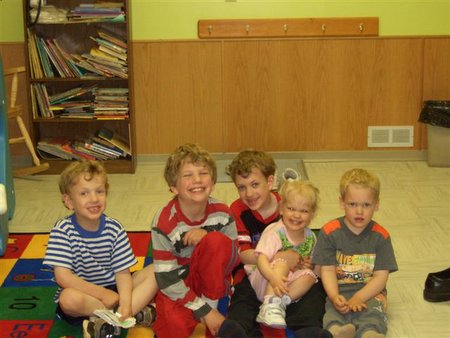 The Ryder-Flournoy children, from the left Chance 5, Austyn 8, Pierce 7 holding Chaselyn 2 and Tanner 4.
CAS in this province needs to have a watchdog on them. They need someone they have to be accountable to for everything they do. I am now involved with CanadaCourtWatch.com to expose the Rainy River Distict of NW Ontario CAS offices especially the one in Atikokan.
I have only the two children back, the other three are now crownwardships with access ... access that never happens because I live so far away and they don't want phone access because my children's behaviour gets so bad after talking to us ... gee wonder why? Could it be bc they want to come home and are being abused there?
I was made to sign papers saying I did all these terrible things to my children which I DID NOT and my rights have been violated just to get two back because the judge was retiring and couldn't continue with the trial. I was forced to do this. They were taken on an unverified allegation that wasn't even against me two years ago. How they could be taken and made crown wards on a unverified allegation that wasn't against me in the first place I have no idea. They told the judge in the beginning it was verified though and through the little of court trial we had we found out and its on court record that it was never verifed at all. They lied to the court and judge to be able to steal my children. They lied and tricked me and the courts to illegally steal my children.
Their excuse has come down to this .. I can't possibly look after five children, I made a poor decsion marrying an abusive man in the past and divorcing him (meaning I can't manage five children as a single parent) that the three children in care supposedly have disabilities and I can't supply their needs, disbilities they didn't have when they lived with me. They have two of them drugged up on very very dangerous drugs (Seroquel and Clobazam) in my opinion just to control their behaviour because they want to come home and I have the doctor's records to prove it and there has never been a diagnosis made to warrant drugs.
My one son is so doped up on drugs that he was hit by a car last summer while in these people's care and assulted by a fosterparent and it's on record in court and we also believe sexually abused. The third they said they are sure they will find something wrong with him at some point. They separated them all and from the two I have and me for the last two years, they have destroyed our lives. I'm contacting media of all kinds and mp's, mla's and the ombudsman to get people to listen to whats going on at that office.
Relatives in BC have been trying to get custody of the kids but were told by cas they aren't gonna let any family have them, that they are gonna stay in their care .. ummm aren't family supposed to be allowed and isn't it law that children be placed with responsible family should they come forward? The law society in Ontario won't even return any correspondence by lawyers in BC hired by family to get the kids. I'm moving back to BC in the summer, the children will have no family or ties to this province whatsoever if those people keep them and they refuse to move them anywhere out of the district .. mmmm .. must mean they really really need the extra money they are getting for them.
This agency in Atikokan Ontario has done this to several and I mean several other women in the same town. The Native Friendship Society has told me such and that none of the women they had taken the kids from EVER got any back.
I wonder how they can sleep at night, I cry myself to sleep most nights .. oh ya right .. everyone knows the more kids in care and the more who "supposedly" have problems the more money they get for them. If you don't have money to fight them you are an easy target when it comes to your children. It all comes down to money .. not what's right or what's best for the kids and family.
April Flournoy
Box 809
Manitouwadge Ontario P0T 2C0
More CAS Cases
March 23, 2006 permalink
Here are two more letters to politicians and a third story communicated privately.
This letter to Liberal MP Lloyd St Amand of Brant will be forwarded to CAS by the politician, so there is nothing to be gained by concealing names or places.
expand
collapse
- From:
- nathalie gauthier <nathalie19682000@yahoo.ca>
- Date:
- 2006/03/19 Sun AM 01:46:43 EST
- To:
- St.Amand.L@parl.gc.ca
- Subject:
- a plea for help
Mr. St.-Amand
As the MP and a former lawyer of mine, I am asking for your help. I don't know who to turn to anymore.
If you recall, the C.A.S. has been in and out of my life and a few months ago I had contacted you regarding a matter that's before the court. This is not about this case that I am requesting your help. It's about myself and my unborn child which is due for July 11th, 2006. I have been informed by a worker from the Society that an alert has been placed across Canada due to the fact that I had left Ontario and moved to New Brunswick. I have returned back to Brantford in January 2006. The moment I give birth to this child, they will be apprehending. With all the lies and false accusations, they will not let me keep the baby. The main one is that I'm being told that my parenting skills are not appropriate or so they say. I have been more then cooperative with the Society over the years. Yet no matter what I've said and done, they seem to find faults.
I want to raise this child and be able to nurture her. But the Children's Aid Society is bound determined to make sure that this does not occur.
I am asking for your help because you are a government figure for our County and I believe that there could be a way that you could be of assistance. Please help me sir to keep this child.
Sincerely,
NathalieBrantford ON N3R 1Y9
(519) 753 - 2720
Here is a letter to Andrea Horwath in support of her effort to get the Ontario Ombudsman to have authority to look into Children's Aid. It is one of the three most common kinds of case — the divorce continuation. A parent already separated tries to get CAS to protect their child from the other parent. In Dufferin, when complaints become annoying to CAS, they take the child permanently away from the complaining parent. As is typical in child protection cases, the family supports the NDP. The letter is posted with permission of the author, who says that there is no ban on publishing her case or her name.
expand
collapse
- From:
- rkergan1@cogeco.ca
- To:
- ahorwath-qc@ndp.on.ca
- Cc:
- rtmq@stn
- Sent:
- Saturday, March 18, 2006 1:16 PM
- Subject:
- ombudsman involvement with cas
Dear Ms. Horwath
Re: Collins, York and CAS Hamilton
My (now) ex, myself, and, my son (now almost 10) have been in court for almost five years. In October 2005 Justice Czutrin decided at the first Status Review (initiated in February 2004) that the case was not about child protection but custody and access. We are currently in court on the custody cross-claim (initiated after the child protection application by necessity). CAS is still involved - not in supervising my ex's care of my son but in providing supervised access for me.
My ex is registered on the Ontario Child Abuse Registry since 1984 for physically assaulting his nephew. The nephew (then aged 15) had visible injuries and was reluctant (he had been threatened) to report these. It was his probation officer who called CAS. The ex's nephew was made a crown ward and Hamilton Police did an investigation but did not charge the ex because the nephew was unwilling to testify and they felt the situation did not necessitate it with the Crown Wardship order.
My ex has an extensive criminal record including assaults, unlawful use of a firearm (resulting in a death), and, sexual assaults.
My ex has had charge of my son since he was five. I allowed my son to be placed with my ex on a temporary basis to prevent him from becoming a crown ward. (CAS Hamilton ridiculously prolonged the case and was never trial ready.) the child's placement with my ex was under CAS supervision. The order respecting this supervision was made on consent and ordered by Justice M. Bennotto in June 2001. The order was three pages long respecting the supervision with one paragraph respecting my access. I felt confident CAS Hamilton would enforce all of the provisions of the order and adequately supervise the ex's care of my child - they never did.
In July 2001 I reported possible alcohol abuse by my ex to CAS and Police. Police refused to investigate and CAS After Hours refused to attend while the ex was intoxicated yelling and threatening me on the phone with my child crying in the background. They didn't feel this was an emergency so they waited until sometime on Monday or Tuesday to investigate. The investigation consisted of asking the ex if he was drinking and he of course denied it saying I suffer "mental illness" problems. THey refused to send the ex for drug tests and stated there were no concerns.
In September and October 2001 I made belated reports to CAS Hamilton because I made immediate calls to Hamilton Police over the threats. Police did attend at the ex's and the ex told his stories. I did receive occurrence numbers and later charged the ex privately in 2003 (as this continued). My charges were thrown out of Ontario Court (Criminal Division) because CAS was involved and there was a trial pending in Family Court. The trial never occurred.
I started to contact the Office of Child and Family Services in September 2001 about the care situation but they refused involvement because my son was not in CAS care.
The Office of the Child and Family Services suggested I study the CFSA legislation (which I began to) and I also obtained a copy of the 2000 Ontario Spectrum of Service and Risk Assessment Guidelines. They also encouraged the CAS internal review process.
I have been minimally (if at all) satisfied with the internal review process at CAS Hamilton. I have gone through it about four times. THe first time I used the procedure of social work supervisor, (Sheila Penney now a manager), director, executive director, and Board of Directors. This process advises a "wait and see" as you move up. It is lengthy and inadequate and does not immediate address protection needs of children at risk.
At the director stage (Ingrid Hauth) in the first complaint procedure (November 2001) became enraged interrupting a court ordered parent capacity assessment with a motion to have the court assessor replaced with one of their own choosing. With each complaint some sort of Court Motion was filed with orders that eventually eroded my rights to my son little by little. CAS Hamilton's mental illness allegations increased with the overall undertone that my concerns for my child were a mental illness problem. THe concerns were never fully investigated and CAS kept saying there were no concerns.
In 2004 I started writing the letters in quadruplicate all at once only to be referred to the supervisor level.
I've written the Ministry in September 2005 when my son had further physical injuries which were (as usual) suspicious and sent out quadruplicates to CAS to all levels in the complaint procedure only to receive a letter back from the Ministry in October 2005 advising me of the internal complaints procedure (the letter to the Ministry noted all the copies already sent to CAS Hamilton).
The result from CAS Hamilton was that they informed the school to advise CAS Hamilton if they saw injuries. This is ridiculous as it was the social worker who saw the injuries at my supervised access and did nothing more than question the child taking his word.
That particular injury was a very large bruise and swelling of the child's forehead which the child stated occurred playing ball at school when a ball hit him. I doubt very much that a ball would or could impact a child's head causing that severe an injury. At the very least this should have been assessed by a doctor. The social worker (Nicole Wilcox) either left or was fired from CAS Hamilton. She is working (negligently) elsewhere with some other vulnerable victim such as my son.
My son has had numerous bruises around his eyes, a broken foot, staph infections near his mouth, etc. The broken foot took four days to be seen by a doctor, the mouth infection was immediately investigated by an after hours worker. Most of the time any investigation is minimal and very much after the fact when evidence is non-existent.
My son is afraid. At the initial start of the intervention in 2001 my son was upset after his grandfather died because he was used to having my full attention. CAS Hamilton put in affidavit material the very day of the temporary care hearing threatening an application for crown wardship. It stated my son said I hit him leaving red marks and bruises. In 2004 a review of the case notes revealed the worker asked leading questions and omitted the fact the child stated "but these go away after I go to my room for awhile". I am quite sure my son sees the result of this is losing his mother and so he will endure abuse at any length and not report it afraid of losing his father. My son is in need of psychological intervention and he should have had prompt thorough investigation of his injuries.
CAS Hamilton and mCSS has, and continue to, fail my child with their gross negligence. This is an overfunded agency making use of their funding to abuse situations and to accommodate the whims and fancies of their social workers and the power mongering of the director.
I believe with my son's eighteenth birthday he has a very possible lawsuit against the Province of Ontario for the existing legislative scheme which doesn't protect children in "kinship care cases". I think Bill 210 is very dangerous in that it promotes CAS to provide kinship care that doesn't fall under the Office of Child and Family Services. CAS' accountability when they are supposed to be supervising a child's care seems to include mostly their own discretion in investigation and management.
Bill 210 would take the minimal right of a child's outside complaint procedure for CAS care cases and abolish that. My situation illustrates what already has, and is happening. with cases of vulnerable children that have no recourse except the ridiculous CAS internal procedure.
I am of the opinion the internal investigation procedure is useless and should be abolished entirely. All it seems to be is an excuse for supervisors and managers to discuss a situation internally on the versional story from a social worker and supervisor without the complainant's presence to fully explain the situation and defend the CAS allegations. The meetings aren't taken seriously, the worker or supervisor makes allegations about the complaining parent, and not much is done.
I have contacted the Ombudsman's Office by phone only to be told to not even write because they can't do anything or get involved with CAS. I believe the Ombudsman's Office not only should have a right to investigate these situations but be given extra funding (perhaps out of the CAS budget) to do so.
I am thoroughly disgusted there was so much public uproar over the Liberal government's sponsorship scandal and our public money, but so little is done about these atrocities concerning our vulnerable children. I applaud the efforts of the NDP on this issue and hope and pray you win the next provincial election.
Please try to help my child.
Angelique Collins
The following story is typical of CAS intervention in the life of a young couple. Since CAS ordinarily retaliates against families going public, we have omitted the name, phone number and CAS venue.
expand
collapse
March 15, 2006
My issues with the CAS are as follows. When I call my worker it takes days for a reply. I am a part of the groups that have been assigned to me through CAS. My social worker has made no attempt to inquire of my progress, yet insists that she needs good reports. She says that my boyfriend and myself are not working with the society, yet we have attempted to do every group meeting and every letter that has been set out for us. She has cancelled meetings, not shown up and has only met with me three times since my children were taken into care, a total of five months. My worker says that I cannot have unsupervised visits with my children. because it is court orders that visits be through and at the discretion of the CAS. Visits now take place at my mother's, under her supervision, not CAS's. My two daughters are presently in the same foster home and frequently show up at sessions, dirty, hungry and refusing to go back to the foster home. The two girls are often left in the care of the teenage children in the foster home. My son (8 months) has only been introduced to beginner cereal. I brought this up with the worker, she told me that she had no concerns. When I discuss things that my 6 year old says to me, the worker says that the child does not know what she is talking about. The worker showed up in the court and claimed that (boyfriend) has not done any drug testing, to her knowledge, because she does not have the results. We went to the doctor who did the test and got copies of the results, that day they were faxed to the worker. There have been other cases held open for months for the same reason, the excuse being that they are waiting for a fax which they had received previously, this seems to be a trait with CAS.
The reasons the children were taken into care, were neglect (thumb sucking, diaper rashes and ability to talk to our 6 yr. old appropriately). Lately CAS has apologized, regarding the diaper rash and the thumb also having a rash. Since being in care the problem is still present and is not going away. It is time that CAS listens to doctors and takes their advice and not jump to conclusions. Drug abuse (he has been six months clean and done related counselling) homelessness, domestic violence (1 time incident of him pushing me, no police reports were ever filed) and mental health (I take antidepressants) and I see a psychologist. The Children's Aid have started a court action against me and are asking for 6 month wardship, even though the children have been in care for 5 months and everything they have asked me to do is almost complete. We are having a hard time with the housing because I cannot work due to the groups. We have almost saved up enough money and will have our own place in April.
I feel that in most cases that CAS abuse the entire family by separating all members. We are desperate to receive help in order to get our children returned to us. We believe that we have carried out CAS's requests in order to do this, but it appears that nothing is going to please them and that we will never get rid of CAS from our lives.
Please feel free to contact me at 000-000-0000. I have lots more information to add to this.
Dead Children in Manitoba
March 21, 2006 permalink
The disclosure of a large number of children dying in foster care has provoked a scandal in Manitoba. The article below shows efforts to contain the scandal without any real disclosure. A group composed entirely of functionaries of the child protection system will investigate and prepare a report which will of suggest more money and power for child protectors. Only full public disclosure of the facts has any hope of contributing to a solution of the problems.
expand
collapse
Probes launched
Gov't to review foster care deathsBy ROCHELLE SQUIRES, LEGISLATURE REPORTER
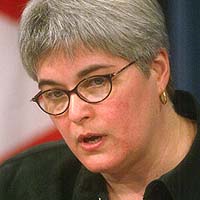 Family Services and Housing Minister Christene Melnick addressed an external review of cases of children in care at a news conference at The Legislative Building today.(C. PROCAYLO, Sun)
After facing public outrage over the deaths of numerous children killed in foster care, the province announced yesterday it will commission two reviews.
Nine foster children were murdered in Manitoba last year and a total of 31 children in care have been killed since 2000.
"The death of one child is too many. It's important to review concerns raised over recent developments and to work together to make the necessary changes we believe will improve services to children in care," said NDP Family Services Minister Christine Melnick.
An external review will focus on the opening and closing of cases of children in care, how files are transferred and the caseload of front-line social workers.
INTERIM REPORT IN JUNE
The external probe will be led by Manitoba ombudsman Irene Hamilton, Children's Advocate Director Billie Schibler and an Ontario child and family services director.
It will also involve the CEOs of the four aboriginal child and family service authorities in Manitoba.
An interim report will be provided in June and a final report in September.
An internal probe will also be conducted and led by Hamilton, Schibler and Jim Newton, director of psychology at the Manitoba Adolescent Treatment Centre.
The aim of that review is to look at how cases are managed and the administrative and financial areas of CFS. Interviews will be conducted with CFS staff.
"This is not a witch hunt," said Melnick. "These reviews will help guide improvements so we can continue to build a strong and high-quality care system for children in the care of CFS."
Schibler said her office has received many calls since the deaths of little Phoenix Sinclair and Heaven Traverse came to light.
Sinclair was murdered three months after her case was closed with CFS and Traverse died while in foster care.
"The general public is wanting to know, and I feel very confident in the people who will be working with our office and myself as we go into examining these matters," said Schibler.
Meanwhile, opposition Tories and Liberals continue to press the premier to remove Melnick from her cabinet post.
"This minister of family services has failed Phoenix Sinclair and she's failed all Manitobans," said Opposition Leader Stuart Murray in the house yesterday.
'ROOT CAUSES'
Vince Surbey, whose adopted son Chris, 17, was murdered last summer while in the care of CFS, said yesterday he's pleased the reviews have been called, but isn't sure they will have the desired effect.
"Whether it goes far enough remains to be seen," he said. "I think the reviews can be useful in helping point out where there are problems but it won't get to the root causes.
"Some procedures might be changed, but they basically have to do an overhaul of the whole system of returning children (to parents)."
Chris Surbey, who lived with fetal alcohol spectrum disorder, was placed in CFS care by his parents at age 12 because he needed constant supervision to contain fits of irrational behaviour.
At the time he was killed, Chris had been left alone in his apartment after his youth worker left for the day, despite his parents' warnings that he needed 24-hour supervision.
Source: Winnipeg Sun
CAS Fights Back
March 16, 2006 permalink
Our observer in Hamilton reports that CAS is fighting back against the calls for Ombudsman oversight. The following is an account of the TV coverage on Wednesday, March 15:
expand
collapse
As a social worker goes into a house to apprehend a baby and young child, it's reported she is stabbed in the hands. The camera crew has her on the news wrapped hands and all, dozens of cops all over the place, parents pinned to the house, mom's hands behind her back, looks extremely distressed and in pain, getting arrested, there are a bunch of concerned area residents (all home in the middle of the day) telling the reporter about the goings-on at the house, people going in and out at all hours and in and out though windows.
It is reported to be the messiest most disgusting home anyone has ever entered, but no film of the inside. Four police offices had to go back to the station to be treated for lice. Lice?
I worked for public health — lice don't fall from ceilings and you don't get them from entering a home, they are not that easily transmitted in adults. But it makes the apprehension seem all so extremely urgent. And how did the camera crew get there to see it all unfold? If indeed the parents are spending the night in a jail, they should be charged in the morning with the assault on the social worker, since I assume this would be in a criminal court. Is it not public record?
Addendum: The Hamilton Spectator had a similar story. A woman was arrested for defending her family against CAS. Failure to name the woman makes independent verification impossible.
expand
collapse
CAS workers attacked, mom charged
A Hamilton mother has been charged after Children's Aid Society workers were attacked.
Police were called to a William Street home after two CAS workers had gone to pick up two children Wednesday.
While a worker went into a bedroom to get clothes for the kids, the 25-year-old mother allegedly got into an argument with the other worker, then pushed and hit her. Police say the other worker rushed from the bedroom and was attacked.
Police say the mother then grabbed a knife from the kitchen and swung it at one of the workers, slightly cutting her hand. The other worker managed to rush out of the home with her cellphone and call police.
The mother was charged with assault with a weapon and two counts of assault.
Source: Hamilton Spectator
Child Protector Dead
March 16, 2006 permalink
A child-protection administrator has been found apparently murdered in Texas.
expand
collapse
San Antonio Express-News
Child agency supervisor dead
Web Posted: 03/16/2006 12:00 AM CST
Jeorge Zarazua
Express-News Staff WriterThe body of a missing Child Protective Services administrator was found Wednesday in a field outside Victoria, two days after she last told a friend she was settling in for the night.
Sally Ann Blackwell, 53, was reported missing Tuesday after she failed to show up for work and her daughters immediately feared her job might have played a role in her disappearance.
Victoria police notified the daughters shortly after 5 p.m. Wednesday that Blackwell's body had been found in a field off U.S. 59 and Hanselman Road, southeast of Victoria, said Kirsten Menie, a family spokeswoman. The cause of death wasn't immediately known, but police told the Victoria Advocate they were treating the case as a homicide.
Menie said the daughters were too distraught to talk.
"Nobody is able to communicate, to tell you the truth," she said.
Menie said the family continues to believe Blackwell was a victim of foul play.
 Blackwell
"Right now there are endless possibilities," she said. "I don't necessarily think the police are just clueless."
The family offered a $5,000 reward for information about the case, according to the Associated Press.
Earlier Wednesday, Tina Taulbee said her stepmother had spoken of threats she had been receiving at work.
"In the 15 or 16 years she has been there, this is the first time she was actually scared," Taulbee said.
Taulbee, 37, of San Antonio, said she didn't know details of the threats, but said it was in connection with one of the cases the CPS program director's office was handling.
Blackwell oversaw caseworkers in nine South Texas counties, including Bexar.
Patrick Crimmins, a spokesman for the Texas Department of Family and Protective Services in Austin, confirmed Wednesday that someone threatened Blackwell in her office last week.
But he said the agency hasn't received any information Blackwell's death was related to her work.
"We're obviously shocked and filled with sadness," Crimmins said. "We, of course, were hoping for a happier outcome. She was very, very well known in the Victoria community. She was well-liked, well-respected.
"Everyone is kind of at a loss for words."
Lt. Mike Hernandez of the Victoria Police Department said a search had been launched for Blackwell in that area early Wednesday, but investigators failed to find her body.
Hernandez declined to say what led investigators to suspect she might have been there, saying it was part of the ongoing investigation.
"No suspects have been identified," he said.
Hernandez said a county work crew found Blackwell's body lying just on the other side of a fence on Hanselman Road. There were no apparent signs of how she might have died, he said.
An autopsy has been ordered for today.
According to Taulbee, investigators found the door to her stepmother's home open and her dog locked up in the garage. Blackwell's car was left at the house.
She said the only thing that appeared missing was Blackwell's purse.
Blackwell, a former University of Texas cheerleader, joined CPS in 1990 as a caseworker in the Cuero office, and in 1998 became a supervisor.
In 2001, she was promoted to CPS program director, overseeing 46 caseworkers, their supervisors and additional support staff in nine counties.
Taulbee said Blackwell was passionate about helping abused children.
"I think that she did what she needed to do to protect the people who couldn't protect themselves," she said.
Crimmins said the incident last week at Blackwell's office "did not escalate" into anything that would have required police intervention.
"It was handled at the time," he said, adding it's not uncommon for CPS workers to be threatened.
The Child Protective Services Division of the Texas Department of Family and Protective Services investigates reports of abuse and neglect of children, and, if necessary, places children in foster care, Crimmins said.
He said employees receive training about workplace violence, dealing with difficult or hostile clients, and personal security.
Crimmins said the news of Blackwell's death spread quickly Wednesday among CPS caseworkers throughout the state.
"There is a strong bond between people that do this for a living," he said. "The jobs are very, very tough; very, very demanding."
Counselors were scheduled to consult with Blackwell's 30 co-workers today at the Victoria office because of her disappearance, Crimmins said.
"That's obviously going to be more important than ever now," he said.
jzarazua@express-news.net
The Associated Press contributed to this report.
Source: San Antonio Express-News
Addendum: The incident was unrelated to the victim's responsibilities in child protection.
expand
collapse
 Jeffrey Frank Grimsinger, 25, got 20 years for kidnapping and a life sentence for murder. He admitted killing Sally Ann Blackwell, 53. Her relatives said they were satisfied with the sentences.
T.C. BAKER: VICTORIA ADVOCATECPS supervisor's murderer gets a life term in plea deal
Killer evades death penalty in '06 Victoria slaying
Subdued and avoiding eye contact with his victim's family, a 25-year-old construction worker Friday pleaded guilty to the 2006 kidnap-murder of Victoria Child Protective Services supervisor Sally Ann Blackwell.
Jeffrey Frank Grimsinger, who faced the possibility of a death sentence had the case gone to trial, agreed to a 20-year sentence for kidnapping and a life sentence for murder. The sentences — assessed in the Victoria court of state District Judge Skipper Koetter — will run consecutively.
Blackwell, 53, disappeared from her Victoria home on March 14, 2006. Her rope-trussed body was found the next day in a field southeast of town. She had been sexually assaulted and strangled.
The killer is the son of Michael Grimsinger, who said he had dated Blackwell intermittently since 1995. Earlier on the night of her death, the elder Grimsinger told the San Antonio Express-News in a 2006 interview, Blackwell had visited his home to discuss renewing their relationship.
'He acted impulsively'
The younger Grimsinger stared into his lap as relatives of his victim addressed the court Friday. "He never made eye contact with them," said Victoria County Sheriff T. Michael O'Connor, whose office led the investigation.
The victim's sister, Mary Allaway of Austin, told the court she remembered Blackwell as "a precious, trusting little sister."
"I remember Sally as a strong, intelligent woman who worked hard and made a positive difference in this world," Allaway said later.
When asked why he had murdered Blackwell, Grimsinger responded, "I don't know."
"I don't know that he's a great orator," said Victoria County District Attorney Steve Tyler. "He might not even fully understand himself. He acted impulsively."
Tyler said the killer had expressed remorse for the crime.
Investigators linked Jeffrey Grimsinger to the murder by DNA evidence found beneath his victim's fingernails and on a cigarette butt discovered at the crime scene. His fingerprints also were found at Blackwell's home. In addition, Tyler said, Grimsinger confessed to authorities and his father.
The prosecutor said he crafted the plea agreement rather than go to trial because capital prosecution "would have been difficult for the family and very expensive for the community."
"I believe this sentence is just, and that is what I am duty-bound to obtain," he said.
M.P. Eaves, district attorney at the time of the murder, said in November 2006 that he intended to seek the death penalty for Grimsinger. Eaves declined Friday to comment on his successor's plea agreement with Grimsinger.
Allaway said she is pleased with Tyler's handling of the case. Blackwell's daughter, Amanda Taulbee, concurred, noting she is grateful to be spared the trauma of a trial. "I am confident Jeff Grimsinger will spend the rest of his natural life in prison," she said.
Victoria County has sent three killers to death row since executions resumed in Texas in 1982.
Remembered fondly
Blackwell joined Child Protective Services in 1990 as a caseworker in Cuero. At the time of her death, she was a program director overseeing 46 caseworkers and other staff in nine counties.
"Those of us who were fortunate enough to have worked with Sally Blackwell will always remember her energy, her optimism and her commitment not only to the children of our state, but also to her co-workers in Child Protective Services," agency spokesman Patrick Crimmins said. "We choose to remember her life."
allan.turner@chron.com
Source: Houston Chronicle
Sidebar: Before finding the real killer, a sheriff's dog accused Michael Buchanek. The Texas Innocence Project has taken an interest in protecting people from junk dog evidence.
expand
collapse
The Innocence Project of Texas, Jul 13 2009
Criminal Investigations Thrown to the Dogs in Texas
Published by Natalie Roetzel at 1:29 pm under Website Updates
The Victoria Advocate released a story last night that takes an in depth look at the use of dog-scent lineups in Texas. Specifically, the article addresses two cases where men were arrested and incarcerated based on canine testimony and later released when proof of their innocence emerged. The evidence in these cases was subjected to bloodhound scent lineups conducted by Sheriff’s Deputy Keith Pikett, a man whose practices are currently under rigid scrutiny as a result of two recently filed federal lawsuits. The story explains:
Michael Buchanek’s federal lawsuit in January 2008 was the first complaint about Pikett’s work, said Randy Morse, an assistant Fort Bend County attorney representing the deputy. A scent lineup and trail identified Buchanek as a suspect in the high-profile murder of Sally Blackwell.
Pikett’s dogs, Quincy and James Bond, walked from the site where Blackwell’s body was found, along Zac Lentz Parkway, to her home more than five miles away. From there, they went to Buchanek’s house nearby.
The hounds also picked the former Victoria County sheriff’s captain’s scent in a series of lineups. The identifications were used to get a search warrant for Buchanek’s home.
His lawyer, Rex Easley, represents Calvin Miller in another civil suit that names Pikett.
In one motion, Easley wrote Pikett’s lineup was “so recklessly flawed that it violated the constitutional rights of the plaintiff. First, the dogs were leashed during the lineup, which fails to exclude handler input. Second, the site, the pads and the cans were contaminated with countless other scents so as to render it unreliable and impermissible to base a warrant upon.”
Easley hired Bob Coote, who led a police-dog force in the United Kingdom and worked with scent dogs guarding the British border, to review Pikett’s work in Buchanek’s case. The lineup was “the most primitive evidential police procedure I have ever witnessed. If it was not for the fact that this is a serious matter, I could have been watching a comedy,” Coote wrote.
The Innocence Project of Texas recently took an interest in Pikett’s use of dog-scent lineups and is currently evaluating several potential wrongful convictions brought about, at least in part, by the use of these flawed “investigation” procedures. In his comments to the Victoria Advocate, IPOT Chief Counsel Jeff Blackburn noted that although dog scent lineups are commonly regarded as junk science, “this isn’t even science. This is just junk.” Even the National Police Bloodhound Association has regarded the lineups as “unreliable” and no longer edorses the practice.
Source: Innocence Project of Texas
More CAS Foot-dragging
March 16, 2006 permalink
John Dunn has sent a letter to the Ministry of Children and Youth Services (pdf). It details the foot-dragging by the ministry and local children's aid societies in denying clients copies of the complaint procedure.
CAS Sued
March 16, 2006 permalink
Canada Court Watch has posted a copy of a lawsuit by Raymond Paquette against Lanark Children's Aid. The facts disclose it as the same case dealt with at length in a series of stories by Dave Brown in the Ottawa Citizen in April 1999. The story given here from the suit is one-sided, but Mr Brown's is not.
Since the oldest child is now over the age of 18, he can sue on his own behalf. He is Raymond Paquette, born on November 20, 1987 to mother Lorena Kerr and father Marc Paquette. In 1991 Children's Aid seized Raymond from his parents, placing them with Lorena's sister, Margo Hunter.
Hand written case notes signed by Ms. Denise Unhola an ex-employee of the defendant CAS disclose that Raymond was audio/video taped:
- November 20, 1991 at the Ottawa-Carleton Police Station
- April 13, 1992 at the home of Margo Hunter
- April 27, 1992 at the home of Margo Hunter
- December 2, 1992 at the home of Margo Hunter
- December 14, 1992 at the home of Margo Hunter
There are unidentified persons on these videotapes and others standing outside the camera view helping the interviewers. The content of the recordings is not described in the suit, but given standard practice in the field, social workers likely tried (and succeeded) to get four- and five-year-old Raymond to make incriminating statements about his parents. The suit calls it brainwashing.
In support of the protection application CAS manufactured the following facts, all later shown to be false. Raymond's father:
- sexually abused Raymond
- shot Raymond's brother in the face with a shotgun
- slit Raymond's throat leaving a six inch scar
- burned the hair off Raymond and his two siblings with a rainbow colored lighter
In 1992 CAS got $7000 from the Criminal Injuries Compensation Board on behalf of Raymond, but did not return the money to him on his eighteenth birthday, November 20, 2005.
On May 7, 1998 Ottawa CAS filed a protection application for twin half-brothers born to Lorena Kerr and her then-partner Jack Hepworth.
In November 1998 when it became apparent that the parents Hepworth and Kerr were winning in that child protection case, Ottawa CAS protection worker Mark Arnold advised CAS to adopt out Raymond Paquette and his sister and brother to Margo Hunter as quickly as possible. The permanency of adoption would place the children beyond the power of the courts to return the children to their parents. The adoptions were completed in December 1998 without notifying the parents. Hand-written case notes by Ottawa CAS social worker Brenda Williams confirm that the adoption was in bad faith.
On February 15 and 16, 1999 judge Robert Fournier found that the case was fabricated by CAS, a ruling not appealed by CAS. But since the three oldest children had already been adopted, they were not returned to the parents, only the baby twins were returned.
Here are the formalities:
ONTARIO SUPERIOR COURT OF JUSTICE
Court File Number CV/06/33958
Raymond Paquette (Plaintiff)
17 Cherly Road
Ottawa, Ontario K2G 0V5
Phone: (613) 228-0368
CHILDREN’S AID SOCIETY OF THE COUNTY
OF LANARK AND THE TOWN OF SMITH FALLS
Defendant
8 Herriott Street
Perth, Ontario K7H 1S9
Phone: (613) 264-1500
Fax: (613) 264-0067
Lawyer for the Defendant:
Ms. Nicky Edmundson-Mosher
Letter to Andrea Horwath
March 14, 2006 permalink
Here is a letter to Andrea Horwath on the subject of Children's Aid. This is posted with permission of the author, who has requested that the names of her own family be deleted. We have omitted her signature and changed her husband's name to husband.
expand
collapse
Brantford Children's Aid Society
On June 22, 2005 I met with one of your intake workers, LeeAnne Wood, in my home along with my husband and children. LeeAnne came out to investigate a complaint about my baby walking down the street with a beer bottle. At that time as far as she was concerned this did not happen. She asked us a series of questions. After she was finished she left and told us she would be in touch.
On August 4, 2005 we met with the CAS again we were told they were concerned about our 'fighting' because we had told LeeAnne during the interview in our home that we occasionally argue. At that point we were informed the case would be transferred to a worker. We met the new worker, Katia Carrunza, who told us husband, needed to go to anger management; an alcohol assessment and I had to attend domestic violence counselling. We followed through with these suggestions to get your organization out of our lives. During my domestic violence counselling I was advised by the counsellor I did not need to attend this class because it was not applicable to my situation. I got the okay from Katia to discontinue this class. She advised me to take a different class which interfered with my school and was going to cost me money that I really could not afford. She then told me I had done what was asked of me and I did not need to take this class.
Husband did his anger management and also had to pay for it after he was told it would be of no cost to him. He also completed his alcohol assessment and was told he could have some counselling on this matter but, it was not necessary. In the meantime husband has quit drinking completely in fear the CAS will again use this against him.
On numerous occasions I called Katia and was unable to reach her, I would leave messages and she would not return my call. I eventually tried calling her supervisor, Trish Johnson, who told me I would have to discuss these matters with Katia. Trish gave me a time when Katia was expected to be in the office but despite my continuous phone calls I was not able to reach her nor did she return my phone calls. I often left detailed messages about when I would be home or if she could reach me at my mothers and I found she would call my home at a time when I told her I would not be there. In my opinion she was calling my home and leaving a message to avoid talking to me personally.
On October 14, 2005 I received a phone call from Katia around 4:00 in the afternoon, she advised me to stay away from my biological father (who I have no relationship with at all, nor had I seen in years.) She continued to tell me not to look for him, and to keep the children away from him, she even went to the point to tell me to lock my doors. (This led me to believe he had made a direct threat toward me and my family.) If I did not abide by this the agency would have reason to apprehend the children. I tried to get more information from her. She told me I could meet with her in her office on Monday, October 17, 2005, in the meantime I had no idea what was going on or what to think. I was terrified. This was unnecessary information to be passed on to me and especially without any detail as to why the call was placed to me in the first place considering I had no contact with this particular individual.
During the week of November 7, 2005 I believe it was Tuesday November 8th husband and I had an appointment with Katia in our home to close our case. That afternoon around 2:00 I received a phone call on Katia's behalf stating the meeting would have to be cancelled that an emergency had arose. For the remainder of that week I had called Katia everyday to reschedule and consistently got her answering machine which stated "Today is Thursday November 3rd I will be in and out of the office today, tomorrow Friday November 4th, I will not be in the office...." I continued to call during the week of the 14th and was still unable to reach Katia.
At 10:30 am on Thursday February 23 I received a message from Katia to call her back. On the 24th I called Katia at 2:00 I left a message on her machine, her message stated "Today is Wed. Feb. 22, I will be out of the office....". I called again on Monday February 27 at 9:10 am and left a message, called again at 11am, and 1:30pm and left a message both times. On Feb.28 I called the office and asked for Katia's supervisor, I was directed to a Dorothy Shween. I left her a detailed message about all the times I tried to contact Katia and asked her to return my call. I called Dorothy again on March 1, when I spoke to her she informed me she was the secretary for that particular division of CAS and there was no supervisor the workers report to a temporary supervisor that changes on a daily basis. She also advised me I could reach Katia right after lunch. I called Katia right after lunch and actually spoke to her, she told me she had not received any reports from the classes we had attended. She told me as soon as she receives all of this information she can close our file because she has not heard of any problems in the past 8 months. I called Nova Vita and spoke to the counsellor of the class I had taken there who informed me she had faxed the letter to Katia On October 25,2005. She asked my permission to call and talk to Katia about the letter. The counsellor called me back to say Katia had received the letter in October. My husband called the lady he was dealing with for the alcohol assessment who agreed to resend the assessment. This is now March 13 and once again I have not heard anything from Katia.
Source: email from author
Praise for CAS
March 11, 2006 permalink
The Hamilton Spectator prints an article today in praise of the Children's Aid Society. It omits one important fact, which we give following the article.
expand
collapse
Giving children a better life
By Michael P. Shea, Superintendent, Corporate Services Division, Hamilton Police Service
The Hamilton Spectator(Mar 11, 2006)
Re: 'Crown wards: stories of struggle and survival' and 'Kids at risk face harsh adjustment' (both March 7)
These stories accurately identified not only a growing problem within our community, but the importance of a timely and compassionate response by child protection workers.
The successes identified in these articles are not accidental.
They are the result of dedicated and committed staff doing everything in their power to make life better for our most vulnerable members -- our children.
The staff of the Children's Aid Society of Hamilton, from the executive director to the front-line workers, are second to none.
I am proud to be associated with such a caring and professional organization.
They do make a difference.
Source: Hamilton Spectator
An endorsement of Children's Aid from an informed outsider, a police superintendent. The article omits mention that on the board of directors page of the Children's Aid Society of Hamilton author Michael P Shea appears as 1st Vice President. Mr Shea is acting as a shill.
Kingston Family Attacked
March 11, 2006 permalink
We received a plea for help, and exposure, from a family in Kingston. To preempt efforts by CAS to remove their website, we have made our own local copy. The writer's surname has been omitted in compliance with the CFSA.
expand
collapse
- From:
- "Cathy" <copbusters@msn.com>
- To:
- rtmq@stn.net
- Subject:
- re: cas corruption
- Date:
- Sat, 11 Mar 2006 13:05:33 -0800
I am looking for social justice groups to help my family. We have been victimized by the Kingston children's Aid society. The courts are not interested that the CAS workers give false evidence. I have opened up a web site where I hope to past some of the tapes I took of them. They are of course trying to shut me down. The courts that allow the lies and the destruction of families should not then order the lies and destruction sealed. Please help me if you can, or give my name to someone who may help. My site is casinternment.com.
Thank you Cathy 613-634-6345
CH TV Continues
March 10, 2006 permalink
CH TV Hamilton has received record-breaking response to yesterday's program on Children's Aid. They have produced another program with John Dunn (Ottawa), crown ward, and Michele Lafantaisie (Hamilton), mother. It will air at 5:30 and 11:30 this afternoon and evening. If response continues at a high level, they may do a one hour show. You can send them feedback by email to 530@chtv.ca , or by phone at 905-522-1101.
Addendum: Here is the program audio posted by John Dunn, or our local copy (both mp3).
DYFS Caution Kills Boy
March 9, 2006 permalink
In this case from New Jersey, child protectors cautious erring on the side of the child resulted in his death.
expand
collapse
Sex case kept little fire victim from a safe haven
DYFS decreed accused grandfather, an ex-Woodbridge cop, could no longer care for Erik
Tucked behind a white picket fence, the house sits alongside a quiet, residential road with a 25-mph speed limit.
On the front lawn, a heart-shaped wooden placard informs visitors they've reached "Grandma and Grandpa's House," with directional signs pointing the way to "Cookies + Milk," "Hugs + Kisses" and "Sleep-Overs."
But the house was off-limits to Erik Sturgis, the 5-year-old who died Saturday in a fire after being left alone at his father's home.
State officials said he could no longer go to his grandparents' house to be baby-sat because his step-grandfather, former Woodbridge police officer Douglas Karlson, 46, was accused of taking lewd photos of a 15-year-old girl and sexually assaulting a 14-year-old boy. Karlson denied the allegations and while a DYFS investigation determined Erik was not involved, it concluded Karlson was an inappropriate caretaker for the boy.
As a result, Erik's father, Kevin Sturgis was forced to find other baby sitters, often paying neighbors to watch the child, even though Karlson and his wife, Donna Karlson, a Middlesex County sheriff's officer for 16 years, took care of Erik "for a significant period of time," said Thomas Buck, a Milltown attorney representing the family.
On Saturday, Kevin Sturgis, a 31-year-old single dad, went to work at a supermarket warehouse, leaving his son home alone when their Sayreville house caught fire. Middlesex County Prosecutor Bruce Kaplan said the flames did not touch Erik, but the smoke killed him.
Authorities have concluded the fire was accidental, said Assistant Middlesex County Prosecutor Thomas Kapsak, but he declined to say how the blaze started and would not reveal whether the boy had access to matches or a cigarette lighter.
"I don't think it would be helpful to speculate about that now," Kapsak said. "We really don't want to conclude anything until we complete our investigation."
Authorities say they are discussing whether to file child endangerment charges against the boy's father but will not make a final decision until the investigation into the fatal blaze is completed, possibly by the end of the week.
Kapsak said police have spoken with Sturgis and described the warehouse shipping clerk as "very cooperative." The prosecuting attorney declined to discuss details of police conversations with the father.
"Obviously, this is a tragic event for everybody and certainly for the father of the child," Kapsak said. "I don't want to put words in his mouth. He's obviously terribly upset."
Yesterday, Karlson, the boy's step-grandfather, said Erik would have been safe at his grandparents' house were it not for DYFS' ruling.
"Pulling me from care was premature. They (DYFS) jumped the gun," Karlson said. "I think they were wrong, but in these situations they have to go overboard. If there's an allegation, the child's gone. That's the bottom line."
The grandmother declined to be interviewed. A computer-printed sign on the door of their Old Bridge home read: "Please respect our time to mourn. No interviews or statements."
DYFS spokesman Andy Williams said it opened a case involving Karlson in May last year and determined Karlson was an "inappropriate baby sitter" for Erik.
"The child's best interest is always the determining factor," Williams said. "If there is a question of the child's safety, obviously we wouldn't place him with that caregiver."
The decision required Erik's father to find alternatives -- and Erik's mother was not an option. Christina Ann Sturgis had been killed in a murder-suicide by Linden firefighter James Hoehman four years earlier.
So Sturgis enrolled his son in preschool and provided DYFS with the name and phone number of a baby sitter he would be using when Erik wasn't at school, Williams said. Satisfied, DYFS closed the case.
Meanwhile, Karlson's troubles were just beginning. The 18-year veteran of the Woodbridge Police Department was suspended from his $80,000-a-year job without pay as charges against him progressed. In September, a grand jury indicted Karlson on charges of official misconduct, child endangerment and aggravated sexual assault.
In January, Karlson's co-defendant, 48-year-old Ann Marie Dobbs of Woodbridge, pleaded guilty for her involvement, but avoided prison under a plea deal in which she agreed to testify against Karlson.
Dobbs told a Middlesex County judge that she was with Karlson when he allegedly photographed a 15-year-old girl over an eight-month period. Police recovered an album full of photos of the girl in various states of undress. In some pictures, she is nude but covers herself with her hands and arms.
The Middlesex County Prosecutor's Office said a 24-year-old man will also be testifying that Karlson sexually assaulted him repeatedly over a four-year period starting 10 years ago.
All that -- and the murder of Erik's mother -- was merely the backdrop against which Kevin Sturgis was trying to care for Erik.
Karlson said Sturgis took a demotion at the Wakefern Food Corp. warehouse in Jamesburg so he could change his work hours and be home with Erik.
"His boss threatened to fire him because he was taking Erik to work with him," said Yolanta Kozlowski, a neighbor.
Karen Meleta, a spokeswoman for Wakefern, said the company has no on-site daycare facility. She said she had no knowledge of Sturgis bringing his son to work or of a threat to fire him for doing so.
Sturgis has declined comment. His neighbor, Kozlowski, said he broke down when visiting her yesterday.
"He's not afraid of (criminal charges) or even thinking about it now," Kozlowski said. "He's more devastated that he lost his son."
Staff writers Susan Livio and Jim O'Neill contributed to this report.
Source: Newark Star-Ledger
referred by Fern
Hamilton Family Services Closes
March 9, 2006 permalink
This article, lamenting the closure of Hamilton's Family Services, leaves the vital fact until the last paragraph: the agency was carrying debt from lawsuits. The article gives no clue what wrongdoing by the agency led to the debts.
expand
collapse
Family Services closes amid tears and questions
 Barry Gray, the Hamilton Spectator
Family Services posted notice at 105 Main St. E. that it is closing.
By Daniel Nolan
The Hamilton Spectator (Mar 9, 2006)The city and Catholic Services of Hamilton-Wentworth were moving quickly to fill the holes left after Hamilton's Family Services closed its doors yesterday.
The closure did not come as a surprise. The agency, which operates counselling, day-care and housing assistance programs, declared bankruptcy last month because of an $800,000 debt. It was a sad development for an agency that opened in Hamilton in 1923.
"I am depressed," said LaFerne Clarke, the agency's executive director who had to cancel an appointment with a doctor over stress tests to be on hand to help deliver the news to staff members at the agency's main office in the basement of Terminal Towers.
"We are 83 years old and we've helped a lot of people," she told reporters, then broke down in tears. "I worked very hard for this agency ... We have done some really good work."
The closure effects 66 employees, 60 of whom were members of Local 216 of the Ontario Public Service Employees Union. Some had worked for the agency for decades.
"I think it's unfortunate. Employees were extremely committed to that organization," said Joe-Anne Priel, the city's general manager of public health and community services.
"It would have been a miracle to save that organization," Priel said.
City staff at Family Services' two day-care centres yesterday gave parents information about other child-care facilities where they can send their children. There are about 40 children affected.
Priel said subsidies will follow children to their new centres.
Linda Dayler, executive director of Catholic Services of Hamilton-Wentworth, said her agency was prepared to take over counselling of clients.
This included counselling for violence against women, family counselling, credit counselling and a program for children who have witnessed violence.
The city was also taking steps for clients in the housing assistance program to notify landlords of changes to lease agreements. Family Services said last night residents will not be evicted because of its shutdown.
Local 216 president Mary Long, who was an intake worker for the day-care programs, said the public needs to ask questions of councillors and MPPs about what happened to the agency and how money was spent to run it.
"It's sad. I've been here 23 years and it's hard to believe it's just come to an end. We've been treated shamelessly and so have the clients."
There appear to be a number of reasons why Family Services went under. Clarke said the agency carried debt for years because of such things as old lawsuits and it grew because it took on programs such as housing assistance that did not have sustainable funding. Priel said the agency got into money trouble when it expanded into the costly child- care business about three years ago.
dnolan@thespec.com
905-526-3351
Source: Hamilton Spectator
Marin and Horwath on TV
March 8, 2006 permalink
We have been informed that tomorrow, Thursday, at 5:30 pm Mark Hebscher and Donna Skelly will do a half-hour TV show on CH Hamilton on the topic of Bill 210. Guests will be Ontario Ombudsman André Marin, Hamilton East MPP Andrea Horwath, and a spokesman from CAS.
Social Work Debate
March 5, 2006 permalink
On February 1, 2006 the Windsor Star published a letter from Dolores Sicheri giving nine suggestions for legislation to regulate the social work profession. The letter was substantially similar to her letter to Mohamad Haniff of March 6, 2005.
The Star printed two replies, one by Loris A Sandre, the other by Beverley J Antle and Mary Kaye Lucier. Both are reproduced below along with two further letters.
expand
collapse
Social workers' ethics strictly governed
GUEST COLUMN
by LORIS A. SANDRE
I am writing to correct some misconceptions which may have been left with your readers as a result of a recent letter from Dolores Sicheri which appeared in The Star on Feb. 1.
The letter from Ms. Sicheri was entitled Recommendations for Social Work Ethics. In it, Ms. Sicheri makes a number of recommendations regarding what I assume — from the tone of her letter — to be her perception of shortcomings in the ethical behaviour of some social workers.
While I realize that Ms. Sicheri's letter is directed more specifically at staff employed by the Windsor-Essex Children's Aid Society, it nevertheless leaves a very erroneous misconception that there are no guidelines whatever that govern the social work profession.
As a proud member of this profession, I would like to take this opportunity to correct some misconceptions created by Ms. Sicheri.
In her letter, Ms Sicheri makes nine recommendations, which she indicated she has submitted to the College of Social Work.
Her first recommendation is that "persons without (proper) qualifications should not identify themselves as social workers..."
I would like to point out that under the Social Work Act of 1998, the title social worker is a protected title under this act, and only persons with the proper credentials and belonging to the college may refer to themselves as social workers.
In short, this recommendation is already a reality.
Committee exists
In her second recommendation, Ms. Sicheri suggests, "swearing of false or misleading affidavits should be grounds for disciplinary action..."
I would like to point out that such behaviour, if it were proven, would indeed be grounds for disciplinary action.
It would also be ground, if it were true, for a complaint to the college.
Ms. Sicheri's third recommendation suggests, "a discipline committed should be established to hear complaints from the public..."
Ms. Sicheri needs to do her homework because such a committee already exists under the Social Work College.
In her fourth recommendation, Ms. Sicheri announces, "a code of professional conduct should be established."
Once again, she needs to do some homework, as this too already exists. It is approximately 30 pages long, and readily available from the college.
Recommendation No. 5 suggests that a "program of professional development linked to licence renewals" needs to be established.
While this provision is not currently in place, the college is in the proces of writing a policy on exactly this issue, and laying out guidelines for ongoing professional education.
Ms. Sicheri's sixth recommendation is based on the false premise set forth in her letter that "every profession in Ontario is legally accountable for his or her actions except social workers."
I'm not sure where this comes from, but I for one could certainly save myself some money for liability insurance if this were true.
In recommendation No. 7, the writer states, "social workers need to know and to respect the boundaries of their profession."
In this, I heartily agree with Ms. Sicheri. However, if she has complaints about a social worker overstepping professional or personal boundaries, she should initiate a complaint to the college. Failure to respect personal and professional boundaries would be seen as a serious professional transgression by the College.
Recommendation No. 8 states that "police background checks should be a mandatory requirement for employment of social workers..."
Oral and written exam
In this also, I would concur. Indeed, this is already a standard of practice in all social work agencies these day. However, it should be pointed out to Ms. Sicheri that if someone does not already possess a criminal record, a police background check would obviously not produce any grounds for not hiring a potential employee.
The final recommendation made in Ms. Sicheri's letter is also one with which I concur. Namely, "there should be an oral and written exam for licensure at the completion of training..."
I would like to pint out that this is the only point in Ms. Sicheri's letter, which is not already either a reality under the governance of the Social Work College, or under consideration by the College.
There is to be a policy announcement in the near future from the college in regards to mandatory requirements fro social workers in regard to ongoing professional development.
On the whole, however, Ms. Sicheri's letter unfortunately left the mistaken, and rather insulting impression that social work as a profession does not adequately regulate itself, nor does it have adequate standards of practice.
Perhaps Ms. Sicheri would be well served to research her topics in the future, rather than making misleading and blatantly false accusations.
If she has had less than pleasant dealings with some social workers, there are avenues of complaint open to her both legally, as well as through the Social Work College.
Loris A. Sandre works at Windsor Regional children's Centre as a clinical social worker, and is involved with teens and their families.
Source:
Photocopy supplied by Dolores Sicheri
Published on or before February 19, 2006
Wednesday, March 1, 2006
Social workers governed by formal regulations
The Ontario Association of Social Workers (OASW) wishes to respond to Dolores Sicheri's recent letter which contained many inaccuracies about the social work profession.
Social workers in Ontario have had a code of ethics for over four decades and have been regulated by the Ontario College of Social Worker and Social Service Workers (OCSWSSW) since 2000.
Prior to the establishment of OCSWSSW, the Ontario College of Certified Social Workers, a voluntary regulatory body, set standards for the profession, investigated complaints from the public and disciplined members who were found guilty of professional misconduct.
It was leadership within the profession that resulted in the formal regulation of social work practice under the Social Work and Social Service Work Act, 1998.
In Ontario, it is currently a provincial offence for any person who is not registered with OCSWSSW to use the title "social worker" or "registered social worker" or to hold oneself out explicitly or implicitly to be a social worker or registered social worker.
As in other regulated professions, a finding by the college's discipline committee that a member failed to adhere to the profession's code of ethics and standards of practice is subject to disciplinary action.
Social workers are not immune from criminal prosecution or civil suits. Some time in the future, an entrance-to-practise examination will be required for registration in OCSWSSW.
Child welfare staff in this province, many of whom are registered social workers, are highly trained and undergo police checks prior to working in this sector. They play a vital role in protecting Ontario's most vulnerable citizens, our children.
BEVERLEY J ANTLE
OASW President
MARY KAYE LUCIER
OASW Southwestern Branch President
TorontoSource:
Photocopy supplied by Dolores Sicheri
In a nutshell, the social work profession needs to be regulated by the Health Profession Act as they are working with vulnerable patient groups.
The community must ask for credentials and require social work registration. For example, a "caseworker" might not necessarily be a "social worker." A "case worker" might be a gym teacher. The public will not know the difference unless it is made aware of the nuance. A case worker's credentials must be presented and reviewed before allowing access.
I am not trying to center out child protection workers. A hospital patient, who is told that they are being sent to a specialized unit when they are being sent to chronic care, is being lied to. A child protection worker, who deliberately misrepresents her role to gain access to a home, is lying. A child protection worker, who writes a phony, puffed up affidavit, is lying. Social workers need to put their reputations and licensure on the line, just like doctors, nurses, teachers, dentists, optometrists, audiologists, speech pathologists, occupational/physiotherapists, and lawyers.
Ms. Antler, Ms. Lucier and Mr. Sandre are trying to create a preception of inaccuracy. The community knows better. Their accusation is without substance. In fact, I find it bizarre that they agreed with everything I said.
The College of Social Work needs to do its homework. For the profession to survive, it needs to bring accountability and transparency to the clients.
Dolores Sicheri
Lakeshore, Ontario
March 1, 2006
March 6, 2006
Editor
The Windsor Star Group Inc.
167 Ferry Street
Windsor, Ontario
N9A 4M5email: letters@thestar.canwest.com
Subject: Social workers
For publication
The Windsor Star has printed two replies to a February 1 letter of Dr Dolores Sicheri on social work and child protection, one by Loris A Sandre, the other by Beverley J Antle and Mary Kaye Lucier. Both chide Dr Sicheri for not checking her facts. But where can one go to check facts on child protection? Court hearings and case files are secret and inquiries to a Children's Aid Society are rebuffed on grounds of confidentiality. Parents and grown children are the only source. Dr Sicheri and I have both spoken to many affected families and have informed opinions.
Both articles claim that an adequate regulatory regime for social workers is in place, yet ignore the reality that families are routinely torn asunder by social services. In cases in which children are taken from parents, social workers routinely omit facts favorable to families, and liberally include hearsay without checking its validity. A common device is giving parents visitation with their children under observation by social workers, then filing court documents denigrating parents while omitting favorable facts. Social workers can even impose a divorce against the will of both parents -- they suggest to a mother that her chances of getting her children returned will improve after a divorce, then use separation as further justification for keeping the children.
What does the existing regulatory framework do to protect families from these abuses? Nothing. Mrs Sandre cites a Code of Ethics for social workers. It guards confidentiality, ostensibly protecting families from embarrassment, really concealing abuses. The code does not contain the word "truth", and offers no relief for misrepresentation or omission of facts.
The OCSWSSW publication Perspective (pdf) dated Winter 2006 says:
As at October 31, 2005, out of 164 completed complaints, there have been four referrals to the College's Discipline Committee, and seven College members have been required to attend before the Complaints Committee to be cautioned.
Did social workers take the nineteen thousand children now in foster care with only four mistakes? Perhaps the discipline committee is protecting social workers more than families.
Robert T McQuaid
Help Ombudsman Watch CAS
March 4, 2006 permalink
Opposition to revisions to the Child and Family Services Act has come mainly from the NDP — most CAS victims are the kinds families supporting the NDP. While defeat of the entire bill is unlikely, adding a provision for ombudsman oversight is possible. You have an opportunity to help this happen by sending your story to Andrea Horwath (NDP), MPP for Hamilton East. The details are in an email below from Dolores Sicheri.
expand
collapse
There is a great battle being fought as we speak in the Legislative Assembly of Ontario regarding Bill C210. It involves the rights of children and families. The NDP are trying to amend the Bill to provide an independent review process through the Ombudsman. If we do not speak up to demand a review process, they will fail.
Please email Andrea Horwath MPP ahorwath-qp@ndp.on.ca today with your personal story regarding CAS. Her fax number is: 416-325-2770
Bill C210 will put in place onerous legislation which will give CAS complete responsibility for the welfare of children with no accountability or transparency.
I will quote Mr. Runciman in the debate:
"Referencing some of the discussion that has occurred related to this issue and the legislation itself, but the issue generally with respect to adoption, I know that my colleague Mr. Jackson from Burlington, who has been a strong advocate in terms of protection of children in this province, has raised a number of issues surrounding the legislation, a number of issues and questions surrounding the intent here. I know that he has raised the issue of the legislation being essentially a cost-containment strategy and not a child welfare outcomes issue."
When you email Mrs Horwath, adding rtmq@stn.net to the cc field will keep us informed as well.
Legislature Debates CFSA
March 2, 2006 permalink
Changes to the Child and Family Services Act, bill 210, were debated in three sessions. Here are links to the debates.
- February 28
- First day of debate
- March 1
- Second day of debate
- March 2
- Question for Mary Anne Chambers
- March 2
- Question for Mary Anne Chambers
- March 2
- Third day of debate
Ontario's Ombudsman will not get oversight over Children's Aid. Once again, nearly half of the debate centered on First Nations. The only real opposition to the bill came from the NDP.
Addendum: Here is spin from the Toronto Star, suggesting the PC's are endangering children by holding up bill 210.
expand
collapse
Conservatives stall adoption bill
Mar. 2, 2006. 07:41 PM
STEVE ERWIN
CANADIAN PRESSA Liberal adoption bill that could help thousands more Ontario children find permanent homes was stalled Thursday by Conservatives angry that Premier Dalton McGuinty hasn't asked a controversial cabinet minister to step down.
Tempers were running high on the last day of the legislative sitting as the Conservatives blocked legislation to lift restrictions on the adoption of Crown wards whose birth parents have a court-ordered right to maintain contact with them.
The bill has the support of the Conservatives, who chose to delay it on the eve of a three-week legislative break because the Liberals refused to extend debate on a separate matter: the reprimand of embattled Transportation Minister Harinder Takhar.
Two weeks ago, Takhar became the first Ontario cabinet minister to be reprimanded by the integrity commissioner because he failed to hire a suitably independent trustee to manage his business affairs while in cabinet.
The Liberals successfully moved Thursday to accept the commissioner's report without further debate on the matter, which the Conservatives have seized upon in recent weeks as grounds for Takhar's removal from cabinet.
Several angry exchanges erupted during question period, which saw Conservative critic Tim Hudak ejected from the legislative chamber and normally placid Child and Youth Services Minister Mary Anne Chambers spouting uncharacteristic vitriol.
After question period, Chambers accused the Conservatives of trying to "hold kids basically hostage" in an effort to give the Takhar controversy "legs."
"We have vulnerable kids and every day that this bill is held up is another day when we are not providing the very best protection for kids," Chambers said.
"It's just shameful that the Progressive Conservatives could see chasing Minister Takhar's ghosts as being more important than taking care of vulnerable kids."
Conservative house leader Bob Runciman accused the government of playing "the sleaziest kind of politics" he's seen since the Liberals took office in October 2003.
He accused the Liberals of using the legislation as a shield to discourage their Conservative rivals from using procedural tactics in protest over the government's decision to end debate over the Takhar controversy.
"They put us in a situation where we had no option," Runciman said. "If anyone's being shameful, it's the Liberals in the way they are conducting this and the way they are suggesting that we've held this up."
The adoption bill, if passed, would allow Crown wards whose birth parents don't take advantage of their rights to maintain contact with their children to be eligible for adoption.
The Liberals say almost 60 per cent of such parents never take advantage of their rights.
The bill is likely to pass final reading when the legislature resumes March 27.
Source: Toronto Star
Teenager Attacks Foster Mom
March 2, 2006 permalink
This story shows an opinion of a foster parent by the person who knows her best — her own foster child.
expand
collapse
Butler Woman Likely Assaulted By Foster Child Image
Ralph Iannotti
Reporting(KDKA) BUTLER A woman who was thought to be the victim of a home invasion, may have been attacked by her former foster child.
Police say that Yvonne Cook’s former foster child, a boy she took into her home and cared for, is the prime suspect.
Terrance Lemont Clowney, 19, is wanted by police in connection with the weekend stabbing.
Cook was robbed and attacked early sunday morning after police say Clowney forced his way into her home through the basement door. She was robbed of about $140 and stabbed with a kitchen knife in the face, neck and hands.
“He was a foster child of my mother - I'm suprised after my mother had reached out - and offered up her home, and her time to help this child...that this is how he repays it,” Cook’s son David told KDKA’s Ralph Iannotti. I knew him as far as I've seen him down the house. I haven't had too many dealings with him, though.”
Clowney is 5 feet, 7 inches tall and weighs about 145 pounds.
A warrant has been issued for his arrest on charges including attempted homicide, aggravated assault, robbery and, unlawful restraint.
Cook’s recovery from the attack has been more encouraging physically than it has mentally.
“The physical part, yes, the emotional part, I doubt very much a week in the hospital is going to heal that,” said (David) Cook. “We'll just take it one day at a time.”
Cook remains hospitalized at Allegheny General Hospital listed in fair condition.
According to a report from Butler City Police, at the tme of the home invasion, Clowney was either wearing a mask or had his shirt pulled up over his face.
Source: KDKA
Ontario Parents Won't Get Funds
February 28, 2006 permalink
Ontario is about to keep social services safe from parents who might care for their own children. The hundred dollar a month federal tax credit for parents of pre-school children will be taken back by the province.
expand
collapse
Ontario could claw back child-care benefit
Last Updated: Feb 28 2006 11:13 AM EST
Some of Ontario's poorest families might never see the monthly child-care allowance proposed by the federal government.
The provincial government is expected to deduct the annual $1,200 child-care benefit for every child under age six directly from social assistance or disability support cheques.
"I'd be horrified if they did," said Cynthia Wilkey, a lawyer with the Income Security Advocacy Centre of Toronto. "I would just be horrified. But would it surprise me? No."
The $100 monthly allowance is intended to replace the current national child-care funding deal with provinces, but Wilkey and other advocates for low-income families worry the province will claw back the benefits.
 Stephen Harper reads to children at Copper House day care in Bolton, Ont. during the federal election in January. (CP Photo/Paul Chiasson)
The Ontario government already deducts the National Child Benefit Supplement from social assistance and disability cheques, despite a campaign promise to stop the clawback.
Sandra Pupatello, minister of community and social services, says the goverment has not yet decided if the benefit will be deducted, but refused to rule out the possibility.
"Our history since we became the government has been to try to make life better for people who are on social assistance, and I think that every single thing we've done since we've become the government has indicated that," said Pupatello.
She says the province is still focused on fighting to save the existing child-care deal signed with the previous federal government.
Source:
CBC
CBC Features Crown Wards
February 28, 2006 permalink
A CBC program will tell the stories of crown wards. The screening schedule is below. The CBC blurb is at Wards of the Crown, and we have a local copy (pdf). There is also a write-up at the National Film Board.
SCREENINGS On Television CBC NEWSWORLD (ET)
- March 7, 2006 10:00pm CBC
- March 8, 2006 1:00am
- March 8, 2006 4:00am
Source: John Dunn
Mom Kept From Crippled Daughter
February 26, 2006 permalink
Haleigh Poutre was taken from her mother by Massachusetts child protectors (DSS) at the age of six and placed with her aunt Holli. Holli adopted the girl and later married Jason Strickland, who became the girl's stepfather. On September 11, 2005 Jason beat Haleigh severely placing her in a coma. Holli and her grandmother were found dead a few days later in a possible suicide pact. Massachusetts DSS and all parties involved wanted to have Haleigh's life-support terminated, but Jason resisted, since he would then face a murder charge.
Haleigh has become a pawn in the struggle over euthanasia with a court allowing teminiation of life-support just as her medical condition improved to where she could breathe without help.
On February 24 social workers held a party for Haleigh's 12th birthday. Her mother, Allison Avrett, was excluded.
expand
collapse
WPRI Providence
February 25, 2006
Severely beaten girl turns 12, mother uninvited
BOSTON The severely beaten girl the state wanted to remove from life-support turned 12 yesterday, and her mother says she wasn't invited to the party. Haleigh Poutre's birthday was celebrated at Franciscan Children's Hospital in Boston. Poutre has been receiving physical, speech and occupational therapy there since last month.
Poutre's mother, Allison Avrett of Westfield, wanted to attend the party, according to her lawyer, Wendy Murphy.
Murphy said she tried to contact the Department of Social Services for permission to attend birthday celebration. But she says the calls weren't returned.
Murphy says the snub left Avrett depressed and outraged.
Avrett is allowed to visit her daughter for 15 minutes every other Tuesday.
A D-S-S spokeswoman disputed Murphy's statement. She said a lawyer for D-S-S returned Murphy's call on Wednesday.
Source:
www.eyewitnessnewstv.com/Global/story.asp
?S=4552574&nav=F2DO
Addendum: Eight years later Haliegh, still alive, enters adulthood, but is wheelchair bound.
expand
collapse
A new life for Haleigh
For child at the center of an end-of-life battle, family created a loving world
 Haleigh played on the front lawn with her adoptive father, Keith Arnett, and brother, Jacob. The Arnetts first took Haleigh in as a foster child.Suzanne Kreiter/Globe staff
WESTFIELD — The minister winds up his welcome to some 400 people, and soon lyrics flash karaoke-like on a large screen. A spirited Christian pop song, “Blessed be Your Name,” fills the Westfield Evangelical Free Church.
In the back row, a young woman, sitting in a wheelchair next to her adoptive parents, lights up.
Though she can’t read all the words, she sways to the music and claps her hands, the nails painted pink with white polka dots. She loves cheerful tunes and a crowd, and on this Sunday, she has both.
Keith and Becky Arnett could have predicted that Haleigh, 20, would brighten at this part of the service.
She entered their lives as a 14-year-old foster child, then known as Haleigh Poutre, who had been at the center of a passionate end-of-life court battle. Her singular story of abuse, compounded by government lapses, drew national media attention. It remains one of the darkest chapters in the state’s child-protection system.
As her case receded from the headlines, the Arnetts, in the quiet of their home in Western Massachusetts, took her in, and slowly learned what abilities Haleigh had — and had not — lost.
One thing soon became clear: Her love of music remained as strong as ever, as was her yearning to be part of a family and a community.
On a fall day in 2008, the kitchen phone rang inside the Arnetts’ ranch home in Southwick. It was a state social worker, asking if they would consider taking in a “foster child with disabilities.”
The couple didn’t hesitate. They had completed foster-care training two years before, already had cared for a handful of children, and refused to turn away anyone in need.
As devout Christians, they believed God’s work requires sacrifices, including from busy families like theirs raising three boys.
But the social worker didn’t want a quick answer over the phone, insisting instead on a face-to-face visit. A week later, when she and two supervisors showed up at the Arnetts’ house, carrying files and a videotape, they wasted little time before asking, “Have you heard of Haleigh Poutre?”
The couple remembered the child’s photo splashed across the news over the years. She was the adorable girl from the neighboring town who fell into a coma in 2005 and became the center of the national drama over the removal of her life support.
Few throughout the state didn’t follow the riveting events that unfolded as Haleigh lay unconscious with brain trauma so severe she was deemed to be in an “irreversible vegetative state:” There was the arrest of the girl’s adoptive mother and stepfather on assault charges, the bizarre murder-suicide that took the life of the adoptive mother and Haleigh’s grandmother, and the stepfather’s legal effort to halt the removal of Haleigh’s ventilator and feeding tube. If the girl died, his assault charges could be upgraded to murder.
A day after the state’s highest court authorized the withdrawal of life support so she could “die with dignity,” Haleigh’s eyes opened. She began tracking people’s movements with her eyes, and pointing to toys on command.
She defied everyone’s expectations, and while she was never going to return to being the cheerful brown-haired girl who rode bicycles and twirled in dance recitals, she was not, as doctors had predicted, doomed to a life of virtually no awareness.
In the months to come, after the revelation that the state had received numerous complaints alleging abuse of Haleigh since she was 8, she became the face of a sweeping overhaul of the child-welfare system. Not until the recent death of Jeremiah Oliver has the State House seen such fervor for changing laws intended to protect children.
As blue-ribbon panels were formed, the girl behind it all needed a new family.
On this autumn day in 2008, sitting around the Arnett’s kitchen table, state child-protection agency staffers warned the couple to think soberly about this foster care assignment.
They said Haleigh wore diapers, used a wheelchair to get around, and often slurred words. She attended a special school at the Franciscan Hospital for Children in Brighton, and progress was expected to be slow and uneven. They played a videotape of Haleigh moving to music, and typing words on a letter board.
The social workers said the family would be required to undergo another in-depth vetting process to be Haleigh’s foster parents. The state could not tolerate failing this girl again.
“Don’t make any quick decisions,” one of them said.
Keith and Becky, then in their late 30s, looked at each other. They knew they shared the same values, having fallen in love as teenagers at a Christian summer camp.
“Okay, we’ll think about it,” Keith replied.
Haleigh moves in
One afternoon months later, Haleigh sat in the Arnetts’ living room, enjoying her favorite after-school ritual: Feeding herself a snack from her wheelchair tray and relaxing in front of the Disney Channel.
“Hey man!” Keith greeted her as he walked by.
“I’m not a man,” Haleigh declared, with a hint of offense.
Her response left the family chuckling quietly, something they did often early on in Haleigh’s stay as they learned how her mind now worked. On her best days, she could read at a seventh-grade level, but she understood words very literally. Keith, a former special education teacher who now runs a small trucking business, said he stopped saying “What’s up?” because the answer inevitably included ceilings or skies.
The couple had ambitious hopes for Haleigh, that with their love and dedication, she would learn to walk independently again and carry on lengthy conversations. Early on, she relied mostly on her letter board to communicate, such as wanting a “cookie” or a “banana.” Over time, the Arnetts began to understand her without needing words spelled out.
While caring for Haleigh was demanding, she gave back.
“You kiss her on the forehead and she smiles and tells you that she loves you. I have not done a greater thing in my life,” Keith said, seated next to his wife at the kitchen table. “I’m not a great parent. . . . I fail and falter, but I’m willing. Or I should say, we. We are two peas in a pod. We lean on each other all the time.”
The Arnetts, in their first interview since taking Haleigh into their lives, said they agreed to talk with a Globe reporter because they want to draw attention to the importance of foster families.
With his background in special education, Keith said he is deeply aware of the need for good foster homes. Each year in Massachusetts, some 7,000 children, pulled from their troubled families, need a temporary — or permanent — refuge.
But he and his wife said they bristle when people refer to them as saints.
“People often say, ‘How can you do it?’ And I say, ‘How can I not do it?’ ” Keith said. “I am committed to kids having homes.”
As Haleigh celebrated her 15th and 16th birthdays as a foster child, the Arnetts came to know her as a cheerful teenager with a distinctive little-girl personality: Easily bribed with sweets and passionate for the color pink, she craved songs by Justin Bieber and Disney’s Hannah Montana, among other pop idols, and reaching out to people.
Haleigh, who attended a special program at the Southwick public schools, greeted almost everyone with a ready smile and an outstretched hand.
After shaking hands, she often didn’t want to let go. In her playful moments, she would try to transition the handshake grip into a game of thumb-war.
“Haleigh, time to let go,” Becky often gently reminded her.
She quickly bonded with her new family. She began telling Keith and Becky, “I love you.” She learned each boy’s name: Josh, Justin, and Jacob. The youngest, who was 4 when she arrived, spent the most time with her, sometimes playing catch or the board game Candyland.
It was easy for the Arnetts to forget how most people saw Haleigh: A girl with a disfigured shape in her wheelchair, seeming to bend to one side because of a curve in her spine. Her eyes sometimes did not move together, and her speech was often unclear.
Being her foster parents was time-consuming. Traveling with her meant making sure the wheelchair was properly secured in the minivan. She could feed herself, but the Arnetts had to cut up her food, and when she fell ill, they often had to deliver nutrition through a feeding tube. Many weeks, she had multiple appointments with medical specialists.
For a time, doctors recommended that she drink at least five glasses of water a day. Kalli Lacroix, 20, who worked for about a year as an aide for Haleigh and belongs to the same church as the Arnetts, said it was often a struggle to convince Haleigh to drink, and she’d sometimes intentionally dump part of the water when Lacroix wasn’t looking.
“She’d be very sassy with us,” Lacroix said, with a laugh.
Money was often tight. When the Arnetts took Haleigh in, they were treated like all foster parents, receiving a daily stipend of about $25 a day, with additional hourly supplements for extra services.
Keith and Becky admit to feeling overwhelmed some days, and having occasional doubts. They worried sometimes that their three boys, who are being home-schooled by Becky, were getting the short end.
However, the Arnetts say their religion guides them in their choices.
“God loves us, and we want to share his love with others,” Becky said.
The couple said they do not impose their Christianity on their foster children, though expect them to go along with the family’s routines. They do not think Haleigh understands the concept of God and prayer, though she knows religion is about something somber and lofty.
One evening while seated at dinner, they asked for the first time whether Haleigh wanted to lead the family in prayer, something they and the boys typically took turns doing. Haleigh eagerly agreed.
She closed her eyes and bowed her head, and they accepted her lead. She began, “I pledge allegiance to the flag of the United States of America. . . . ”
There was another moment of muffled laughter around the table.
The ‘other mother’
Haleigh rarely asks about the past. Keith said he once drove by her former home in Westfield, and she had no recollection of the place.
Becky said that, during the first year that Haleigh lived with them, she asked about her adoptive mother, Holli, who she understood to be gone from this world and in “heaven.”
As the months and years passed, however, Haleigh has asked far less often about her “other mother.”
Holli Strickland, a family day care operator, gained custody of her niece Haleigh when she was 4. State child-welfare officials accepted as truth what Strickland called to tell them: That Haleigh’s biological mother — Strickland’s half-sister — was a troubled, single teenage mother who routinely neglected her child and that the mother’s boyfriend was sexually molesting the girl.
Strickland depicted herself as a martyr who tried to help Haleigh, who was healthy when she was born, overcome the psychological trauma of her earliest years. Around the time Haleigh was 8, Strickland brought her to the pediatrician’s office with bruises, burns, and cuts. In explaining Haleigh’s injuries, she said Haleigh, due to her mental instability, threw herself down the stairs and stabbed herself with sharp objects.
When questioned, Haleigh went along with Strickland’s explanation to doctors and professed love for her adoptive mother.
Authorities believed Strickland’s stories that Haleigh harmed herself, even as the state received more than a dozen reports of suspected abuse, citing broken bones and numerous other injuries.
But then, on the afternoon of Sept. 11, 2005, Holli and her husband, Jason Strickland, brought an unconscious 11-year-old Haleigh body to a local emergency room. Within a few days, doctors concluded that she had a severe brain-stem injury, the kind caused by violent shaking or a high-speed crash.
Still, Holli and her husband insisted that Haleigh had a self-injurious behavioral disorder.
For the first time, doctors challenged this explanation, triggering a sweeping review of Haleigh’s child-protection file and medical records.
Soon state authorities questioned everything Holli ever told them, and police came to the horrific conclusion that the Stricklands had singled out Haleigh for brutal abuse. Soon the couple was arrested on assault charges. Only one of them, however, would ultimately go to trial.
Two days after they were released on bail, Holli Strickland went to her grandmother’s apartment in West Springfield. The next morning, two gunshots went off — the grandmother shot Holli, who was sedated with sleep medication, records show. The 71-year-old woman then shot herself, completing what police say was a murder-suicide pact.
That left the stepfather alone to face criminal charges, which could have been upgraded to murder if Haleigh died.
Eight days after she fell into a coma, the state’s child-protection agency sought a court order to remove her ventilator and feeding tube.
Two doctors from Baystate Medical Center in Springfield had concluded that she was in a vegetative state and probably would never think or feel again, prompting the state to move swiftly, perhaps fearing Haleigh would become another Terri Schiavo.
The Florida woman was in a persistent vegetative state for more than a decade and the center of a lengthy end-of-life battle before she died in 2005 after her feeding tube was removed.
On Oct. 5, 2005, Juvenile Court Judge James Collins approved the removal of Haleigh’s life support “with great sadness.”
The stepfather appealed the ruling, ultimately engaging the services of a prominent Springfield attorney whose clients included the Catholic Diocese of Springfield.
Attorney Jack Egan said his connection to the church, which generally opposes the removal of feeding tubes and other ordinary life-sustaining measures, had nothing to do with his interest in the case. He said he was drawn in after being asked by Strickland’s court-appointed attorney to review Haleigh’s legal file. Egan said he was horrified at the state’s swift action, and agreed to take the case for no fee.
“Here was a child who wasn’t given a chance to live,” he said in a recent interview.
Egan argued the case before the state’s highest court, and on Jan. 17, 2006, learned that he had lost. But in a different way, he prevailed. The appellate process bought just enough time — three extra months — for Haleigh to regain consciousness.
Just a day after the Supreme Judicial Court authorized the removal of Haleigh’s life support, the state announced that she was showing signs of mental alertness. She was looking around her hospital room, clearly attentive.
Instead of pulling her feeding tube, the state transferred her to Franciscan Hospital for Children. A week later, Harry Spence, then commissioner of the child-protection agency, visited Haleigh’s room, where he watched her track objects, such as a duck and a stuffed animal, with her eyes.
Soon, she was moving her hands to music, writing words on her letter board, and waving at people who passed her in the hallways.
Haleigh becomes an Arnett
The state child-protection agency set out to find a foster family for Haleigh, one that, ideally, could become a permanent home.
After two years living with Haleigh, Becky and Keith Arnett could not imagine family life without her.
The adoption ceremony took place in the Arnett’s dining room, off the kitchen. State officials brought an American flag, which hung from a pole, a Bible, a gavel, and gifts, including a Justin Bieber CD.
The black-robed judge who presided knew Haleigh’s case quite well: It was Collins, the juvenile court judge who initially approved the removal of her life support.
The Arnetts welcomed him, saying Collins was one of many judges and officials in state government who heeded faulty medical opinions about Haleigh, and later proved themselves to be dedicated to her future recovery and care.
“People should be forgiven,” Keith said.
In this spirit, Keith and Becky Arnett said they are looking ahead — not back — in their care of Haleigh, who turned 20 in February.
Her lifelong medical care, rehabilitation, and related expenses will be covered by a $5 million fund drawn from medical malpractice settlements. Haleigh’s state-appointed guardian won these awards after suing her pediatrician, social worker, and other clinicians for missing overt signs of her abuse.
The Arnetts can apply to the fund’s lawyers to pay for items such as an elevator in their home or replacement wheelchairs or beds for Haleigh.
They remain active members of a small group at the Westfield Evangelical Church called Healing Homes, which tries to recruit new foster families for the state.
The group’s membership has stayed static at about 30 members for the past two years, as they struggle to persuade others that the rewards of foster care outweigh the drawbacks, said Tricia Sayre, one of the founders.
The Arnetts said they have learned to adjust their expectations about Haleigh. They had hoped she might try to walk, but she has lost interest in talking steps, even while holding on to others.
Doctors warn that she could regress.
They say they are prepared for any outcome, having fully integrated her into their life as their fourth child and only daughter, Haleigh Arnett.
“It’s a good thing she was able to forget the past,” said Becky. “She won’t hurt any more. In so many ways, she is such a strong kid.”
Source: Boston Globe
Third Reading of CFSA Revision Bill
February 25, 2006 permalink
John Dunn has alerted us to the legislative schedule for action on bill 210, revising the Child and Family Services Act.
expand
collapse
Ontario Legislative Assembly Business for the week of February 27th 2006 (Monday)
BUSINESS OF THE HOUSE
Hon. David Caplan (Minister of Public Infrastructure Renewal, Deputy Government House Leader): On a point of order, Mr. Speaker: Pursuant to standing order 55, I'd like to give the Legislature the business of the House for next week.
On Monday, February 27, in the afternoon, second reading of Bill 53, the Stronger City of Toronto for a Stronger Ontario Act; in the evening, third reading of Bill 21, the Energy Conservation Responsibility Act.
On Tuesday, February 28, in the afternoon, third reading of Bill 210, the Child and Family Services Statute Law Amendment Act; in the evening, third reading of Bill 36, the Local Health System Integration Act.
On Wednesday, March 1, in the afternoon, third reading of Bill 210
Here are links to the legislative history and the discussion of bill 210 and the second reading of bill 210.
CAS Answers
February 23, 2006 permalink
CAS has responded to an earlier article about a group wanting CAS off the Six Nations land. We rarely respond point-by-point to the drivel coming from Children's Aid, but will in this case. Here is their response, exactly as published except that we have numbered the paragraphs.
expand
collapse
Caring for children at risk
By Shannon Korber, manager of Native Services Branch (Brant CAS)
The Hamilton Spectator (Feb 23, 2006)
Re: 'Group wants Children's Aid Society off Six Nations land' (Feb. 18)
1. The mandate of the Children's Aid Society of Brant, Native Services Branch (CAS/NSB) is to provide protection services to children deemed to be at risk of harm or to have been harmed.
2. The NSB staff understands the history of child welfare in Native communities (including the residential school legacy) and strives to implement a service that is fair, consistent and protects children's rights to live safely without risk of harm or neglect.
3. There are situations where, for a variety of reasons, children are unsafe in their current home situations and extended family members are unwilling, unable, or are deemed inappropriate to care for children. In some circumstances there is no, or limited, extended family. However not all children are in care as the result of apprehension. In certain cases, children are signed over to the care of the CAS on the consent of their parents who have identified their own inability to care for their children.
4. Within the structure of existing services, we are the service mandated to bring high-risk issues such as drug and alcohol abuse and domestic violence forward as the very issues that devastate the lives of children and families.
5. The CAS receives reports from community members, teachers and school support staff, police, family members and other professionals, regarding protection concerns.
6. The reports are investigated and must be verified before a child is removed from its home and placed (when possible) in the care of an approved family member, with on-going but limited CAS involvement. If there is no family placement, the child is apprehended and placed in the care of the CAS.
7. The CAS must bring all evidence before a provincial family court judge for review. If the CAS does not provide concrete evidence to confirm child protection concerns, the children would be returned home.
8. This standard is outlined within the Child and Family Services Act, which is provincial legislation and guides other services within the Six Nations community such as day care, police and Social Services.
9. The NSB staffs plan to meet with the Haudenosaunee Confederacy and the Six Nations Band Council to resolve service delivery matters until Six Nations endorses an agreement first negotiated in 1993, allowing community based-service delivery.
10. We would like to emphasize that the caring and protection of children is a shared responsibility. You can help by becoming a foster parent, an adoptive parent, or a volunteer. You are invited to contact our office at 519-445-2247. Together we can make a difference.
Source:
www.hamiltonspectator.com/
NASApp/cs/ContentServer
?pagename=hamilton/Layout/
Article_Type1
&c=Article&cid=1140648615780
&call_pageid=1020420665036That has to make you feel warm and fuzzy about CAS. But here are some realities.
1. This is as it ought to be, not as it is. CAS gets most of its funding from the per-diem reimbursement for children in foster care. Protection of children is a smokescreen.
2. Here Mrs Korber acknowledges past abuses, inviting the reader to assume that things are better now. She did not say things are better, and they are not.
3. The real reason children are placed in foster homes in preference to relatives is that foster care generates funding for CAS, relative placement does not. The cases where children are signed over to CAS are never truly voluntary. We have interviewed dozens of parents who have signed "voluntary service agreements" with Children's Aid. Many are approached by a social worker explaining that a signature is needed to allow CAS to help the family, then the family discovers too late that they have relinquished their children. Others are threatened with court action if they fail to sign as demanded.
4 This is a high-sounding paragraph that makes you feel good about the author's intentions, but on on analysis, says nothing at all.
5. The CAS does indeed get lots of reports from professionals who come in contact with children. Those who fail to report are prosecuted, and CAS has made those prosecutions well known among all targeted professions. They act not out of concern for the welfare of children, but fear for loss of their livelihood.
6. CAS does no real investigation before snatching a child. In actual court cases, most of the justification for keeping a child is from evidence gathered after the apprehension.
7. CAS is not required to present evidence to a court before taking a child. The court proceedings are only about whether the parents can get their children returned. For most parents, those lacking the means to hire competent legal counsel, the hearings are a sham and they have no opportunity to oppose Children's Aid.
8. The Child and Family Services Act is a one-sided law that gives powers to Children's Aid. There is not a single paragraph protective of the rights of parents.
9. CAS/NSB intends to negotiate until the Band does what CAS says.
10. CAS appeals to you to help them, in what must be a worthy cause. Fund appeals by CAS raise insignificant amounts of money, but serve to dupe more members of the public the same way. In hundreds of families interviewed, we have yet to find a single parent or child who has anything favorable to say about his experiences with Children's Aid.
CAS Uses Enron Accounting
February 23, 2006 permalink
When a private company fakes its books, shareholders are hurt, and management can be sued or prosecuted. But when a public agency fakes its books, no one really cares.
expand
collapse
Accountants probe allegations of over-billing at N.S. Children's Aid Society
HALIFAX (CP) - The organization that represents Nova Scotia's chartered accountants is trying to determine whether provincial auditors conducted a proper investigation of alleged expense fraud at the Children's Aid Society in Cape Breton.
A spokeswoman for the Institute of Chartered Accountants of Nova Scotia refused to comment on the case, but the man who made the allegations says the initial audit was slipshod. Jim MacNeil, a former society supervisor, says he called the institute when he learned auditors with the provincial Finance Department had not conducted an in-depth, forensic review of the society's financial records.
Linda Laffin, a spokeswoman for the Community Services Department, said the government is aware of MacNeil's complaints, which came after he was fired for alleged incompetence in 2003.
However, she denied the initial audit was bungled and she insisted the department took MacNeil's allegations seriously.
"We're satisfied the Department of Finance did what we asked," she said. "They did the audit. We take their advice. In their opinion, they reviewed it and there's nothing further to look at."
Meanwhile, the chairman of the society's board of directors said the society conducted an internal investigation in 2003 before the provincial auditors were called in. That investigation determined there were errors in the society's records but they were not the result of wrongdoing.
"It would be very difficult to prove that (someone) cheated the agency," said Jack Coffin.
MacNeil's complaint dates back to 1999, when he was told to review the expense reports of a junior case worker in the society's mentoring program.
He concluded that the Cape Breton-Victoria Children's Aid Society had been over-billed by as much as $5,000 during a nine-month period. He urged his supervisors to launch a wider investigation.
"I was trying to get them to look into the whole mentoring program because I think what I found was the tip of the iceberg," MacNeil said.
He said the society's former executive director refused to pursue a further investigation and instead issued a written reprimand to the employee in question.
"I was threatened with dismissal if I pursued the matter, so I just backed off," MacNeil said.
"In my career, I've seen foster parents who were forced to repay overpayments. I just felt this wasn't right."
In 2003, MacNeil broke his silence after he was fired and lodged a complaint with the Community Services Department, which oversees children's aid societies throughout the province.
Since the children's organization receives all of its funding from the provincial government, an audit by the province's Finance Department was ordered. That investigation found the society's bookkeeping was sloppy, but noted some improvements had been made.
MacNeil said provincial auditors didn't speak with him during their investigation.
"I asked them to do a forensic audit to verify what I had found," he said. "That's not what happened. All they did was a paper audit of how management handled things. There's been no attempt to see what money may have been missing."
Source:
canada.com
Parent Degraded by CAS
February 22, 2006 permalink
Even parents not reported for abuse are humiliated by Children's Aid. In this case, CAS claims to be the guardian of all Canadian children, with oversight over parents. It appears Stockley is the correct name, not Stockwell.
expand
collapse
The Independent
Local mom says dental program is 'demeaning'
A Georgetown woman doesn't mind being told her son has dental problems that need attention, but having to provide proof that the dentist did the work is going too far, she says.
 Emy Stockwell of Georgetown, shown here with her son Matthew, believes a form sent to her home after her son received a dental screening at school requiring her to get a signature from a dentist stating he had initiated dental treatment on her child is an invasion of her privacy rights, and intrusive. She refused to have the form signed.Photo by TED BROWN
Emy Stockley believes that the aspect of the dental screening program administered by Halton Region Health Department requiring her to get her dentist's signature verifying that work has been started or completed on her child is an invasion of privacy.
"Violated, humiliated and interfered with," is how she said she felt when she received the form requiring the dentist's signature after her son's teeth were checked at school last month.
"Although I did appreciate the screening and notification, I feel that having to report back to the department, and the embarrassment of asking the dentist for his signature was interfering, intrusive and demeaning," she said.
Stockley received a letter from Halton Health Department last month stating that her 10-year-old son Matthew's teeth had been checked at the school and he needed immediate dental attention.
Stockley said she already had a dental appointment booked for her son the day following the screening, and the work was done.
After receiving the letter she called Halton Health Department to discuss the program.
"I don't have any objection to this screening," she said she told the official. "I have an objection to being enforced to report his treatment to the Halton Health Department."
She said she will allow her son to be screened again at school, "but again I will not be demeaned, humiliated or forced like a child to get a dentist to prove that I have sought dental health for my child. I have done so of my own accord."
She said the region official told her that by law she was required to report to the Children's Aid Society (CAS) that she hadn't returned the dental form.
"I have accepted that the incident will be reported to Children's Aid and that the municipality justifies their intrusion on my private life and that of my children's lives because it benefits their ability to follow up with those in need of treatment, but I will not give up my right to privacy, my right to freedom from unreasonable interference in my private life."
Gisele Franck, manager of dental health for Halton Region, said most parents are very happy with the dental screening program, which she said is mandated by the province.
She said the goal is to ensure children's dental health is looked after.
The form sent to parents includes an option they can check requesting financial assistance to cover basic dental treatment.
"I think it's fair, it's a service mainly provided to the parents," said Franck.
She said the region makes every effort to work with the parents.
"If they provide us with the name of the dentist, we can call the dentist's office," she said.
She said parents have 100 days to get the dental work done on their child and the health department follows up with a re-screening of the child.
She said at that point if the dental work is not complete the matter is referred to the CAS.
"Dental situations that are not treated are deemed neglect by law," said Franck.
She said last year of the 16,000 kids screened across Halton, less than .01 per cent were referred to the CAS.
Greg Flood, spokesperson for the Ministry of Health and Promotion, which oversees the program, said the signature of the dentist is a "legislative requirement."
He stressed people shouldn't lose sight of the purpose of the program.
"It's a very important program," said Flood. "It's about ensuring that youth are having appropriate dental services and that's why this program is offered by the government."
He added the program enables parents who can't afford dental services to get them for their child.
He said since the program has been administered by his Ministry he has never heard of a complaint similar to the one raise by Stockley.
Source:
www.northpeel.com/br/gi/news/
story/3336250p-3860952c.html
found by a Dufferin VOCA reader
Rape in CAS Custody
February 22, 2006 permalink
Canada Court Watch today reports on the rape of a girl in CAS custody. Court Watch never uses names, but has been truthful in its reports.
expand
collapse
My daughter was raped while in the care of the Durham and Quinte CAS!
(February 22, 2006) Court Watch received a call from a mother today who described her daughter's horrendous experiences while in care of the Durham CAS. Not only was this woman's daughter sent around to multiple group homes, but she was raped while in CAS care and could not trust CAS workers enough to tell them. The mother reported that CAS workers were giving her daughter birth control pills at 13 years of age which obviously meant that workers were condoning teen sex. Court Watch received another call where another young boy was raped while in the care of the Durham CAS due to worker negligence and cover-up. Luckily, the culprit was identified and caught. The bottom line is that children are getting raped, drugged and abused while in the care of CAS, yet the taxpayers keep paying through the nose for this. Corporate donors such as Canadian Tire Corporation are also get duped into donating monies to the CAS. More on this story to follow. It's time to put an end to the mess with the CAS! This could be yet another lawsuit coming up.
Source:
Canada Court Watch
Addendum: Here is an audio recording of the mother (mp3), telling the story in her own words.
Baby-stealers in Pain
February 21, 2006 permalink
The following story deals with the howls of pain from Ontario's baby-stealers cut off from their funding. Ontario's children will be fortunate if Stephen Harper and Jim Flaherty stand firm in their refusal to fund Ontario's child-care boondoggle.
expand
collapse
PM's deal with Quebec has Ontario fuming
Province vows to fight for child-care funding
Kate Jaimet, The Ottawa Citizen
Tuesday, February 21, 2006
Prime Minister Stephen Harper will face strong opposition from Ontario if he cancels the $1.8-billion child-care deal with the province -- especially if he keeps the agreement to send $1.1 billion to Quebec, Ontario Children and Youth Services Minister Mary Anne Chambers said yesterday.
Ms. Chambers said she's unhappy with reports indicating that child-care money may continue to flow to Quebec, even as it's cancelled for other provinces.
But she said she's in the dark about the Tory government's intentions, because federal Human Resources Minister Diane Finley has not returned her phone calls.
The Citizen was unable to reach Ms. Finley for comment yesterday.
Finance Minister Jim Flaherty said Sunday the federal-provincial child-care agreements signed by the former Liberal government will be cancelled as of 2007.
However, in an earlier meeting between Mr. Harper and Premier Jean Charest, a commitment was apparently made to satisfy Quebec.
"They agreed that there will be solutions on the table, and we are confident," Louise Bedard, press attache for Quebec's Minister of the Family Carole Theberge, said yesterday.
But the mood at Queen's Park and in Ontario municipalities is anything but confident, Ms. Chambers said. "We're very concerned," she said. "We need funding from the government of Canada to make this (child-care program) a reality.
"Ontario is not in a position to pick up the slack financially," said Ms. Chambers. "Ottawa is the government with the surplus. Ontario is the government with the deficit."
Source:
canada.com
Social Service Agency Failing
February 19, 2006 permalink
Family Services Hamilton is facing bankruptcy and may shut down. The FSH website, one of those with nothing but smiling faces, may disappear from the internet soon.
expand
collapse
Family Services shutting down
Bankruptcy rescue attempt fails
A rescue attempt to keep financially-indebted Family Services Hamilton afloat has failed and the non-profit community agency is heading for bankruptcy.
About 66 employees will lose their jobs when the agency shuts down -- perhaps as early as next week.
Family Services Hamilton (FSH) provides counselling for victims of abuse and domestic violence, day care for about 30 troubled pre-schoolers, a housing help program and a money-losing day care centre.
FSH, which dates back to 1923, has faced deadlines and ultimatums from its main funders in past months to come up with new business and debt-reduction plans to resolve its ongoing financial crisis.
The three main funders, the city, the Ontario Community and Social Services Ministry and the United Way, have stressed, however, that contingency plans were in place to have alternative agencies look after the people helped by Family Services.
"It's unfortunate that the agency has been unable to address its serious financial and governance issues," said ministry spokesman Paul Doig. "We are taking steps to ensure the continuity and delivery of service."
Linda Dayler, executive director of Catholic Family Services of Hamilton-Wentworth, said her agency is prepared to help any FSH clients as early as Monday.
FSH's latest crisis came to a head Thursday when Mac Carson, the new president of the agency's board of directors, was ousted by the other directors.
"I learned a lot, mainly never try to help somebody; when they are drowning, you can't do much to pull them out," he said.
Carson, a former Hamilton-Wentworth Region chief administrative officer, said he had been working on a bankruptcy protection plan, extension of funding and other rescue efforts but they were rejected by directors when there was finally a quorum for a "hectic" meeting Thursday.
"The board voted no confidence in me," he said. " I tried several things but they didn't want to take the road I suggested."
The board then voted to go into bankruptcy, Carson said.
LaFerne Clarke, the executive director of FSH, could not be reached for comment.
Carson said he scurried about in past weeks to improve the cash flow at FSH but bills piled up and there was currently only enough money to pay employee wages up to yesterday.
"Everybody got paid today but nobody got severance pay which I think is disgusting," he said yesterday.
Carson blamed the agency's problems on inadequate management and a governing board of directors that was seldom able to meet quorum requirements and take action.
"We couldn't do anything but go into bankruptcy," he said. "There was no leadership and co-operation inside."
Carson, who joined the board in past weeks, said the three main funders gave the agency every possible chance to survive. "They tried far beyond the call of duty to keep the organization going."
Family services has a current deficit of about $100,000 including a $19,000 payment due next week to the receiver-general of Canada. FSH has a total debt of about $800,000.
In past years and months, Family Services Hamilton has experienced tumultuous and fractious board of directors meetings and resignations of directors.
In addition to its funded day care program for troubled preschoolers, the agency provides fee-for-service employee assistance programs.Its other for-profit day care program is losing money and was set up with $200,000 in borrowed money.
The agency provides housing subsidies for about two dozen families but lost provincial funding for its second-stage housing program a decade ago and was unable to make up the lost funds.
Dayler at Catholic Family Services said workers from her agency would be available at 905-527-3823, ext. 269 to assist any FSH clients Monday or at 447 Main Street East, Unit 201.
905-526-3328
Source:
Hamilton Spectator
Pointed out by K Karolak
Transcript Faked
February 19, 2006 permalink
A man reports that the transcript in his case was altered, protecting the crown from disclosure of its wrongdoing, and denying him any possibility of appeal. Canada Court Watch made the recording on February 16, 2006.
Get Rid of CAS!
February 18, 2006 permalink
The following article gives some reasonable sounding quotes from CAS Executive Director Andrew Koster, while his critics have to remain anonymous. Bear in mind the habit of child protectors as pointed out by Edward Wernecke, that they say in public the opposite of what they do in secret.
expand
collapse
Group wants Children's Aid Society off Six Nations land
A group of parents angry that the Children's Aid Society at Six Nations has taken their children away wants the band council to kick the agency out.
The parents had planned to show up unannounced to the band council meeting this week to present it with a wampum, but the meeting was moved to another location. The group vows to return for next week's council meeting Tuesday.
A wampum is a belt of beads and shells that is considered sacred and is used to convey messages and represent agreements -- in this case, a historical agreement by colonizers and natives not to interfere in each other's business, according to clan mother Sandy Miller.
A man whose children were taken by the CAS said the reason given was that he and the children's mother were doing drugs. He has been meeting with other upset parents to work on strategies for getting their children back. The man cannot be named because doing so would identify children in the care of a CAS.
The children's protection services on the reserve are provided by native services branch of the Brant Children's Aid Society, which was invited by the band council to set up in Six Nations.
Brant CAS executive director Andrew Koster said staff at the branch are all from Six Nations, so it's not a case of a CAS from outside dictating to a reserve.
Koster says there are some people who now want Six Nations to take over these child services "and we support that."
Whether Six Nations develops its own community type of care or not, "the bottom line is these kids have to be safe."
In the meantime, he said the Brant CAS tries, wherever possible, to place children in foster homes that have the same spiritual beliefs. Many of the children are also placed with family members, he said.
Koster said the CAS has 60 reserve children in its care, a relatively low number when compared with Six Nations' 14,000 population.
Koster admits there is a negative history of First Nations dealings with Children's Aid Societies and this makes individual issues more difficult.
Miller said the parents' group intends to take their children back and the wampum gives them that right.
She also said the CAS model is not suitable to aboriginal kids. "It's traumatizing those children and the parents and they tear their hearts out. They are hurting the children."
905-526-3392
Source:
Hamilton Spectator
Addendum: The Hamilton Spectator published a response from Shannon Korber.
Institutions Harm Children
February 17, 2006 permalink
Parents, children and even wild animals have known for a long time that parental care is superior to institutional care. Now science has discovered the same thing.
expand
collapse
Long-term care 'harms children'
Placing children in long-term care is in itself "an act of abuse", according to a leading professor of paediatrics.
Speaking at a science conference in St Louis, US, Professor Dana Johnson said that even a week in an institution could be detrimental.
The University of Minnesota scientist said that children placed in these facilities could suffer serious physical and emotional health problems.
The findings come from an ongoing study of children conducted in Romania.
Professor Johnson, from Minnesota Children's Hospital, said long-term institutional care should be a last resort, and then only with a view to placing children with foster families.
But he explained that in the Bucharest Project, children placed in a more nurturing environment showed considerable improvement.
"The conclusions are that nothing replaces a family," Professor Johnson told the BBC.
"Children in institutional care have deteriorations in many things that we want to see children improve in during the earliest years of their life," he said.
"Their cognitive abilities are lower, their growth is terrible and their brain development is abnormal as well."
Emotional scars
What is even more surprising is that Professor Johnson puts the problems down to emotional deprivation affecting the children's hormonal balance.
The study found that children in institutions fall behind the norm in terms of their stature, brain and weight.
"As children get to two or three years of age, their weight starts to recover, but their height continues to deteriorate," Professor Johnson said.
"So up until puberty, you can predict how short children are going to be by the time they have been in the orphanage. They lose about one month of linear growth - or stature - for every three months they have spent in the orphanage.
"I think putting a child in long-term institutional care is an act of abuse."
Professor Johnson would like to see an end to all long-term care institutions for children.
"There is always going to be a place for short-term facilities. But I think we need to underline 'short-term'. These kids cannot stay in those facilities for longer than necessary.
"A few days in an institution should be as long as children are asked to endure," he added.
"Children need to be in a family; they need it for their physical and brain development to be in a nurturing environment," Professor Johnson said.
Details of the research were presented at the American Association for the Advancement of Science annual meeting.
Source: BBC
Found by Aneurin Ellis
Open House
February 17, 2006 permalink
Dufferin Child and Family Services Open House
expand
collapse
Wednesday, March 1st, 2006
3:00 to 6:00 p.m.
655 Riddell Road
Orangeville ON
Irene Beazley (519)941-1530 ext 225
Please RSVP by February 24, 2006You are invited to our Open House.
Come visit our new home, have a tour
and meet the staff.
Body Unclaimed
February 16, 2006 permalink
The first story below of a boy murdered by his adoptive parents is not so unusual, but the second is. The adoptive family contains the boy's only legal relatives but none of them want to be reminded of the shameful events leading to his death. The natural mother, the one genuinely bereaved, is not a legal relative, cannot claim the body, and is not even entitled to notification of her son's death. Ontario's proposed changes to the Child and Family Services Act provide that a protection order ends with the death of a child. That looks like a good idea.
expand
collapse
Ricky Holland's Adoptive Parents Charged with his Murder
Mason, Ingham County - Murder charges in the death of 7 year old Ricky Holland... his adoptive parents are accused of the crime.
After months of searches and investigation, police found the boy's body in rural Ingham County on January 27, 2006, after Tim Holland pointed the way. He and his wife Lisa are now both charged with his murder.
Tim and Lisa Holland were to appear in court Tuesday to face obstruction of justice charges relating to their son's disappearance and death. Instead, prosecutors upped the charges.
Judge Thomas Boyd heard the evidence against Tim and Lisa Holland in a closed courtroom, and agreed to charge both with open murder.
Lisa Holland's attorney, Michael Nichols, says the charges are not a surprise, but he hopes prosecutors are not rushing to judgment. He says, “You know, it took seven months to find out the fate of Ricky Holland, and five days to decide to charge both of his parents with open murder."
Tim Holland is also charged with open murder. His attorney, Frank Reynolds says, “He's devastated with the entire situation. If you had an opportunity to see him in there today, you could see from his expression how he's reacting to this." Now, the work begins to build their defense. Reynolds says, “We had probably a thousand pages given to us late yesterday. And there's a great deal more that's out there that we haven't seen yet."
Although investigators previously said the two pointed the finger at each other, Ingham County Prosecutor Stuart Dunnings III says if the case proceeds against both adoptive parents, Tim and Lisa Holland could be tried together. He says, "I would anticipate, if they were tried together, that we would have two juries. One jury to consider his case and one jury to consider her case."
For now, both Tim and Lisa Holland are being held without bond.
The judge did give two orders today to keep the facts of the case private, to avoid tainting the potential jury pool. Evidence presented Tuesday will not be made public. Also, the lawyers and investigators were told not to talk about the details of the case.
Source:
www.wzzm13.com/news/news_article.aspx
?storyid=50232
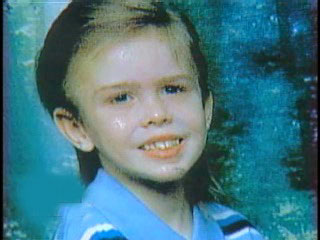
expand
collapse
Holding funeral for Ricky complicated by court case
Seven months ago, hundreds of volunteers searched for Ricky Holland, on foot, by helicopter, even underwater.
Today the body of the slain 7-year-old lies unclaimed in a Michigan State University forensics laboratory, and strangers have stepped forward offering to pay for the funeral of the child whose adoptive parents are charged in his death.
Ingham County Medical Examiner Dean Sienko said Monday that he can't release the body, which was found Jan. 27 in a rural Ingham County ditch, until legal issues are worked out. But his office was swamped with offers from strangers anxious to provide the child with a dignified end.
The issue is determining who in the family gets the remains," Sienko said. "Typically we contact the next of kin, (but) this is complicated.
"Since he was adopted, his biological parents have no rights to his body.
"So now we have to work through the adopted families, and we will proceed in the normal line of succession. It's my responsibility to determine the next of kin."
Sienko said no family members have requested the remains. To do so, they would need to file a petition with the state Department of Human Services. If nobody claims the body, it would be up to Human Services to provide a burial or cremation.
Meanwhile, several people also called The Detroit News with offers to provide final rites for Ricky.
One church pastor wrote to say he would provide the services, and others called willing to start fundraising drives to support a memorial or scholarship fund in Ricky's memory.
Ray St. Clair of Brighton was among those moved by the story of the hungry and abused little boy.
"We've got to put a park bench up for this kid or something," he said. "This hit me in the heart."
You can reach Karen Bouffard at (734) 462-2206 or kbouffard@detnews.com.
Source:
www.detnews.com/apps/pbcs.dll/article
?AID=/20060215/METRO/602150330/1003
Marin Wants CAS Oversight
February 14, 2006 permalink
Ontario's Ombudsman has issued another press release in his campaign to get jurisdiction over Children's Aid Societies. A contrary view follows the press release.
expand
collapse
PRESS RELEASE
Ombudsman Ontario
FEBRUARY 14, 2006 - 12:30 ET
Ombudsman Ontario: Proposed Legislative Changes Fall Short of Extending Independent Oversight to Children's Aid Societies
TORONTO, ONTARIO--(CCNMatthews - Feb. 14, 2006) - The Ministry of Children and Youth Services' proposed amendments to Bill 210, the Child and Family Services Statute Law Amendment Act, fall far short of what is needed to ensure independent, third party, investigative oversight of Children's Aid Societies, according to Ontario's Ombudsman, Andre Marin.
In a letter sent to the Minister on Monday, the Ombudsman wrote: "The Ministry's proposal falls far short of what the citizens of Ontario, in particular, children in need of protection, deserve."
Mr. Marin, who has called on the legislature to extend Ombudsman oversight to Children's Aid Societies, expressed concern and disappointment at the proposal which includes additional internal complaints mechanisms and expanding the mandate of the Child and Family Services Review Board.
"It's a stop-gap measure, which does not go far enough," said Mr. Marin. "All it does is add another layer of bureaucracy to internal processes. "
The Ombudsman also pointed out that the Child and Family Services Review Board, which will operate under a limited jurisdiction, lacks both investigative powers and the power to address systemic issues affecting children and families. "You are talking about protecting our children. How many more cases like Jeffrey Baldwin will there be before the government wakes up and sees that we need stronger accountability, the kind that comes from having an independent watchdog with strong investigative powers?
"This proposed scheme still leaves us at the back of the oversight pack," said Mr. Marin, referring to other provinces in Canada, which have independent oversight of child welfare matters. "I was hoping we would move forward, instead we've gone nowhere."
Mr. Marin further noted that Ministry officials were unable to provide him with any answers as to why the proposal to bring Children's Aid Societies under the umbrella of Ombudsman oversight was rejected. This is something which has received wide public support and which makes eminent sense. "What are they afraid of?" he said yesterday upon reviewing the Government's proposed changes to Bill 210.
This press release is also available in French.
The Ombudsman is an officer of the Legislature and is independent of both the political process and government administration. Generally an office of last resort, the Ombudsman investigates and resolves complaints about provincial governmental organizations and recommends corrective action. Services are free and confidential. Other languages can be arranged. For further information, call 416-586-3300, TTY 1-866-411-4211 or visit our website: www.ombudsman.on.ca
Backgrounder
Re: Independent Oversight of Children's Aid Societies
- Children's Aid Societies do not come within the Ombudsman's jurisdiction.
- The Ombudsman received 436 submissions and complaints from January 1, 2005 to February 13, 2006 regarding the need for greater oversight and accountability of Children's Aid Societies.
- Types of complaints:
- concern about care of children by CAS
- concerns about dealings with CAS
- denial of access to grandchilden
- threat of removal of child
- sexual abuse by CAS staff
- concerns about CAS allegations
- concern about child abuse register administration
- refusal to disclose information
- concerns about CAS removal of child
- concerns about access and custody
Bill 210
- Bill 210 provides an opportunity to enhance independent oversight of Children's Aid Societies by extending the Ombudsman's jurisdiction to complaints about Children's Aid Societies.
- The Ombudsman investigative process provides a credible accountability mechanism for the child protection system. Administrative conduct of Children's Aid Societies has the potential for seriously and dramatically impacting the lives of Ontarians and it should be subject to independent investigation and systemic review of administrative practices.
- The costs of implementing expanded jurisdiction of the Ombudsman in this area would be minimal, given that the infrastructure and experience already exists.
Other Jurisdictions
Five other provinces (Alberta, British Columbia, Manitoba, New Brunswick and Nova Scotia) have Ombudsman oversight of child welfare issues including child protection
- In Alberta, the Ombudsman has jurisdiction to review the conduct of government officials who administer the child protection system in that province with the exception of First Nations child protection services.
- In British Columbia, the Ombudsman has authority to investigate children's services provided by the Ministry as well as services provided by private agencies.
- In Manitoba, the Ombudsman can investigate children's aid societies and other childcare agencies because of their responsibility to the Crown under The Child Welfare Act.
- In New Brunswick, the Ombudsman has jurisdiction over child welfare issues, which are the responsibility of a department of provincial government.
- In Nova Scotia, in accordance with s. 2(a) of the Ombudsman Act and the Designation of Agencies Regulations, child welfare agencies and child-caring facilities licensed under the Child and Family Services Act are within the Ombudsman's jurisdiction. The Act was amended in May 2004 and new regulations approved by cabinet in December 2004 to provide the Ombudsman with clear jurisdiction over these bodies.
Saskatchewan, Quebec and Newfoundland and Labrador have independent investigative oversight of child protection issues through separate offices:
- In Saskatchewan, the Ombudsman has jurisdiction to consider complaints about the child protection system, which is administered through a government ministry. Generally, the Children's Advocate, which is essentially a specialized Ombudsman, deals with issues affecting children. However, the Ombudsman does consider complaints relating to child services brought by others e.g. parents.
- In Quebec, child protection services are provided through another oversight body with investigative authority.
- In Newfoundland and Labrador has a Child and Youth Advocate that has investigative powers.
CONTACT INFORMATION
Ombudsman Ontario
Gail Scala
Manager, Communications
(416) 586-3402
gscala@ombudsman.on.ca
www.ombudsman.on.caSource: press release from Ombudsman
Earlier in this debate, the OACAS issued a report Ontario's Children's Aid Societies are Highly Regulated and Accountable. In case of expiry, here is our local copy of their holocaust denial.
Addendum: Here is a letter to the legislature on the same subject:
expand
collapse
From: Dolores A. Sicheri
To: anne_stokes@ontla.ola.org
Sent: Wednesday, February 15, 2006 9:07 AMSubject: Bill C210
Members of the Social Policy Committee of Ontario Legislative Assembly:
Gentle men and women
Minister Mary Ann Chambers' proposed amendments to Bill C210 do not go far enough to protect the rights of parents and children of Ontario. As an advocate for families, I respectfully request that the Ontario Ombudsman be given the oversight right of public watchdog with appropriate funding to fulfill the role.
The "private corporation" administrative setup of Children's Aid Societies has the potential for abuse. These corporations, funded with public dollars, should be subject to an independent and public review of its practices.
Five other provinces (Alberta, British Columbia, Manitoba, New Brunswick and Nova Scotia) have identified the need for increased independent monitoring and have already given the Ombudsman oversight in child welfare issues including child protection.
The taxpayers of Ontario deserve transparency and accountability.
Dolores Sicheri
311 Taylor Drive
Lakeshore, Ontario N8N 4K9
519-735-7818
Don Bortz on DFCS
February 12, 2006 permalink
When baby Dylan Bortz died from an accident (the autopsy cannot determine a definitive cause), Georgia child protectors snatched the other child from the family. The family has established a blog at www.savejacksonbortz.com/. The entry for February 11 is an essay on child protection. The second half, not dealing with the facts of his own case, appears below. We can confirm his conclusion, in six years and hundreds of families interviewed, we have not found a single parent or foster child who reports a good experience with child protectors.
expand
collapse
You have no business being in 70% of your cases from the get-go, let alone the amount of cases where you "substantiate abuse", and later find that judgment was a wrong one. Those are thousands of families you do, YOU DO TERRORIZE, persecute, and wrongfully abuse. As long as DFCS continues to wield a broadsword for a neurosurgery situation, they will continue to destroy family by family. Thousands of families in danger because your protocol works on a system of unfairness, biased opinions, non-existent paperwork, and this idea that all children are in need of saving.
What is the need to seal the child's name in a deprivation case? Please explain. The reason Jackson is known is because he has so many hands trying to pull him away from this system.
Our children have no faces, no names. They get kidnapped and muzzled. They are removed from us under false pretenses, false paperwork, and empty threats and at no time does DFCS concern themselves with their rights. My son represents a percentage pay increase to someone's annual paycheck.
How is that his best interest? The more kids in the system, right or wrong, it doesn't really matter, the more money YOU make. From Case worker to Foster parent, it is a business; from government funds to garnishing wages for child support (even in relative placement where things can be handled privately.)
If anyone from DFCS wants to work WITH us and not AGAINST us, we welcome it. But we tried that in the beginning. You were innocent; you proved yourselves guilty. I wish we had been given that same chance.
Bottom line is - Our children are placed in danger by this system.
Children have a right to an identity in deprivation cases. They have rights that need ensuring. There is no bonus check for ensuring those rights, is there? No, I don't get a check for trying to save my son from YOUR system of shadows, do I? I bet I do it because I love my child.
I bet that's why an enormous amount of families fight this system.
When a system is established that gives those identities back to the children, when we have a system that is not over-zealous, when we have a system where the accused families can face those that accused them, when we have a system that holds its operators accountable for their lack of judgment and their mistakes, when we have a system that operates with some common sense, then we have arrived at THE STARTING POINT of a system that works.
You are facing families that you have wronged. That you have refused to not just believe, but to listen to in the first place.
A lack of due process in this agency is what keeps the Smiths from their child. A lack of common sense by this agency is what keeps Ms. Gomez from her baby. An over abundance of biased opinion by this agency is what keeps the Lane family and the Barnett family sundered. Stubbornness by this agency is what keeps the Bortz family apart.
I am still waiting for one post, just one post from someone who has benefited from DFCS intervention. You call this website "one-sided", why aren't any persons you have "helped" stepping forward? The truth is NO ONE sees all the great magic wonderful things in a child when you strip them of identity and rights. You DO see a lot of tears, pain and anguish.
If you do not like being called terrorists, then do not terrorize. Revise the system.
Don Bortz
Father of Dylan and JacksonSource: Save Jackson Bortz website, entry for February 11, 2006
More on Wanda Young
February 12, 2006 permalink
CTV has an in-depth story on the case of Wanda Young, victim of a false allegation. It is the story of a wolf devoured by wolves, using the same methods they ordinarily use on sheep. The story traces the steps by which an unfounded allegation leads to total ruin for the victim. Thanks to an alert reader for finding this article.
expand
collapse

Cloud of Suspicion
W-FIVE Staff, Updated: Sat. Feb. 11 2006 7:14 PM ET
In 1992, Wanda Young was a student at Memorial University in St. John's, Newfoundland. Wanda had always wanted to be a social worker and help abused children. She had been going part time to Memorial and wanted to be accepted into full time studies in Social Work Department.
 In 1992, Wanda Young was a student at Memorial University in St. John's, Newfoundland.
 Wanda's father Gordon Young is a cabinetmaker.
 Professor Leslie Bella
 Andrew Caddigan, a front line social worker with almost thirty years experience with young offenders.
 Gillian Butler
It was a big dream for a girl from Spaniard's Bay, a small out port about eighty-five kilometers from St. John's. Her father Gordon Young is a cabinetmaker and her mother Barbara once worked in the local fish plant. Wanda is the middle child in this large close-knit family and ever since she was small she had one thing in mind — to become a social worker. When she told her father she intended to pursue her dream, he wasn't surprised. "She was cut from that cloth, says Gordon, "that's what she wanted to be."
For Wanda, being a social worker was more than just a career — it was her vocation. "I just felt in my heart and soul that I had something that I could do for these kids. I don't know, I just wanted to help them out in any way I could." recalls Wanda.
In 1994, after four years of university courses, her marks were slightly below the admission rate of 65 per cent and the competition for placement was high — she didn't get in. So she went to the head of admissions and asked her what she should do. Her advice floored Wanda. "It was at this point where she told me that they didn't think I had what it takes to be a social worker. And if I wanted to pursue a career in social work she would have to ask me to go elsewhere." But there was nowhere else in the province for Wanda to go. Hurt and confused she left the meeting in tears — and left behind her dream of a career in social work for good.
What Wanda didn't know was the university falsely suspected her of sexually abusing children.
Wanda had written a twelve-page term paper about juvenile sex offenders. The last two pages contained an appendix entitled "Case Study", a graphic and lurid account written by an actual teenage sex offender who would molest the children she babysat. Wanda had taken it word- for- word from a textbook, but she had forgotten to add a footnote.
She had written the paper for a long distance course taught by a social work professor, who was away on a research project in Labrador. The teacher was Professor Leslie Bella. When she read the appendix to Wanda Young's paper, alarm bells rang. She thought Wanda was writing about her own life. "There was attached to the paper was a first-person confession to being a child sexual abuser written by a young woman who was abusing her children in her care, says Professor Bella, "there was no reference, no citation indicating where it was taken from."
Professor Bella felt the suspected confession could well be a cry for help from Wanda. So she consulted her director, Professor Bill Rowe. Professor Rowe is a leading expert on child abuse. He contacted Newfoundland's Child Protection Services to warn them about Wanda Young. He then wrote a letter suggesting the RCMP investigate. But he didn't send the entire 12 pages — he only attached the alarming Case Study, which read like a confession.
But nobody from the RCMP or Newfoundland's Child Protection Services called Wanda. And when Professor Bella contacted her, it was on an entirely different subject. Professor Bella called Wanda and suggested that she had self-plagiarized the paper. Wanda had actually written the paper for another course and naively had submitted it to Professor Bella's class. The professor gave her a zero and she failed the course.
Wanda thought this was the end of the story. But it wasn't — based on the false suspicions Social Services now had a file on Wanda as a potential child molester. And from 1994 to 1996, that file traveled around Conception Bay to a half dozen out port community welfare offices. From Carbonner to St. John's more than twenty different social workers were handed the file on Wanda. A file that Wanda never knew existed. Even when the RCMP in Bay Roberts got the file - just five minutes away from her family home. But while everyone else talked - nobody called Wanda.
It wasn't until about two years later that Wanda had any idea of what had happened. She and her partner Roy received a call from the Child Protection unit in St. John's. They asked Roy to come in to discuss a matter concerning Wanda and his two young children he had from his former marriage. Roy and Wanda raced into the social services office and were confronted with the Case Study. The social worker asked him if he had any reason to believe that Wanda was sexually abusing his children. The social worker placed the Case Study in front of him and quickly he and Wanda sorted out the confusion. Wanda went home, found the term paper and showed it to the social worker.
Within twenty-four hours, Newfoundland's Child Protection Services sent her a letter clearing her of their suspicions.
Wanda thought this disturbing episode in her life was finally over, but it was just beginning. She and Roy thought it was appropriate for Memorial University to issue an apology but they refused. Explains Professor Bella: "In a situation where there's a possibility of child sexual abuse, you have to be extremely careful not to put the children in danger by doing the investigation yourself while it's happening."
So what should the professor have done? We asked Andrew Caddigan, a front line social worker with almost thirty years experience with young offenders. Says Caddigan:
"You'd have to be a moron to make some of these decisions I mean before you make any statement to anyone concerning the idea that this person could be a threat to children, you investigate it. Then investigate it again and then investigate it again."
But Memorial University stood firm and believed that professor Bella and Rowe did no wrong. Wanda Young met with the university on five occasions asking for an official apology but they refused to give her one.
So Wanda went on to work in a series of low paying part time social work positions — as a caseworker and as a guard at a juvenile detention centre. It was tough work and she received good feedback from her superiors like Andrew Caddigan but never was able to move up into more senior positions.
And one day while working at the Confederation government building in St. John's Andrew Caddigan overhead a group of people discussing who would be good for a promotion and heard Wanda's name come up. "I heard one of the workers say — but Wanda has been red-flagged."
Six years after meeting with the social worker whom she thought had cleared her name, Wanda found out through Andrew Caddigan that she was red-flagged and her name was on a registry within the ministry as a suspected child abuser.
A teary-eyed Wanda recalls: "Basically my resume got passed over because I was red flagged as an alleged sex offender. I was very angry.
And she understood now why her career was being held back. And a simple mistake made eight years earlier was causing a major disruption in her life.
In 2002, Wanda Young sued Memorial University. In October 2003 her case went to court in St. John's. After a three-week trial that made headlines in Newfoundland, the six-person jury found Memorial University, Professor Bella and William Rowe negligent and granted Wanda a damage award of over $800,000.
Wanda had her day in court and finally felt vindicated. But her nightmare was far from over. Memorial University appealed the case and won. Wanda had received about $300,000 of the $800,000 award, but had to pay it back. It was a devastating. "I still can't understand how somebody can take that away," says Wanda, "I can't believe somebody's letting them off for what they did. I makes no sense that they can do this to an individual and get off with it."
Wanda had one last chance to reverse the appeal court's decision. She took her case to the highest court in the land, the Supreme Court of Canada. At best, it was a long shot. The Supreme Court of Canada receives hundreds of applications and accepts about thirteen percent of the cases.
But in October 2005 they heard Wanda's case and in January 2006 made a decision. It was unanimous - all seven Supreme Court judges sided with Wanda Young. They dismissed all of Memorial University's arguments and upheld the original jury's verdict.
It was a big moment for Wanda, her family and her lawyer Gillian Butler. W-FIVE caught up with Wanda and her family at her lawyer Gillian Butler's office in St. John's. They were ecstatic about the ruling but Gillian Butler thinks there are larger issues for the rest of the country.
"The most profound one is you cannot make a report without a foundation. You cannot make an unjustifiable report because the consequences to an individual who was totally innocent are too significant," says Butler.
But not everyone agrees. Peter Dudding of the Child Welfare League of Canada thinks this case will have a negative effect on child welfare reporting practices across the country.
I'm worried about the family doctor, the school teacher, perhaps the police officer, those people who are dealing a lot with children, who may not be quite as well informed around their responsibities are and maybe worried about what their liabilities might look like," Dudding told W-FIVE's Victor Malarek in an interview.
Gillian Butler disagrees. "The Supreme Court of Canada says the university had no information. This ruling doesn't affect a case then people truly have information that a child is in need of protection. One, there was no child. Two, there was no information. End of story."
W-FIVE asked Memorial University for an interview but they didn't return our telephone calls. They did issue a press release saying they accept the Supreme Court decision and have promised to write Wanda a letter of apology.
And after all, that's all Wanda really wanted in the first place.
Source: CTV
Australia to End Parental Authority
February 11, 2006 permalink
Australia will soon be coercing parents to execute contracts requiring them to follow state orders in their conduct inside their homes.
expand
collapse
The Australian
Neglectful parents to sign court contracts
AAP
February 06, 2006COURTS will be able to order parents of children at risk of neglect to sign parenting contracts under new laws to be passed in NSW.
The parental responsibility contract law would be the first of its kind in Australia.
Premier Morris Iemma said the contracts, which would be lodged in the Children's Court, could require parents to undertake parenting programs, stop taking illegal drugs or quit drinking excessive amounts of alcohol. The Department of Community Services would be able to apply to the court for contracts to be drawn up. Parents who failed to sign the contracts or meet their obligations would risk having their children placed in care.
"We know that the majority of people take their responsibilities as parents very seriously," Mr Iemma said yesterday.
"If parents want help then we will provide it, but the Government cannot replace the integral role that parents need to play."
Community Services Minister Reba Meagher said studies showed that of 1000 children neglected by their parents, 256 would come into contact with the juvenile justice system.
Source: the Australian, pointed out by K Karolak
Daycare Harmful
February 10, 2006 permalink
Professional child protectors will be astonished that pre-schoolers fare better when cared for by mothers than by daycare centres.
expand
collapse
Quebec daycare bad for children
study: Rise in aggressiveness, hyperactivity; 'An increased use of child care is associated with a decrease in their well-being'
KAZI STASTNA
The GazetteThursday, February 02, 2006
Quebec's much-heralded universal child-care program might be good for the economy, but not for the kids enrolled in it, a study by a Toronto-based think tank says.
The study, carried out for the C.D. Howe Institute, found that while $5-a-day child care had positive economic impacts by increasing the proportion of working mothers in Quebec by 21 per cent - more than twice the rate in the rest of Canada - it had negative effects on the well-being of children and parents.
Comparing children age 4 or under in Quebec with those in the rest of Canada from 1994 to 2003, the researchers noted the increase in everything from
aggressive behaviour to throat infections was much greater
in Quebec - suggesting that children were worse off after the
$1-billion-a-year program was introduced in 1997.
The study was done by economists Michael Baker of the University of Toronto, Jonathan Gruber of the Massachusetts Institute of Technology and Kevin Milligan of the University of British Columbia.
They analyzed data on 33,000 children of two-parent families, collected by Statistics Canada for its bi-annual National Longitudinal Study of Children and Youth. In that study, parents answer questions on their children's behaviour, such as how often they fight with other kids, are fearful or nervous, or are hyperactive.
The researchers found that in the post-universal daycare period, aggression among 2- to 4-year-olds increased by 24 per cent in Quebec, compared with one per cent in the rest of Canada.
The relative increase in hyperactivity and anxiety was also substantial, while certain social and motor skills declined.
The proportion of parents reporting nose or throat infections in newborns to 2-year-olds rose by about 20 per cent in Quebec, but stayed constant in the rest of Canada.
"For almost every measure, we find an increased use of child care was associated with a decrease in their well-being relative to other children," the authors write.
The well-being of parents also declined, with more mothers reporting depression. There was also a greater incidence of hostile parenting and dissatisfaction with spouses.
The authors acknowledge some of the effects might simply be a result of parents of children in daycare reporting incidents more often. But the researchers point to a 2003 study by the U.S.-based National Institute of Child Health and Development Early Childcare Research Network that also linked disobedience and aggression to time spent away from maternal care.
The findings could also simply reflect an earlier manifestation of problems children will face anyway once they enter school, Baker said. That's why more study is needed on whether the effects are short- or long-term.
The study should give pause to those advocating extension of the Quebec program federally, the authors argue. The report comes as the incoming Conservative government in Ottawa has shifted attention away from a national child-care program, advocated by the Liberals, to direct subsidies to parents.
"The more people that study (the Quebec program) from a variety of perspectives, the better off we're going to be," Baker said.
The Association quebecoise des centres de la petite enfance, which represents public daycares in the province, said yesterday it would not comment on the report until later this week.
The study is available online at www.cdhowe.org/english/whats_new/whats_new.html
kstastna@thegazette.canwest.com
Source: Montreal Gazette
Note: The text of the study (pdf) is at www.cdhowe.org/pdf/ebrief_25_english.pdf.
Amish Family Falsely Accused
February 10, 2006 permalink
When an Amish baby died, child protectors snatched the rest of the family, even interfering with the funeral. The easy part was diagnosing the true cause of death. The hard part was getting child protectors to give the children back to their family, achieved only with agitation in the press. The article is by Tom Shachtman in the Smithsonian Magazine.
expand
collapse
Medical Sleuth
To prosecutors, it was child abuse - an Amish baby covered in bruises, but Dr. D. Holmes Morton had other ideas
By Tom Shachtman, Smithsonian magazine, February 2006


It was every parent’s nightmare: a few days before Christmas 1999, Elizabeth and Samuel Glick, Old Order Amish dairy farmers in rural Dornsife, Pennsylvania, an hour’s drive north of Harrisburg, found their youngest child, 4-month-old Sara Lynn, gravely ill. They rushed her to a local hospital, from where she was soon transferred to the larger Geisinger Medical Center in the next county. There, a doctor noted a hemorrhage in her right eye and extensive bruising on her body, and suspected that her injuries were caused by child abuse.
Alerted to the doctor’s suspicion, the police and officials from the Northumberland County Children and Youth Services descended on the Glicks’ farm during the evening milking, and took away the couple’s seven other children, all boys, ranging in age from 5 to 15. The boys were separated and placed in non-Amish foster homes. Sara died the next day, and when the county coroner found blood in her brain, he declared her death a homicide.
At Sara’s funeral, on Christmas Eve, Elizabeth and Samuel were not permitted to speak privately with their sons. By that time Samuel had already contacted the Clinic for Special Children in Lancaster County, and pleaded with its director, pediatrician D. Holmes Morton—the world’s leading authority on genetic-based diseases of the Amish and Mennonite peoples—to find the cause of his daughter’s death.
The Amish are Anabaptists, Protestants whose forefathers were invited by William Penn himself to settle in Pennsylvania. Today there are almost 200,000 Amish in the United States, of whom 25,000 live in Lancaster County, in southeastern Pennsylvania between Philadelphia and Harrisburg. Some of their customs and religious values have changed little over the past century.
Most people know that the Amish wear conservative clothing, travel mainly by horse and buggy, eschew most modern technologies, and refuse to use electricity from the common grid. The Amish also remove their children from formal schooling after the eighth grade, do not participate in Social Security or Medicare, and in many other ways maintain their sect’s separateness from mainstream America.
But most people don’t know that the Amish, and their spiritual cousins the Mennonites, experience an inordinately high incidence of certain genetic-based diseases, most of which affect very young children. Many of these afflictions are fatal or disabling, but some, if diagnosed and properly treated in time, can be managed, enabling the children to survive and lead productive lives.
That possibility—of proper diagnosis and intervention to save children’s lives—was what intrigued Morton, then a recently minted M.D. on a postdoctoral fellowship. A colleague at Children’s Hospital in Philadelphia asked him one evening in 1988 to analyze a urine sample from a 6-year-old Amish boy, Danny Lapp, who was mentally alert but wheelchair-bound because he had no control over his limbs—perhaps from cerebral palsy.
But when Morton analyzed the urine, he saw no evidence of cerebral palsy. Rather, in a diagnosis that must have seemed to others like the amazing deductions of Sherlock Holmes, he recognized the footprint of a genetic-based disease so rare that it had been identified in only eight cases in the world, none of them in Lancaster County. Morton’s was an educated guess: he was able to recognize the disease, a metabolic disorder known as glutaric aciduria type 1, or GA-1, because it fit the pattern of diseases he had been studying for almost four years, those that lay dormant in a child’s body until triggered into action.
Typically, a child with GA-1 shows no sign of the disorder until he or she comes down with an ordinary childhood respiratory infection. Then, perhaps prompted by the body’s immune response, the GA-1 flares up, making the child unable to properly metabolize protein-building amino acids, which in turn causes a buildup in the brain of glutarate, a toxic chemical compound that affects the basal ganglia, the part of the brain that controls the tone and position of the limbs. The result, permanent paralysis of the arms and legs, can resemble cerebral palsy.
Sensing that there might be other GA-1 children in the deeply inbred Amish community—some of them, perhaps, treatable—Morton visited Danny Lapp and his family at their Lancaster County home. Indeed, the Lapps told him of other Amish families with similarly disabled children. “The Amish called them ‘God’s special children,’ and said they had been sent by God to teach us how to love,” says Morton. “That idea deeply affected me.”
In the following months, Morton and his fellowship supervisor, Dr. Richard I. Kelley of Johns Hopkins University, visited the other families with afflicted children and collected from them enough urine and blood samples to identify a cluster of GA-1 cases among the Amish. “We very quickly were able to add to the world’s knowledge base about GA-1,” Richard Kelley recalls. “For a geneticist, that’s exciting.”
Rebecca Smoker, an Amish former schoolteacher who had lost nieces and nephews to GA-1 and now works for Morton’s Clinic for Special Children, vividly remembers the sense of relief that began to spread through the close-knit Amish community. Previous doctors, Smoker recalls, had been “unable to tell parents why their children were dying,” but Morton was able to identify the disease. That was comforting: “If you can say, ‘my baby has this,’ or ‘my baby has that,’ even if it’s an awful thing, you can feel better about it,” says Smoker.
Later in 1987, Morton began driving out from Philadelphia to Lancaster County to manage the care of children with GA-1. Many of the patients who had been previously diagnosed with cerebral palsy were paralyzed beyond repair, but there were some with less advanced paralysis whom Morton was able to help with a new treatment regimen including a restricted-protein diet and, when needed, hospital care. He also learned, through testing, that some of the affected children’s younger siblings—who had not yet suffered paralysis—had the gene mutation and biochemical abnormalities. If he could manage these children through their earliest years, when they were particularly vulnerable to the effects of GA-1, he believed, as he says now, that he could “alter the likely devastating course of the disease.”
Several of the children came down with respiratory infections in the months that followed. Morton’s strategy—“immediately getting them to a hospital, giving them IV glucose and fluids, anticonvulsants, and reducing their protein intake to get them past the crisis points”—worked, and they escaped without severe injury to their basal ganglia. Morton had gone beyond giving the horror its proper name; he had found ways for Amish parents to help save their other children from the ravages of the disease.
Now, nearly a decade later, Sara Lynn Glick’s death presented Morton with a new challenge. He was determined to figure out what had killed her, to exonerate Elizabeth and Samuel Glick, and to help them retrieve their seven sons from non-Amish foster homes.
Morton’s first clue to what had actually happened to Sara came in a conversation with her mother. “Liz Glick told me that she had to put socks on Sara’s hands, because Sara had been scratching her own face,” Morton says. Such scratching, he knew, was a likely sign of an underlying liver disease. Another clue was that Sara had been born at home, where a midwife had not given her a vitamin K shot—standard procedure for hospital-born babies, who are given the shot to ensure that their blood will clot properly.
Morton concluded that Sara’s death was due not to child abuse but to a combination of genetic disorders: a vitamin K deficiency, coupled with a bile-salt transporter disorder that he had previously found in 14 other Amish children and some of Sara’s cousins.
Convincing the authorities, however, wouldn’t be easy. So Morton called a friend, Philadelphia lawyer Charles P. Hehmeyer. “You’re always looking for good pro bono cases,” Morton remembers telling Hehmeyer. “Well, here’s a doozy.” Together, they went to see the Glicks in Dornsife, where they sat in a candlelit kitchen, long after dark, as Liz Glick asked through tears if she would be going to jail.
Sure of his diagnosis, Morton went—uninvited—to a meeting between doctors and the district attorney’s office at Geisinger Medical Center, hoping to point out that the hospital’s own records would conclusively demonstrate that Sara’s injuries had not come from child abuse. He was shown the door.
The clinic for Special Children in Strasburg, Pennsylvania, lies only a few hundred miles from Morton’s childhood home in Fayetteville, West Virginia. But for him the journey was long and full of unexpected turns. The second youngest of a coal miner’s four sons, Holmes flunked all of his science classes in high school, sank to the bottom of his class and withdrew before graduation. “I was never an easy person to teach,” he admits. “I was always doubting, questioning, arguing.” He took a job in an engine and boiler room of a freighter on the Great Lakes—“my first encounter,” he says, “with people who were very intelligent but had little higher education.” Focusing on practical shipboard problems and doing plenty of physical labor were a spur to developing his mind: within a few years he passed an examination for a commercial license to operate the boilers, and, then completed his high-school equivalency degree.
Drafted in 1970, Morton spent four years “working the Navy’s boilers”; off duty he read about, and then took correspondence courses in, neurology, math, physics and psychology. After the Navy, he enrolled at Trinity College in Hartford, Connecticut, volunteered at a children’s hospital and set his sights on a medical degree.
At Harvard Medical School Morton developed an interest in what he calls “biochemical disorders that cause episodic illnesses.” Like a sudden storm troubling a ship on the Great Lakes, these disorders disrupt in a seemingly static environment and do great damage—maybe irrevocable damage. But afterward everything is calm again. As a resident at Boston Children’s Hospital in 1984, Morton met a child who had been diagnosed by the admitting physician as having Reye’s syndrome, a buildup of pressure in the brain and an accumulation of fat in the liver and other organs that often occurs during a viral infection such as the flu or chicken pox. Morton thought the diagnosis mistaken, substituted his own—a metabolic disorder—and accordingly changed the child’s diet and treatment regimen. The child recovered and now lives a normal life, and the case gave Morton the confidence, three years later, to discount the cerebral palsy diagnosis for Danny Lapp and diagnose him with GA-1 instead.
Another such “episodic” disease, this one not found among the Amish but among the much larger Mennonite community, had piqued his interest in the late 1980s. Like the Amish, the Mennonites are Anabaptists. But they use some modern technologies, such as internal-combustion engines, electricity and telephones in the home.
Enos and Anna Mae Hoover, Mennonite organic dairy farmers in Lancaster County, lost three of their ten children, and had a fourth suffer permanent brain damage, before Morton arrived on the scene. Their ordeal began in 1970 with the birth of their second child. When the child became ill, refusing the bottle and going into spasms, “the doctors had no idea what was wrong,” Enos recalls in a low, even voice. When the boy was 6 days old he fell into a coma, and he died a week later at a local hospital. Four years later, when an infant daughter refused to nurse, the Hoovers took her to a larger hospital, where a sweet smell in her diaper finally alerted doctors to what was afflicting her and had killed her brother: Maple Syrup Urine Disease, or MSUD, which prevents the body from properly processing proteins in food. By then, however, the little girl had already suffered irreparable brain injuries. “Even with a later baby, it took three to four days to get a proper diagnosis,” Enos says. “We missed the crucial days where better treatment could have made a difference. Then a doctor asked us if we’d like to meet a Doctor Morton. We said yes, and we were amazed when he came to our house. No other doctor had ever come to see us or our babies.”
Around the time of Morton’s first visits with Enos and Anna Mae Hoover, he was realizing, as he would later write, that the “economic and academic goals of university hospitals” seemed to be “at odds with the care of children with interesting illnesses.” He concluded from his work with GA-1 and MSUD children that the best place to study and care for them was not in a laboratory or a teaching hospital but in the field, from a base in the area where they lived. With his wife, Caroline, a fellow West Virginian who holds a master’s degree in education and public policy from Harvard and had worked with rural communities and schools, Morton envisioned a free-standing clinic for Amish and Mennonite children who have rare genetic diseases.
Enos Hoover helped raise some money for the Mortons’ dream within the Mennonite community, and Jacob Stoltzfoos, grandfather of a child with GA-1 saved by Morton’s intervention, did the same among the Amish. Stoltzfoos also donated farmland in the small town of Strasburg for a clinic. Both Hoover and Stoltzfoos eventually accepted invitations to serve on the board of the as-yet unbuilt clinic, where they joined sociologist John A. Hostetler, whose pioneering 1963 book, Amish Society, first drew medical researchers’ attention to potential clusters of genetic disorders among Pennsylvania’s rural Anabaptists.
As Hostetler’s book makes clear, says Dr. Victor A. McKusick of Johns Hopkins University, the founding father of medical genetics, the Amish “keep excellent records, live in a restricted area and intermarry. It’s a geneticist’s dream.” In 1978, McKusick published his own compilation, Medical Genetic Studies of the Amish, identifying more than 30 genetic-based diseases found among the Amish, ranging from congenital deafness and cataracts to fatal brain swellings and muscular degeneration. Some had never been known before at all, while others had been identified only in isolated, non-Amish cases. “The diseases are hard to identify in the general population because there are too few cases, or the cases don’t occur in conjunction with one another, or the records to trace them back are incomplete,” McKusick explains. He adds that Morton, by identifying new diseases and by developing treatment profiles for diseases like GA-1 and MSUD, is not only building on the foundation that McKusick and Hostetler laid: he’s been able to create treatment protocols that doctors around the world can use to care for patients with the same disorders.
But back in 1989, despite the efforts of Hoover, Stoltzfoos, Hostetler, and Lancaster County’s Amish and Mennonite communities, there was still not enough money to build the free-standing clinic the Mortons wanted. Then Frank Allen, a staff reporter for the Wall Street Journal, wrote a front-page article about accompanying Morton on house calls to Amish patients, mentioning that Holmes and Caroline were prepared to place a second mortgage on their home to build the clinic and to buy a particularly critical piece of laboratory equipment made by Hewlett-Packard. Company founder David Packard read the article and immediately donated the machine; other Journal readers sent in money, and the clinic was on its way.
There was still no building, but the money and machinery were put to use in rented quarters, allowing the screening of newborns for GA-1 and MSUD. And then, on a rainy Saturday in November 1990, dozens of Amish and Mennonite woodworkers, construction experts and farmers erected the barnlike structure of the Clinic for Special Children, stopping only for lunch served by a battalion of Amish and Mennonite women.
Early in the year 2000, pressure from Hehmeyer, Morton and local legislators—and from a public alerted by newspaper stories—pushed the Children and Youth Services to move the seven Glick children from non-Amish foster homes into Amish homes near their farm. In late February the boys were returned to their parents. But Samuel and Elizabeth remained under investigation for child abuse in connection with Sara’s death. A week later, the Northumberland District Attorney’s office turned over the most important piece of evidence—Sara’s brain—to outside investigators. At the Philadelphia Medical Examiner’s Office, Dr. Lucy B. Rorke, chief pathologist of Children’s Hospital in Philadelphia and an expert on the pathology of child abuse, examined it during a teaching session with other doctors and students, and quickly concluded that Sara had not died of trauma or abuse.
A few weeks later, the Glicks, who had never been formally charged, were entirely cleared of suspicion. The family was relieved, and Morton was inspired: he accelerated his efforts to find the precise genetic locus of the bile-salt transporter disease so the clinic could better identify and treat it. Most newborns in Lancaster County were already being screened for a handful of the diseases that afflict Amish and Mennonite children. Morton wanted to add to the list the disease that took Sara Lynn Glick’s life.
“We don’t pick problems to research,” says the Clinic for Special Children’s Dr. Kevin Strauss. “The problems choose us. Families come in with questions—‘Why isn’t my child developing properly?’ ‘Why is this happening?’ ‘What causes that?’—and we look for the answers.” Strauss, a Harvard-trained pediatrician, joined the clinic because he agreed with its operating philosophy. “If you want to understand medicine, you have to study living human beings,” he says. “It’s the only way to translate advances in molecular research into practical clinical interventions. You can’t really comprehend a disease like MSUD, and treat it properly, without involving biology, infections, diet, amino acid transport, brain chemistry, tissues and a lot more.”
When Morton began his work among the Amish and Mennonites, fewer than three dozen recessive genetic disorders had been identified in the groups; today, mostly as a result of the clinic’s work, some five dozen are known. Cases of GA-1 have come to light in Chile, Ireland and Israel, and of MSUD in India, Iran and Canada.
The clues come from anywhere: working with one Amish family, Morton learned that a 14-year-old girl had kept a diary while caring for a terminally ill sister. Using information from the diary and other patients, the clinic was able to help map the gene mutation for a syndrome responsible for the crib deaths of 20 infants in nine Amish families—with implications, perhaps, for progress in solving SIDS (Sudden Infant Death Syndrome), which kills thousands of children each year in the larger population.
And at a Mennonite wedding two summers ago, family members rolled up their sleeves to have their blood drawn by Morton, Strauss and a clinic nurse. The team was trying to pinpoint a genetic defect that made the males of the family susceptible to a form of meningitis that had killed two of them. The tests revealed that, of the 63 people whose blood was drawn at the wedding, a dozen males were at high risk, and 14 of the women were carriers. The men were put on penicillin, vaccinated and given stashes of antibiotic to take if they became ill. Shortly after the wedding, the combination of antibiotics and immediate hospital care prevented one man from succumbing to a meningitis attack, possibly saving his life. “Genetics in action,” Morton comments.
But Morton’s approach to identifying and treating a disease is more than mere genetics. On an average morning, the clinic’s waiting room looks like any pediatrician’s office—albeit with most adults in traditional Amish and Mennonite dress—with children crawling about on the floor, playing with toys or sitting as their mothers read them books. The appearance of normalcy is actually deceiving, says Kevin Strauss. “Most of the kids here today have genetic diseases that, left untreated, can kill them or lead to permanent neurological disability.” Parents have brought their children, some from as far away as India, not only for the clinic’s renowned research capabilities but for its treatment. Donald B. Kraybill, one of the foremost scholars of the Amish, and the Senior Fellow of Elizabethtown College’s Young Center for Anabaptist and Pietist Studies, praises Morton’s “culturally sensitive manner,” which he says has won Morton the “admiration, support and unqualified blessing of the Old Order communities.”
The communities’ support is expressed, in part, through an annual series of auctions to benefit the clinic that are held by the Amish and Mennonites across Pennsylvania. These auctions raise several hundred thousand dollars of the clinic’s annual $1 million budget. Another chunk of the budget is covered by outside contributors, and the remainder comes from the clinic’s modest fees—“$50 for a lab test that a university hospital has to charge $450 for,” notes Enos Hoover.
About two years after Sara Glick’s death, Morton, Strauss, clinic lab director Erik Puffenberger, who holds a doctorate in genetics, and researcher Vicky Carlton from the University of California at San Francisco located the precise genetic site of the bile-salt transporter disorder, and devised a test that could tell doctors whether an infant might have it. If the test is done at birth, or at the first sign of a problem, no family will ever have to repeat the Glicks’ ordeal.
Or, perhaps, any other ordeal caused by diseases passed on genetically in the Amish and Mennonite communities. Morton and his colleagues believe that they’re within a few years of realizing a long-term dream: placing, on a single microchip, fragments of all the known genetic diseases of the Amish and Mennonites, so that when a child is born, it will be possible to learn—from comparing a small blood sample from the child with the DNA information on the microchip—whether he or she may be affected by any of a hundred different conditions, thus allowing doctors to take immediate treatment steps and prevent harm from coming to the child.
The clinic’s use of genetic information as the basis of diagnosis and the individualized treatment of patients make it “the best primary care facility of its type that exists anywhere,” says G. Terry Sharrer, curator of the Smithsonian’s Division of Science, Medicine and Society. And he suggests an analogy: over a hundred years ago, when Louis Pasteur’s germ theory of disease replaced the four humors theory, it took decades for a majority of doctors to understand and adopt the new approach. “Most of the switching didn’t occur until the next generation came out of medical school. Something similar is happening now with gene-specific diagnoses and treatment, as the aging baby-boom generation demands more effective medicine. The Clinic for Special Children shows that health care can be reasonably priced, highly tailored to patients and conducted in simply managed circumstances.”
If Sharrer is right, the clinic may be a model for the future of medicine. Even if it’s not, Morton’s contribution has not gone unnoticed. Three years after the clinic opened its doors, he received the Albert Schweitzer Prize for Humanitarianism, given by Johns Hopkins University on behalf of the Alexander von Humboldt Foundation. On being notified of the prize, Morton began to read about Schweitzer and found that the great German physician also came to medicine late, after a distinguished career in music and theology—and that he had established his famed hospital in Gabon at age 38, the same age Morton was when he began the clinic in Strasburg. In a speech accepting the award, Morton said that Schweitzer would have understood why the Clinic for Special Children is in the middle of Lancaster County—because that “is where it is needed...built and supported by people whose children need the care that the clinic provides.” After winning the award, partially in homage to Schweitzer and his love of Bach, Morton took up playing the violin.
Source: Smithsonian
Mother Compelled to Watch Abuse
February 9, 2006 permalink
Scandal has compelled the government of British Columbia to conduct an inquiry into the death of Sherry Charlie in foster care. In today's testimony the girl's mother describes watching as her child suffered abuse at the hands of her foster parent. This same anguish is shared by thousands of other parents who never get an opportunity to testify.
expand
collapse
Mother says she sensed Sherry Charlie's fear when they visited uncle's home
PORT ALBERNI, B.C. (CP) - The mother of a toddler who was beaten to death by an uncle told a coroner's inquest Wednesday she could tell her daughter was afraid when she was near the man.
Juliana Frank said she sensed fear in both her children when she went to visit the house where her daughter would die on Sept. 4, 2002. Sherry Charlie and her older brother Jamie appeared afraid of their uncle Ryan Dexter George, she said. But when she told the aboriginal children's agency that placed the children in the home about her fears, they refused to move them, said Frank.
She said the agency, Usma, told her that if they moved the children from George's home they would end up being separated.
"I did not want them going to a stranger's house," she testified.
Jurors wiped their eyes and loud sobbing could be heard in the courtroom as Frank, 24, described her daughter's fears.
"I knew she was afraid because she would never look at Ryan when I was around. I just saw the fear in her eyes," Frank said.
George pleaded guilty to manslaughter in 2004 and was sentenced to 10 years in prison. He originally said Sherry died when her brother pushed her down the stairs.
Sherry died 22 days after government agencies placed her in George's home in Port Alberni, located about 200 kilometres northwest of Victoria.
George had a lengthy criminal record, including convictions for violence, but aboriginal and provincial child welfare agencies approved the move without fully completing background checks.
Frank said she had concerns about George, but allowed her children to live at the home because her aunt Claudette Lucas, George's partner, was a gentle person and Usma said the move to the George home was the best way to keep the children together.
"I knew he was short-tempered and angry and that's why, in the beginning, I didn't agree with my daughter going there," Frank said. "I told Usma that."
She said she didn't recall signing a document in August 2002, that sent her children to the George and Lucas home.
Frank said she never knew why she ended up losing her children, although she admitted to an alcohol problem. When she was drinking, Frank said her children were always with her mother or a family babysitter.
Frank said there were allegations of neglect and that her children were not being fed properly, but "none of that was true."
The father of her children, she said, was hardly ever home during their six-year relationship. "I was practically a single mom," said Frank. "I wasn't getting any help from him."
Trevor Charlie, the children's father, was scheduled to testify Thursday. George is also scheduled to testify.
Sherry was 19 months old when she was beaten to death. Her death has sparked an examination of British Columbia's child protection system, including probes into how government and aboriginal children's agencies allowed Sherry to be placed in the home of a relative with an extensive criminal record.
Family members made an emotional plea Wednesday for the toddler's short life not to be in vain.
"Sherry was a sweet little girl," said Darlene Dick, her great aunt. "She was lovable. She was always smiling. She was always glad to see us. She knew who we were."
Dick said Sherry, who knew her as a grandmother, was a frequent visitor at her home in the remote Vancouver Island village of Ahousaht, located on the Island's rugged west coast near the tourist town of Tofino and accessible only by boat or float plane.
She said the inquest has been emotionally trying for all the families involved, but it's been especially difficult in the aboriginal community because it has touched so many lives.
"I'm glad that this is happening today so that it won't happen to any other child," Dick said outside the inquest. "It's affected all of our community."
Trevor Charlie sat in the courtroom as Frank testified. The two are no longer a couple, and Frank is expecting another child next month.
"On behalf of the family we want to say that this is important what's going on here," said Guy Louie, speaking on behalf of the Charlie family.
"We didn't want our little one's death to be in vain and we don't want it to happen to any other child, or have any other parents or grandparents or family to go through what our family is going through here," he said, surrounded by about 10 family members.
"We're hoping that our families can come together and heal together."
So far, the inquest has resulted in tough questions for the RCMP, which waited more than four months to launch a criminal investigation despite having a preliminary autopsy report that found Sherry suffered serious injuries.
Sherry's death has been the focus of intense political scrutiny since last July when the B.C. government released a long-awaited review of the case that cited poor communication and lax procedures between child welfare agencies.
The original government review resulted in at least six other reviews of the handling of Sherry's case.
Solicitor General John Les said budget cuts and government incompetence resulted in the failure to properly review the deaths of 713 children.
Source: Canadian Press
More Money for Baby-Stealers
February 8, 2006 permalink
Women's shelters, purportedly institutions to help abused women, are actually worse abusers of women than the husbands they flee from. Dufferin VOCA has interviewed four women who took shelter in Orangeville's Family Transition Place and lost their children as a result. Canada Court Watch has assembled a set of recordings of women's shelter inmates describing the true conditions inside. Now the Ontario government is increasing funding for women's shelters.
Back to Mom and Dad
February 8, 2006 permalink
Canada's new Conservative government is moving quickly to get mom and dad more influence over their children. One step is reduced funding for those social service agencies that otherwise would be caring for children. Howls of pain are already coming from the agencies, as is evident in this article from the Toronto Star, unfavorable to the Conservatives.
expand
collapse
Harper offers Quebec 'transition' child-care deal
Not clear whether other provinces will get similar deals
Feb 7, 2006. 05:01 PM, SUE BAILEY, CANADIAN PRESS
OTTAWA — Stephen Harper is facing a showdown with the premiers over his plan to scrap child-care deals that were years in the making.
The prime minister offered Tuesday to negotiate a "transition period" with Quebec before cutting off related funding to all 10 provinces after March 31, 2007.
It wasn't immediately clear whether other provinces will get similar offers before the Conservatives snuff the Liberal plan to set up a $5-billion national day-care system.
But leaders in Quebec, Ontario and Manitoba said Tuesday they expect the Tories to honour commitments made by the former government.
Ontario, Quebec and Manitoba signed five-year funding pacts, while the other provinces had one-year agreements in principle as they worked out details to negotiate longer terms. That process was interrupted by the recent federal election.
Ontario Premier Dalton McGuinty said Tuesday that his Liberal government has much invested in its child-care deal.
"All I know is that we worked long and hard to land the agreement we have in place and we are very reluctant to give that up. We think that serves the interest of Ontarians and serves them well."
Ontario's minister of children and youth services, Mary Anne Chambers, has repeatedly stressed that her government negotiated in good faith with Ottawa — not with the now defeated Liberals.
In Manitoba, there was similar resolve.
"We still have two signed agreements with the government of Canada," said Family Services Minister Christine Melnick.
"Our expectation is that they certainly will be honoured. We are very committed . . . to our five-year child-care plan."
Harper made a point of calling Quebec Premier Jean Charest earlier in the day.
Details have not been worked out on whether funding would be extended in Quebec or for how long, said Harper spokesman William Stairs.
"It was a cordial conversation. Basically what (Harper) said to him was that we would be moving forward with this and he offered to get together with Mr. Charest to discuss this."
The two men plan to meet soon in Ottawa, Stairs said.
"He started with the premier of Quebec because they have the most established (day-care) system in place, so we thought it would be a good place to begin discussion."
Will other provinces be offered transition periods?
"We'll see what happens," Stairs said. "We have a plan for child care. We ran on that plan and we intend to put that plan into place."
Harper announced just hours after being sworn in Monday that he'll move fast to end agreements negotiated over more than two years with all 10 provinces.
The Liberals committed $5 billion over five years to help create early-learning spaces across Canada.
But the Conservatives slammed the deal as a potential black hole of overspending that doesn't offer parents real choice.
They want to give parents $1,200 a year for each child under age six starting July 1. They will also offer $250 million in tax credits to employers and non-profit agencies that cover the full cost of providing new spaces.
Tories say the plan could create 125,000 spots over five years, but critics say tax incentives have failed in the past to motivate employers.
Charest has warned that child care falls squarely on Quebec's jurisdictional turf. The five-year deal signed by Quebec and Ottawa in October hands $1.1 billion to the province with few strings attached.
"We want the agreement reached with the former government to be respected," Charest said Tuesday in St-Georges-de-Beauce, south of Quebec City.
Bloc Quebecois Leader Gilles Duceppe pointed out that cutting the child care funds will cost Quebec $806 million over four years. That won't jibe with Harper's promise to correct the fiscal imbalance between Ottawa and the provinces, he said.
"That is far from resolving the situation. It's aggravating (it)."
In Quebec, parents pay $7 daily for care that costs the province $1.1 billion a year.
Demand for similar services is high across the country. According to national statistics, 70 per cent of women with children under the age of six have jobs, but there are regulated spaces for fewer than 20 per cent of those kids.
On the ground, there is growing confusion about what will become of new services, jobs and wage hikes already planned or in place.
"The child care movement is reeling," said Monica Lysack, executive director of the Child Care Advocacy Association of Canada. ``Within hours of being sworn in, Harper ripped the child-care program away from parents and children without any discussion.
"This is not how a minority government should behave. (Harper) got a clear message from Canadians when two-thirds of them supported other parties."
Conservative officials say their intentions were clear, and that Harper is simply doing what was promised.
Source: Toronto Star
Crown Ward Murdered
February 8, 2006 permalink
Child protection has failed for another crown ward. This time he was murdered.
expand
collapse
Metroland, Durham Region
Police releasing few details in teen's slaying
OSHAWA -- An investigation continues into the stabbing death of a teenager on a downtown Oshawa street.
Durham Regional Police are releasing few details about 15-year-old Jerome Bennett and the circumstances under which he died. Homicide Detective James Stewart-Haass would not say whether or not police have identified suspects in the slaying.
"All I can tell you right now is the investigation is moving forward," he said.
The boy's body was discovered around 8:30 p.m. Saturday in a lot at the Glazier Medical Centre, at Simcoe and Gibb streets. Police said there were obvious signs of trauma to the body, which sustained sharp-force injuries.
The incident marks the first homicide in Durham Region this year.
Not much is known about the boy. He is estranged from his north Oshawa family, a source said. The Durham Region Children's Aid Society has confirmed he was in the agency's care.
"Jerome Bennett was a Crown ward in the care of the CAS," said agency spokeswoman Jacqueline Spencer.
She would not comment on how long the boy had been under CAS protection, where he was living when he died, or where he was going to school.
"The only thing I can confirm is he was one of our Crown wards," Ms. Spencer said.
The boy is also unknown at the Second Chance youth drop-in centre in downtown Oshawa. Young people at the Mary Street shelter Tuesday morning said they did not know the boy and records indicated he had not visited the centre, said executive director Clarence Keesman.
The centre caters to a clientele aged 16 to 24. Mr. Keesman said the vast majority of Oshawa's homeless youth do not choose to be on the streets, but find themselves there when they're thrown out or find life at home intolerable because of abuse or other pressures.
The remainder of the story, relating to other deaths, is omitted
Source: Durham Region .com
First grader suspended for sexual harassment
February 7, 2006 permalink
A six-year-old boy is suspended from school for sexual harassment of a girl classmate.
expand
collapse
Brockton first grader suspended for sexual harassment
BROCKTON - A Brockton first grader was suspended for three days after school officials said he sexually harassed a girl in his class by allegedly putting two fingers inside the girl's waistband while she sat on the floor in front of him.
The boy's mother, Berthena Dorinvil, said she "screamed" about last week's suspension from Downey Elementary School, and added her son doesn't know what sexual harassment is.
"He doesn't know those things," she told The Enterprise of Brockton. "He's only 6 years old."
School officials declined comment to The Enterprise, citing the child's age.
"They would have not suspended the child without doing an investigation," said spokeswoman Cynthia McNally.
Dorinvil said the school principal, Diane Gosselin, called her to pick up her son Jan. 30. She said her son asked the principal if the police were going to come get him.
The principal told Dorinvil the girl complained to the teacher after her son touched the girl's waistband, hitting her skin, in a room full of children.
Dorinvil said her son told her he touched the girl's shirt, not her skin, after the girl touched him.
"He was playing with her," Dorinvil said.
Source: Boston Herald
CAS Improvements Needed
February 5, 2006 permalink
Past London Free Press articles on the subject of Children's Aid have been favorable to the child protectors. Here is an opinion piece printed in the paper on Friday, February 3, 2006, not availiable online.
expand
collapse
Children's Aid Must Protect kids at Risk
The trial of Torontonians Elva Bottineau, 54, and Norman Kidman, 53, in the death of their grandson, five-year old Jeffrey Baldwin, raises many questions about the Catholic Children's Aid Society (CCAS) of Toronto. A child is dead after being placed in the care of his maternal grandparents. The CCAS, which removed Jeffrey in the first place, must bear some responsibility in this tragedy. They are legally in charge of enacting child protection laws under their mandate and would have made some type of recommendation about this case. Also disturbing is the notorious Edith Sanders abuse case in London. Imagine having been adopted by a torturer who ended up being Canada's oldest female inmate, escaping a terror comparable to a concentration camp, including the fact the victims were ruthlessly branded with an "E" on their arm, and having to fight in a courtroom for years to get justice.
The abuse and torture profoundly affected many lives; the damage is incredible. A woman adopted by her, Kim Campbell, as well as the daughter of Sanders, and a woman kept as a slave, endured a long battle. It took decades for Sanders to be held to account. She was sentenced in her 80s to four years in prison. Superior Court Justice Edward Browne, who presided over the case, described it has having featured the most appalling evidence he had heard in 40 years.
Sanders died in September 2004, but litigation asking for responsibility by both the London police and the London Children's Aid Society remains. Campbell is in her late 40s and survived her own horror show of abuse, as well as witnessing the savage abuse of Beatrice Feick, the woman kept by Sanders as a slave. Feick is in many ways an older version of Jeffrey Baldwin, the difference being she is alive, which is amazing considering the tortures inflicted on her. The fact that an evil torturer was allowed to foster and adopt children or even raise her own, is incredible. The fact that a couple who had a history of child abuse had custody of Jeffrey is even more incredible. In both tragedies is a much larger issue: Where is the responsibility of Children's Aid Societies?
Bill 210, introduced by the provincial Liberal government, has made various recommendations for changing adoption, fostering and child welfare. I support some of these changes in addressing the needs of children. Of concern is Section 68, which reframes the process of official complaint procedures against a Children's Aid Society, nullifying the few mechanisms of complaint against them.
Numerous groups want the CAS to be more accountable, considering the volumes of other abuse cases historically, as well as those that continue to come to light. John Dunn, president of the Foster Care Council of Canada, is one of many who are concerned. Dunn has said the section removes responsibility from these agencies, leaving victims to complain to the perpetrators. Ontario Ombudsman Andre Marin recently approached the standing committee on social policy concerning Bill 210 to ask for investigative powers to oversee complaints regarding the Children's Aid Societies of Ontario. Anyone who is concerned about such serious cases of abuse should consider supporting the recommendations by the ombudsman. A petition to urge the government to give the Ontario ombudsman authority to investigate the CAS can be found online under the Foster Care Council of Canada.
It would be unconscionable for the government to remove responsibility from these agencies for ensuring child safety. It is a sad commentary when children are dead and others will suffer years of trauma due to the failure of the system. More sad is that both of these horrific tragedies could have been prevented in the first place. As a society, we have a responsibility to protect children - and so should the very agencies specifically designated for this purpose.
Anne Patterson is a London freelance writer.
Source: Anne Patterson, searches@sympatico.ca
Ontario Targets Homeschoolers
January 30, 2006 permalink
The Home School Legal Defence Association of Canada has warned its members that proposed changes to the law will harm homeschooled teenagers. The following letter by Paul D. Faris LL.B., Executive Director and Legal Counsel, outlines the problem. We have omitted those parts of the letter instructing members how to participate in action to oppose the law.
expand
collapse
Ontario Raises Compulsory School Age to 18 — Bill 52
The Ontario government has introduced legislation to raise the compulsory school attendance age in Ontario to 18. Introduced on December 13, 2005, Bill 52 will enforce the new age of attendance through several means including:
- Imposing fines on employers who hire students who should be in school,
- Requiring proof of school attendance to obtain a drivers license, and
- Imposing fines against parents and children who do not attend school and are not legitimately excused.
While homeschoolers will continue to be exempt from school attendance so long as they are receiving "satisfactory instruction at home or elsewhere", the changes may restrict the freedoms of homeschoolers in several ways.
First, Bill 52 extends by two years the time allowed to parents to justify themselves to the government, or fear having to justify themselves to the government, for homeschooling their children. This is especially a problem where students may have completed high school early, or want to incorporate apprenticeship or other learning experiences into their later high school years without having to justify it as satisfactory instruction.
Second, Bill 52 raises concerns that homeschoolers may hit bureaucratic barriers in applying for jobs and drivers licenses. This is of particular concern in relation to drivers licenses. Bill 52 seems to set up a system whereby students will have to prove they are in compliance with the attendance laws before they can get a drivers license. Such proof may take the form of written permission and confirmation that the student is in school or homeschooling.
Links to:
It is not clear yet exactly how the legislation will be implemented as that will largely depend on the regulations and policies that are developed following its passage. Nevertheless, it is very important that our concerns be heard now.
HSLDA's Position
Preferred Resolution: A removal of any ties between the Ministry of Education and the Ministry of Transportation.
Secondary Resolution: Proposed ties between the Ministry of Education and the Ministry of Transportation retained, but a letter from a parent to the Ministry of Transportation would be sufficient to enable a homeschooling student to obtain a drivers license.
Student Social Worker Compensated
January 29, 2006 permalink
In this case a student social worker had her classwork reported to child protectors, causing her name to be entered onto a child abuse registry and ending her hopes of a career as a social worker. The Supreme Court of Canada has awarded her compensation.
It is hard to know whether to laugh or cry at this case. The student should have known that her actions could lead to the same kind of ruin routinely inflicted on ordinary families by the social services system.
So will this result in any better justice? Some relief from mandatory reporting laws? The law seems to be treating (aspiring) social workers here as a privileged class, exempt from being reported, as they are exempt from all other laws.
Other links follow the story
expand
collapse
Court awards woman $1M over abuse allegations
OTTAWA -- A former social-work student whose says her world collapsed after her university professors wrongly accused her of child sex abuse won more than $1-million in the Supreme Court of Canada on Friday.
 CREDIT: Canadian Press
Wanda Young (right) says her life was ruined by wrongful accusations of sexual abuse
Memorial University of Newfoundland was ordered to pay Wanda Young $839,400, plus interest and court costs. More than $400,000 is for pain and suffering, which is believed to be one of the largest awards of its kind in Canada.
In a unanimous decision, the court chastised professors for "nothing more than speculation and conjecture" when they reported Wanda Young to child welfare authorities, based solely on information in a term paper.
Although Young was never charged with anything, her name eventually ended up in a sex offender database and she was blacklisted by the Newfoundland social work community.
"Justice was served today," Young, 34, said Friday in an interview. "Now the highest court in the land has told them that they've done wrong and I expect an apology. That's all I ever wanted."
Young's lawyer, Gilian Butler, said the university will have to pay "well in excess of $1 million."
The ruling, which found two professors and the university to be negligent, concluded that professors have a special duty of care toward their students.
"Those whose professional responsibilities include the exercise of power over the careers and future lives of fee-paying students are required to take the necessary care to get their facts straight before taking a potentially career-ending action in relation to a student," said the ruling, written by Chief Justice Beverley McLachlin and Justice Ian Binnie.
The decision overturns the Newfoundland Court of Appeal and restores a 2003 jury award to Young, who is now a provincial bureaucrat in St. John's. Her damages include $430,000 for pain and suffering for anxiety, embarrassment, insomnia and depression, and another $409,000 for lost income and future care.
Young's path to the Supreme Court began in 1994, when she was a 23-yearold student taking correspondence courses in hope of being admitted to the university's social work school. She submitted a term paper on juvenile sex offenders to her professor, Leslie Bella, in which Young included a case study from a class textbook detailing an anonymous woman's account of sexually abusing a child.
Young added the source in her bibliography, but neglected to footnote it in the main body of her paper.
Bella, suspecting the first-person account was "a cry for help," did not raise her suspicions with Young, but instead took the matter to her department head, William Rowe, who reported Young to provincial child welfare authorities.
Over the next two years, the false allegation was passed on to the RCMP and to at least 10 different social workers, many of whom knew Young. Her name was also added to a sex offender registry, where it remained for years.
"Dr. Rowe acted on nothing more than speculation and conjecture in making his report which, as director of the school of social work, he must have known would have serious consequences within the small community of social workers in Newfoundland," said the Supreme Court.
Young had no idea that she was under suspicion.
Source: Saksatoon Star Phoenix
Two other links:
Petition
January 28, 2006 permalink
There is a new petition calling for an investigation into the practices of Canadian child protectors. In the past petitions, even with thousands of signatures, have fallen on deaf ears, so we do not have great hopes for this one. You may read and sign the original petition online.
expand
collapse
To: Prime Minister of Canada
CHILDREN'S AID SOCIETIES DO NOT PROTECT CHILDREN, THEY DESTROY FAMILIES!!
They have been dealing with and kidnapping young children for no legal and proper reason for many years from Nova Scotia to British Columbia. These Societies have switched their efforts from beating the NATIVES in our country as they had no recourse or legal rights at that time, to beating the less fortunate in our country those in poverty, with no legal or possible chance for legal representation to stand up for their rights as CANADIAN citizens. They are doing this all over the country with Gestapo tactics and Police State tactics by removing children from their families. CAS needs to be held accountable for their actions. DEMAND a PUBLIC INQUIRY into the corruption and tactics of the Children's Aid Societies of this country.
Sincerely,
The Undersigned
Foster Mom Kills Baby
January 27, 2006 permalink
A grandmother wrote to tell us of the death of her grandson at the hands of his foster mother Tember Rector. A collection of articles on the case is enclosed.
expand
collapse
Foster Mother Accused Of Abusing Children
Timmy Dodge's Parents Say Signs Of Abuse Clearly Evident
A former foster mother was arrested over the holiday weekend, accused of child abuse.
 Timmy Dodge
Doctors say Timmy Dodge had a very severe head injury and hemorrhages in both eyes caused by an extreme force that he could not have caused himself.
Tember Rector faces felony charges for seriously injuring two children while in her care, including inflicting a severe head injury on a 2-year-old boy who was rushed unconscious to Children's Hospital three weeks after he was placed in her custody.
That boy's biological parents said there were signs of abuse long before their son's injuries were evident.
Tim Dodge and Misty Anderson had feared the worse when their son, Timmy Dodge Jr., was taken to the hospital Feb. 2. Doctors removed part of Timmy's skull to protect his swelling brain. They had worried that he might not ever speak or walk again but after the surgery, Timmy recovered quickly, with a swollen eye and stitches as visible remnants of his brain surgery.
"Until he gets into school, we are not going to know the full extent of the abuse, the damage," Dodge told 7NEWS.
Rector had told police Timmy fell from the bed and hit his head on her nightstand. But in Rector's arrest affidavit, released on Monday, doctors said that "aside from falling out of a two-story window, (Timmy) Dodge could not have caused this injury to himself."
In January, social services removed both Timmy and his younger sister, Serenity, from Dodge and Anderson's home after a judge ruled them to be unfit parents. Social workers had described their home as filthy and the couple were suspected methamphetamine users.
The children were placed in Rector's care in Castle Rock.
Anderson said she saw signs of abuse and feared for her children's safety after learning that five complaints had been filed against Rector before Timmy and Serenity were even placed in the home. All of those claims were unfounded, according to Douglas County Human Services.
But after a nine-month investigation Castle Rock police found otherwise, charging Rector with a second count of child abuse for allegedly injuring a 7-year-old girl. That girl broke her wrist in summer 2003 and told authorities that she was pushed down the stairs when she came home and her clothes were dirty.

For Timmy and Serenity's parents, they just hope soon their children will be home with them.
"You tend to get hopeless sometimes, but these are our kids and we are not giving up," Dodge said.
The state conducted an investigation into Maple Star, the agency that certified Rector as a foster parent. It cleared the agency of any wrongdoing.
For Dodge and Anderson, they're fighting for custody of their kids and hope that justice will be found through the courts when it comes to their son's abuse. The children have been placed in another foster home.
Source: thedenverchannel.com
Foster mom found guilty of abusing 2-year-old boy
A Douglas County jury Thursday took one day to convict a Castle Rock foster mother of recklessly abusing her 2-year-old foster son, who suffered massive brain and head injuries nearly two years ago.
Tember Rector, 44, was found not guilty of a second count of child abuse involving a 7-year-old girl who broke her wrist seven months before the boy was injured.
Under the sentencing guidelines for child abuse, Rector faces a minimum prison sentence of 10 years and a maximum of 32 years, which will be determined by Douglas County District Judge Paul King on April 7. Rector remains free until sentencing but must post $50,000 bail by Monday. Her attorney, Joe Pickard, said they are considering an appeal.
"I believe the verdict was fair considering the evidence," said Deputy District Attorney Darren Vahle. "The doctors at Children's Hospital (who treated the boy and testified at the trial) were very persuasive. This did not happen the way she said it happened."
The six-day trial was based on circumstantial evidence because no one witnessed how the boy, Timothy Dodge Jr., was injured the evening of Feb. 2, 2004.
Vahle claimed Rector lost her temper and caused Timmy's injuries. But Rector testified that Timmy hurt himself when he fell into a nightstand while jumping on her bed. Emergency personnel airlifted the boy to Children's Hospital, where doctors cut one-third of his skull away to relieve pressure on his brain from swelling and bleeding.
Dr. Andrew Sirotnak, an expert on child abuse at Children's, testified that the boy's brain injuries were consistent with extreme force trauma, such as severe child abuse or falling from a high building.
Rector's attorney said the case was difficult.
"She said she did not injure the boy, and I believe her," he said. "It's too bad the judge doesn't have more discretion in this sentencing."
As for the girl, prosecutor Vahle said it was an understandable verdict because of the many stories the girl told the jury about how she broke her wrist. The girl, who is now 10 and living in her 15th foster home, told the jury a number of conflicting stories and couldn't remember which arm she broke.
She identified Rector in the courtroom and said, "She's the one who hurt me."
Pickard said the only direct testimony against his client came from the girl, yet the jury chose to exonerate Rector on that charge and convicted her on circumstantial evidence in the boy's case.
Staff writer Mike McPhee can be reached at 303-820-1409 or mmcphee@denverpost.com.
Source: Denver Post
Here are some comments by the grandmother of the injured boy:
The SAME JUDGE oversaw the case of some children that were placed in that home a year before my grandchildren. My son and daughter-in-law called people, wrote letters, went to the media and did everything they could to get those kids out of that home because of all the bruises, cuts and scrapes. Social Services told them if they didn't stop ranting and raving about the care their children were getting, they would get a restraining order and they wouldn't be able to have any more visits. You will see from the articles that a 10-year old girl testified that Tember Rector pushed her down the stairs and broke her arm. Other children were injured, I have the arrest affidavit, and the documentation that goes with it, and I KNOW what happened in that home. They covered up for that woman at the cost of 12 children in a 2-year period of time, ALL of whom were removed from her home.
They took my son's kids because there were Light Bright pegs on the floor that they said were an immediate danger to the kids, and they took them and placed them in a home where there was a LOADED, unlocked gun in an unlocked drawer in the nightstand beside their bed. This woman claims she left my grandson on her bed watching t.v., got into the shower and heard a thud. Obviously there was overwhelming evidence that she did something horrible.
Source: dee7020@aol.com
CASTLE ROCK
Child's injuries bring 15-year prison term
A Castle Rock foster mother was sentenced to 15 years in prison Friday for causing severe injuries to a 2-year-old boy in her care two years ago.
Tember Rector, 44, tried to convince jurors of her innocence in January. But they convicted her on circumstantial evidence of causing severe head injuries to Timothy Dodge.
The jury acquitted her of similar charges involving Jimmy's 7-year-old sister, who broke her wrist under Rector's care.
She faced a mandatory sentence of at least 10 years.
Source: Denver Post
Adopt Or Else!
January 26, 2006 permalink
Child protectors in Alberta have been ordered to meet adoption quotas or lose pay.
expand
collapse
Adoption staff face fines over quotas
Child-welfare managers docked pay for missing targets: internal report
EDMONTON -- Child-welfare managers are being coerced by threats of lost wages if they don't meet quotas for placing children in adoptive homes, says a confidential internal government report obtained by The Journal.
The 54-page Children's Services report, A New Casework Practice Model, says some child-welfare managers have been financially penalized if they don't meet their adoption quota.
"It is somewhat unsavoury to link individual financial recompense to the adopting out of dependent children," the report states.
"This type of thinking does not engender permanency for children. If anything it may place them in a more vulnerable position, as breakdowns in adoption are more likely when there is pressure to rush adoptions."
The report, dated December 2005, was prepared by the Child Intervention Planning and Implementation Office of Children's Services. It was mistakenly e-mailed to a number of people within government. They were then told to delete the e-mail and were warned they would be reprimanded if they printed the document.
The report outlines how the work of child-welfare staff must be adjusted to meet the goals of the new Child, Youth and Family Enhancement Act. The act came into effect in November 2004, replacing the Child Welfare Act.
See ADOPTION / A12
Source: Edmonton Journal
Adoptive Family Killed
January 26, 2006 permalink
In this tragedy, seven adoptive children died in a traffic accident.
Normal families have to wait years to adopt one child. In previous cases of many adoptions in one family, the state has used the family as a dumping ground for its problem children. We await further news on this case. A check with the Florida Department of Highway Safety and Motor Vehicles shows that a fifteen-year-old may hold a learners license but not an operator's license.
expand
collapse
7 adopted children killed in fiery Florida school bus crash
CBC World News, 04:35:11 EST Jan 26, 2006
LAKE BUTLER, Fla. (AP) - Seven children who had been adopted by a single family were killed Wednesday in a fiery crash when their car was crushed between a truck and a stopped school bus in rural northern Florida.
The children, ranging in age from 15 years to 21 months, were alone in the car, headed toward their home about three kilometres north of the crash site. The truck hit them from behind, pushing the car into the bus and causing the car to burst into flames, police said. "It's a very chaotic scene," said Lieut. Mike Burroughs of the Florida Highway Patrol.
"It's just a mangled, charred mess."
Everyone in the car was killed, including the 15-year-old girl who was driving illegally. All the youngsters had been adopted by the same family and lived together, police said.
It was unclear why the children were unaccompanied.
Evidence from the scene showed the truck, which was carrying bottled water, did not brake before hitting the car on the two-lane road, Burroughs said.
The bus ended up 60 metres from where the car struck it and the cab of the truck lay overturned near the scene, Burroughs said. The bus was at an approved bus stop but it was not immediately clear whether children were getting on or off.
Nine students were on the bus and three were thrown from the vehicle by the force of the crash.
State police said three were seriously hurt and six others suffered minor injuries. Hospital officials said they received five children, two of whom were in fair condition late Wednesday and three who were in serious condition.
The drivers of the bus and the truck were also taken to hospitals. The truck driver suffered minor injuries and authorities planned to interview him. The bus driver was thrown from the vehicle and her condition was not immediately known.
The car was driven by 15-year-old Nicki Mann, who was with siblings Elizabeth Mann, 15; Johnny Mann, 13; Heaven Mann, three; Ashley Kenn, 13; Miranda Finn, eight or nine years old; and Anthony Lamb, almost two years old. Lamb was in the process of being adopted, Burroughs said.
Joy Clemmins, who lives next to the crash site, said she heard the collision and ran out of her house.
"It was horrible. People were screaming, children were wandering around, two were laying the middle of the road," she said.
"It is like they were walking around in a dream."
The bus was operated by the Union County school district, which has three schools from pre-kindergarten to Grade 12 in the area about 100 kilometres southwest of Jacksonville.
School Supert. Carlton Faulk said extra grief and guidance counsellors will be on hand Thursday to help children deal with the tragedy.
Meanwhile, the U.S. National Transportation Safety Board said it was sending a team of investigators.
Source: CBC
Federal Election
January 23, 2006 permalink
In today's federal election, here are the results for candidates with a family law connection:
- John Baird (Conservative), former Ontario Minister of Community and Social Services, was elected in Ottawa-West Nepean.
- Dorian Baxter, running for the PC (Progressive Canadian) party in Newmarket-Aurora got 729 votes out of 58,799 cast.
- Cynthia Cameron (NDP), a mother of an autistic child featured in last year's the report "Between a Rock and a Hard Place" by André Marin, got 5455 votes out of 56,034 cast in Etobicoke-Centre.
- Jim Flaherty (Conservative), who was the Attorney General of Ontario sponsoring bill 117, was elected in Whitby-Oshawa. The bill allows a woman to get control of a man's assets in a court hearing in which the man cannot participate. The bill was enacted in 2000 and has sat on the Lieutenant-Governor's desk without signature since then.
- David Laird (NDP), a Children's Aid caseworker, got 8081 votes out of 64,940 cast in Burlington.
- Anne McLellan (Liberal) former Canadian Attorney General who kept equal-parenting out of the proposed divorce reform, was defeated in Edmonton-Centre.
- Svend Robinson (NDP), author of the law making criticism of homosexuals a hate crime, who fell from grace after being caught in the act of stealing jewelry, was defeated in his comeback attempt in Vancouver-Centre.
- Maret Sadem-Thompson (NDP), former director of OACAS and Durham Children's Aid, got 8720 votes out of 66,793 cast in Whitby-Oshawa.
- David Tilson (Conservative), CAS champion, was reelected in Dufferin-Caledon.
Family law became part of the campaign when Stephen Harper proposed giving parents of pre-school children a tax credit of $100 per month. Scott Reid, Paul Martin's communications director, suggested parents would squander the money on beer and popcorn. Mr Harper incorporated the insensitive remark into his campaign speech.
Deadbeat Agency
January 21, 2006 permalink
It is not only natural parents who can be deadbeat dads. Here is a child protection agency that fails to pay for its wards.
expand
collapse
Foster parents say they're owed money
Dozens of New York City and Long Island foster parents say they have been cheated out of thousands of dollars to care for abused or neglected children placed in their care by the city's embattled Administration for Children's Services.
In an effort to crack down on problems with private foster care agencies that funnel money from the city agency to families, the city terminated contracts with several of the agencies. Some families say the agencies were only paying them a fraction of what they were legally owed.
"The city has to make due and reimburse us for any money that is outstanding," said Catherine Walker, 52, of Massapequa, a former foster mother of seven children who said New York City owes her nearly $150,000. She ultimately adopted the seven special needs children, who require round-the-clock care, but was reimbursed by the city at a lower rate that didn't account for disabilities that she said range from attention deficit disorder to mild retardation.
The city agency has come in for heavy criticism since the Jan. 11 death of Nixzmary Brown, 7, whose case was under ACS investigation for months before her stepfather allegedly killed her. The foster care complaints come on the heels of a federal review that said the cases of New York State's foster children aren't being reviewed enough.
The city spends about $200 million annually on contracts with foster agencies for the estimated 17,000 children in foster care. The number of city foster children is at an all-time low, reflecting a policy shift that aims to keep families together.
The rate paid to a foster parent to care for a child who does not require special services is $17.49 a day, or more than $500 a month, city officials said. A family caring for a child with special needs is eligible to receive about $1,000 a month per child, depending on the child's age.
"I'm very frustrated. I don't want this to happen to anyone else," Walker said, explaining she lost her job as a counselor to homeless people because of absences incurred by shuttling the children to and from medical appointments. Last week, a Brooklyn Family Court hearing officer ruled that the city must reimburse her.
"If the court has ruled that the city owes money to the foster parent, it's our job to ensure we comply with that," ACS spokeswoman Lisi deBourbon said. She said the agency can't comment on specific cases.
One of the agencies that placed the children with Walker was terminated by the city in February, deBourbon said. Walker also said she still is owed money from 1995 from an agency the city ended its relationship with in 1997.
Such contract terminations have left foster parents with little recourse.
Eugene and Betty Moses of Roosevelt were awarded $16,000 by Brooklyn Family Court after an ACS-contracted agency paid them only the average daily rate for their foster children, ages 5, 7 and 9, even though they later were determined to be eligible for a higher "special needs" stipend.
"One of the boys shoved a pencil into his ear and then later tried to kill himself with a scissors," said Eugene Moses, 61. Moses said he blames the city for not adequately assessing his needs. "We had to learn the hard way," he said.
Source: Newsday
Legal Pot Users Harassed
January 21, 2006 permalink
Here is another case of parents engaged in a legal non-mainstream activity who are harassed by Children's Aid. The article is from Now Magazine January 5-11, 2006.
expand
collapse
 Children's aid cases against pot-smoking parents are usually prompted by complaints from former spouses or info turned over by cops.
Photo By Laurence Acland
Father knows buds
Watch out, parent tokers - reefer-mad children's aid societies could come knocking on your door
Given the medicinal qualities of cannabis, one could argue that toking parents might be more relaxed caregivers, more capable of handling screaming teething babies or puberty-confused teenagers.
But don't tell that to child protection agencies across the province currently dragging parents — including those using the herb medicinally — to court for allegedly endangering their children's well-being.
How many pot-related cases are currently before the courts or on child protection agency files is difficult to estimate. These agencies say they don't keep such stats. But the number is in the dozens, according to medical marijuana users who've been visited by social workers. The cases are usually prompted by complaints from a former spouse or info turned over by police who've busted medical users for growing their own.
Several Toronto Compassion Club (TCC) members are currently under the watchful eye of the Catholic Children's Aid Society. They decline to speak on the record to NOW about their experiences for fear of reprisals from CCAS. But such encounters with child protection agencies across the province suggest that social workers' personal views on pot are skewing their decisions about whether cannabis impairs parenting skills.
"It's a never-ending battle because parents have to prove their use is medicinal," says TCC executive director Jim Brydges.
Just ask medical pot user Travis Azzopardi how nasty CCAS can get. He's willing to talk publicly now that his case has been settled. He says CCAS demanded he undergo 365 urine tests over a three-year period — weekly, biweekly, then finally randomly. "They stuck a microscope up my ass for two and a half years," he says.
Azzopardi's non-verbal autistic son Brandon is 18 years old and just recently learned to use the toilet.
"They said I might get stoned and pass out, and he'd turn on the stove and burn the house down," explains Azzopardi, who's on a disability pension and smokes to alleviate pain from severe migraines. "The doobies barely make me normal. But they didn't give a damn about it being medicinal, even with two doctors' letters."
Steve Bacon, another licensed medical user investigated, says child protection officials he dealt with for eight months never noticed when he showed up medicated to meetings. Yet he says they were making decisions about whether he could keep his daughter based on the assumption his marijuana use was impairing his ability to care for her.
"I told them I'd been smoking before every meeting. Last I ever heard from them."
Like Ontario's building inspectors and animal control officers, Children's Aid workers can enter a dwelling sans warrant.
The one guard against overzealousness built into the system is the requirement that a worker appear before a judge within five days to explain his or her reasons for entering a premises.
The Ontario Association of Children's Aid Societies created the "eligibility spectrum" as a tool for assessing whether a child is being abused and how severely. But "the spectrum is not intended to replace worker judgment," according to the document outlining its applicability.
Suset Silva of the Catholic Children's Aid Society of Toronto responds to questions about pot cases via e-mail.
"The level of concern [about marijuana] would depend on the level of the use, the exposure of the children to the use and the impact of the use on the ability to parent," she writes.
"It is not possible to comment on the frequency [with which] the society might request drug testing for a client. It could happen on an individual case, but would depend on several factors that would be taken into consideration when assessing risk to the child(ren) and planning for a desired outcome."
But does cannabis consumption adversely affect parenting skills?
Not according to McMaster sociology prof Andy Hathaway, who's also a researcher at the Centre for Addiction and Mental Health and recently completed a study on the stigma associated with pot use.
"Cannabis doesn't impair parenting," says Hathaway, but stereotypes surrounding its consumption are having a negative impact on parents.
"We're hesitant to be open about cannabis because the social stigmas are still there. Weeds or That '70s Show, may be expressions of pro-cannabis culture, but temperance is setting social policy directives," Hathaway says. "I don't think it's that uncommon for a mother to test positive for cannabis and then have her child taken away, because it's very much a temperance issue. She smokes pot, hence she must be a bad parent."
But lawyer Roselyn Zisman, who specializes in family law, says she would be shocked if the CAS were taking the children of pot-puffing parents into custody.
"Generally, a social worker wouldn't consider this a concern if it's just recreational cannabis. Marijuana is still illegal, but social workers are not the police. Is there a different agenda with these cases? I've never seen it."
Still, Zisman adds, agencies can be "very intrusive."
Chris Goodwin, a recreational user and activist who runs the Up in Smoke Café in Hamilton, knows that all too well.
Area child protection workers, he says, came calling for a hair sample and asking about his son this past summer after he took part in an anti-prohibition rally at which he gave away a quarter-pound of weed. The agency was responding to a police report in which he admitted smoking in front of his son Chris.
Goodwin is not about to let the ordeal shut him up. He says it's the police who are actually putting his son in harm's way by threatening to have CCAS remove him, not his pot smoking.
"Some people say I'm playing with fire. But I never brought this one on me," Goodwin says. "It's different down at the store. There, I'm an activist, but I'm a dad and husband at home."
Source: NOW
F4J Canada Approaches Candidates
January 20, 2006 permalink
Fathers-4-Justice Canada is still alive. Kris Titus has appeared as Wonderwoman in F4J demonstrations in the Toronto area. Today she approached the leaders of the parties in next week's Canadian federal election. Liberal leader Paul Martin rebuffed her enquiries while Conservative leader Stephen Harper was more receptive.
expand
collapse
January 20, 2006
Hi all. Kris Titus and I went to Oshawa's Judy Longfield's riding office where they had Paul Martin giving a speech. After the speach, Kris was able to very briefly speak a few words about our cause.
Then we decided to go to Colbourg with Gary for Paul Martin's next stop. As we got there, the RCMP recognized wonder women and asked her why she was there and then asked what she has planned. Needless to say, the RCMPs were very nervous. In the end, we got to tell Paul Martin that we need equal rights for children and fathers after divorce. But, as in Oshawa, no real response from him.
I got on the phone with Kris this afternoon and she told me that she was able to speak to Stephen Harper and his entourage at a stop in Toronto this morning and they were very receptive to what she had to say. Kris told me that she was going to be at this evening's conservative rally in Oshawa and will let me know about her evening later on tonight or tomorrow.
Just wanted to keep you informed.
Guy
Source: Guy Lavigne 4theone@sympatico.ca
CCAS Experiences Wanted
January 19, 2006 permalink
Another CBC reporter is requesting information, this time about the CCAS of Toronto. John Dunn has asked to have this enquiry distributed as widely as possible.
expand
collapse
Dear Mr. Dunn,
My name is Gillian Findlay and I work for the CBC-TV investigative program, 'the fifth estate'. I was given your name and email address from Amanda Reed.
I'd been in touch with Amanda because we are looking into doing a one hour documentary about the short, sad life of Jeffrey Baldwin - with particular emphasis on the failings of the CCAS.
I gather from your website that this is an issue near and dear to your heart as well.
I am very interested in talking to you about all of this and wonder if you might be available for a chat in the next few days.
I'm completely at your disposal.
The best number to reach me at is my office: 416-205-5521. Please call collect.
If you'd prefer, you can email me back with a time that would be convenient for me to call you.
Looking forward to hearing from you,
Gillian Findlay
host - 'the fifth estate'
CBC Television
416-205-5521 (w)gillian_findlay@cbc.ca
Foster Punishment
January 19, 2006 permalink
In this case a judge acted on knowledge universally understood but never uttered: that foster care inflicts harm on a child. In this case, the harm was punishment for a crime.
expand
collapse
12-Year-Old Sentenced In Carjacking
3 Children Inside Car When It Was Forcibly Taken
KANSAS CITY, Kan. -- A 12-year-old boy was sentenced in Wyandotte County Juvenile Court Wednesday for a carjacking in August 2005.
Court papers show that on Aug. 25, Chico Kelley carjacked a Honda Accord at Fifth Street and Quindaro Boulevard. Three children were sitting in the vehicle at the time; their mother was inside a nearby store. After forcing the children to exit the car, the then-11-year-old got in and drove away.
A judge found Kelley guilty of aggravated robbery. KMBC's Robb Yagmin reported that Kelley was sentenced to one year with a foster family. He must also pay $300 in damages and perform 20 hours of community service.
"I asked the juvenile be placed in the juvenile version of prison. It's a locked facility," said Vicki Meyer, Wyandotte County Assistant District Attorney.
"I feel it was a cry for help. It's about the environment he was in and he was looking for attention. It was a call for help," said Geneva Brown, whose son was in the carjacked Honda.
"A lot of people have sympathy for Chico because he's 11. As a parent, it pulls at your heart," Meyer said.
The victims of the carjacking said that they accept and agree with the sentence.
"I forgive him. He's a young kid, searching for love. Something's lacking in his life," said Penny Brown, whose car was taken.
Yagmin reported that Kelley's mother was in court and cried throughout the hearing. The judge said she must go to parenting classes if she wants her son back. She must also demonstrate that the home is crime- and drug-free.
Source: Kansas City Channel
Foster Care Failure
January 19, 2006 permalink
Here is the story of a man raised in the Charles Manson tradition. The damage done by separating a child from his family cannot be undone by later payment of conscience money.
expand
collapse
Accused Killer Was Receiving Money From State
OCALA, Fla. -- The teenager suspected of killing two college students in the Ocala National Forest may have funded his crime spree with cash from the state.
Investigators said Leo Boatman used money he got for being a former foster child to buy gear and bus tickets to carry out his murder plot, WESH 2 News reported.
Marion County investigators are finding out more every day about what they call a plot to kill. The targets were the two unknowing 26-year-old students, Amber Peck and John Parker.
Boatman just got out of jail four months ago and started collecting on money owed to him because he spent so many years in the foster care system.
Investigators said they are certain Boatman cashed the state check worth $875 and bought a bus ticket to Ocala and camping gear once he got there. They think he then tracked down two victims in the forest in a popular camping area and shot them to death.
"He was receiving that money, approximately $500 monthly, and then it was recently increased because he had enrolled at St. Petersburg College," said Maj. Chris Blair, of the Marion County Sheriff's Office.
Boatman told a fellow customer at a camping store near the crime scene that he was enrolled in veterinary college.
Police said two movies may have influenced Boatman -- The Silence Of The Lambs and Cape Fear. Both movies have plots that revolve around killers. Boatman rented those two films about a week before Peck and Parker were shot to death.
Blair said that Boatman revealed to a friend and an uncle that he wanted to commit a murder or even more than one.
"Our interviews were that he made numerous statements about where he wanted to commit a homicide to see exactly what it felt like," Blair said. "He talked about how he wanted to be a serial murderer."
The money Boatman was getting comes from a mix of state and federal dollars. Former foster children get the money once they turn 18, and then they get even more while they are enrolled in college.
Investigators said Boatman's uncle said once he enrolled in college he thought the teen was turning his life around after having spent several years in juvenile custody.
Boatman's case goes before a grand jury on Jan. 27 to determine if he could receive the death penalty.
Source: WESH
Fathers-4-Justice Disbanded
January 18, 2006 permalink
In today's edition the tabloid The Sun in the UK published an article saying police had broken up a plan by fathers-4-justice to kidnap the five-year-old son of British Prime Minister Tony Blair. The original article appears below.
Curiously, there were no arrests in the plot, and no plotters were named, suggesting the plot may not have been serious. But regardless of its truth, F4J founder Matt O'Connor has announced the disbanding of the organization. This action leaves the Canadian F4J orphaned. A press release by Hal Legere for F4J Canada follows the article.
expand
collapse
WORLD EXCLUSIVE
In the name of the Fathers
SPECIAL Branch cops smashed a plot to kidnap little Leo Blair while monitoring a small band of fanatical dads, The Sun can reveal.
They stumbled across the startling plan as they investigated the activities of men on the lunatic fringe of the Fathers 4 Justice group.
Tony Blair and his wife Cherie were told about the threat to five-year-old Leo — the youngest of their four children.
A security source told The Sun: "They were naturally very concerned, as any parent would be. But they have been assured the police are on top of the situation."
A security assessment of the Prime Minister's family was carried out by Special Branch after the plot was uncovered.
It included analysis of the protection given to the Blairs' other three children — Euan, 22 tomorrow, Nicholas, 20, and 17-year-old Kathryn.
The source said: "Appropriate steps have now been taken."
The snatch plot chillingly demonstrates how extreme elements have attached themselves to Fathers 4 Justice.
It will horrify the group, which campaigns for dads from broken families to have better access to their kids, as it is bound to damage their cause.
And the conspirators may be from the breakaway camp which has threatened founder Matt O'Connor with DEATH because he is "not radical enough".
Special Branch came across the plan to abduct Leo just before Christmas.
No details of how the fanatics intended to snatch the child have been disclosed.
But it is understood the men only wanted to hold Leo for a short period of time and were not intending to harm him.
The security source said: "Fortunately we think we have nipped this in the bud at an early stage. There have been no arrests although inquiries are continuing. It was good intelligence work."
In the past Fathers 4 Justice dads have hurled purple powder at Mr Blair in the Commons.
They demonstrated dressed as superheroes and scaled St Paul's Cathedral and the London Eye.
And in 2004 "Batman" protester Jason Hatch, 32, scampered on to a Buckingham Palace ledge.
But the kidnap plot marks a sinister new tactic that would never be condoned by mainstream members of the group.
The growing threat posed by extremists was highlighted in November by an ITV documentary called Dad's Army.
It was based on a 12-month investigation of group members.
One man was secretly filmed boasting about beating up his ex-wife's lover — and threatening to kill the woman unless she allowed him access to his kids.
He was also recorded bragging about plans to vandalise court buildings.
Alarmed by growing extremism, Special Branch began monitoring the group three years ago. And their efforts intensified as some dads pressed for more "direct action".
Mr O'Connor, a 38-year-old dad of two, said in an interview late last year: "We exist to act as a positive force of change.
"But there are all manner of groups calling themselves Fathers 4 Justice who have nothing to do with us whatsoever."
He added: "I understand fully the anger and bitterness that drives people to think of extremes. But this is not the way forward for our movement."
Police refused to comment on the Leo plot.
Source: the Sun (UK)
expand
collapse
PRESS RELEASE
18 January 2006 (For Immediate Release)
The media worldwide have been reporting that Security officials in the United Kingdom have reported discussions by "persons on the fringe of Fathers-4-Justice" in which the kidnapping of the son of British Prime Minister Tony BLAIR was the topic of the discussion. The reports we have seen indicate that this apparent discussion was merely "pub talk" and that no planning or actions taken to further this idea.
Fathers-4-Justice (Canada) in conjunction with Fathers-4-Justice organizations worldwide vehemently denounce even the thought that anyone would use a child as a tool for personal or political purposes.
The very existence of Fathers-4-Justice (Canada) and other like organizations worldwide is founded on the very principle of preventing the use of children as tools in any dispute or disagreement, whether by particular individuals, organizations or in fact state entities.
It is our belief that the existence of Fathers-4-Justice worldwide has created some hope for parents that the future holds some promise that the treatment of children as pawns in family disputes will soon be a footnote in history. We believe that it is in fact the existence of Fathers-4-Justice will give some desperate people hope and thus prevent the type of talk and or actions outlined in these reports.
Fathers-4-Justice (Canada) will take every action possible to ensure that no child is unnecessarily taken from his or her parents.
We sincerely regret that the name of our organizations has been used in this unfortunate incident. We regret that any parents, including the parents of young Leo, would be subjected to the fear that their child might be taken from them.
- Contact:
- Hal LEGERE National Director Fathers-4-Justice (Canada) (778) 837-1224
Fathers-4-Justice (Canada) is a non-violent direct action organization committed to the establishment of a fair and balanced family rebuilding system based on equality for all, the true rule of law, and the obvious premise that in the vast majority of cases children should never have a parent removed from them by state action.
Source: Hal Legere
CAS Client Exonerated
January 17, 2006 permalink
A grandmother has been exonerated by in independent investigation, but it is unlikely CAS will apologize.
expand
collapse
Independent review says the CAS was wrong
It took two years for a London woman to clear her name, now she wants an apology

Carol Richardson was accused by the Children's Aid Society of hitting her granddaughter.
Carol Richardson could not have asked for a better Christmas present than the one she got. A couple of days before the big day, Mrs. Richardson received a package from her lawyer in Ottawa. After an extensive investigation, he found she is innocent of allegations made by the Children's Aid Society (CAS) of London.
For more than seven years, Mrs. Richardson has had a court order to care part-time for her granddaughter. Two years ago, her granddaughter told a social worker her grandmother hit her with a wooden spoon and her hand. The girl claimed to have a small oval-shaped bruise to prove it.
That night, Mrs. Richardson received a devastating phone call from CAS. They told her access to her granddaughter would be denied. However, she was adamant she was innocent. Now, this report from the lawyer appointed to her case by the ministry of child and youth services substantiates her claim.
"This lawyer did not mess around," she explains. "He saw through it from the very beginning. What he's saying is (CAS) screwed up. And they did. That was the best Christmas present ever."
Paul Conlin of the Ottawa firm Conlin & Payette came to London and spent a few days interviewing Mrs. Richardson, her psychologist, her granddaughter's CAS social worker, as well as some of Mrs. Richardson's friends.
Among other things, the report states, "The flawed CAS investigation led to a flawed verification process as great reliance was placed on the social workers investigation, but the verification committee ought to have been more vigilant."
Mrs. Richardson couldn't agree more. She says when her granddaughter told her social worker about the alleged striking, it took three or four days for her to arrange a doctor's appointment to have the bruise examined. Also, the social worker did not make any formal recordings -- on a tape recorder for example -- of the girl's claim.
Mr. Conlin recommends the CAS apologize to Mrs. Richardson and remove any such allegations from their records. They are currently reviewing the report.
"I don't expect to get an apology because they told me last summer, if the procedures were all followed properly on their end, they don't apologize. These procedures weren't followed in my opinion," Mrs. Richardson says.
Mrs. Richardson says CAS received the report on the same day she did.
She believes they are trying to find a loophole, something the lawyer must have missed. Mrs. Richardson doesn't see how that will be possible.
"I plan to take them to court for defamation of character. Whether I get the letter of apology or not, they have to be held accountable," she says. "If their review is anything like their verification process, which is nil . . . what they put me through should not happen to anybody else and people should know. We have the right, as taxpayers, to know what is going on. I think it is no wonder that so many people are disillusioned about Children's Aid."
Diane Cresswell, director of communications at CAS for five years, says they will be looking at what recommendations the report makes and any steps the society needs to take.
"We will be reviewing the report and as soon as we have done our review we will be further in touch with the grandmother at that time," Ms. Cresswell says. "We need to consider the review seriously and the information in that."
Ms. Cresswell was unable to comment on whether the society has ever been in this situation before. She was also unable to say how long the review would take.
"We are taking this report from the review very seriously and we will be taking action and looking at the recommendation as soon as we can," she explains.
Mr. Conlin states in his report "the CAS has every right to voice their opinion as to whether Mrs. Richardson's conduct amounted to inappropriate discipline or excessive corporal punishment, but in doing so, having concluded that the conduct did not raise a protection concern, it (CAS) stepped outside its legislative mandate".
More than a year ago, Mrs. Richardson paid to have a polygraph test done. She passed. The four-hour test is considered to be 96 per cent accurate. CAS did not even consider the results from this test in their investigation.
Source: the Londoner
Addendum: Paul Conlin's resumé is available online. He holds an Ontario private adoption license, making him a part of the child protection apparatus. So his finding against CAS is remarkable. One Dufferin VOCA reader praises Mr Conlin because he mediated her adoption of her niece.
Adoption Story on Oprah
January 17, 2006 permalink
Lawyer James Marsh acts as lawyer and publicist in this story of an adoption gone wrong. Follow the link in the announcement below for the whole story.
expand
collapse
On Wednesday, January 18, 2006, her attorney, James R. Marsh, Esq., and advisor, Maureen Flatley, will appear on Nancy Grace on CNN Headline News at 8 PM EST.
On Thursday, January 19, 2006 ABC Primetime will air an update on Masha's story at 10 PM EST.
On Friday, January 20, 2006, the Oxygen network will air Oprah After the Show. Learn more about Masha's story at 7 PM EST.
For further details contact Marsh & Gaughran LLP at (800) 592-2251 or visit www.MashaStory.info.
Source: James R Marsh
Whistleblower Coming
January 16, 2006 permalink
We may be getting some inside information about Children's Aid shortly.
expand
collapse
CAS whistle-blower contacts Court Watch
(Posted Jan 16, 2006). Just this past weekend, a CAS whistle-blower has contacted Court Watch and reported a number of chilling stories about CAS operations in Ontario. Readers will be advised and information disclosed to appropriate law enforcement authorities, once evidence has been properly validated by Court Watch, Based on initial information from this inside source, a number of CAS workers, including professionals, could be taking a permanent holiday from their jobs. Stay tuned folks for more to follow on this story. If you are a CAS worker (past or present), a child or a parent who has information about abuse of power and authority by CAS workers and agencies and would like to share your information for the purposes of helping to stop the abuse of other children and families in Ontario, then please contact Court Watch at: info@canadacourtwatch.com
Since the Dufferin VOCA webmaster is a computer professional, we can also post information with anonymity, when required.
Adoption Lawyer Absconds
January 13, 2006 permalink
A Chicago adoption lawyer has hid her fees in Switzerland and fled her jurisdiction. What kind of a lesson does this give the children she steered through the adoption process? The large amounts of money show how lucrative the adoption business can be.
expand
collapse
Fugitive lawyer indicted in tax evasion
A Chicago lawyer disbarred for overbilling state child-welfare officials evaded more than $640,000 in federal taxes, partly by moving $2.6 million in assets to a Swiss bank account, according to a federal indictment made public Thursday.
Joyce F. Britton, 55, failed to file tax returns for 2001 and 2002 despite receiving more than $2.2 million in legal fees from the Department of Children and Family Services during those years, according to the indictment.
She also failed to file tax returns for 1999 and 2000, according to the charges. Britton was charged with two counts of tax evasion and four counts of failing to file tax returns.
Britton is a fugitive believed to be living out of the country, said Randall Samborn, a spokesman for the U.S. attorney's office in Chicago. He said federal investigators are pursuing leads and hope to find and extradite Britton.
Prosecutors had no further comment Thursday on the case.
The charges against Britton allege that from September 2002 to November 2003, she sent about $2,569,950 worth of U.S. assets "to be liquidated and deposited into a Swiss bank account that she held." In December 2002, she destroyed her business records, the indictment said.
The Illinois Supreme Court disbarred Britton last year, following the recommendation of a hearing board of the state Attorney Registration and Disciplinary Commission.
According to the hearing board's report in 2004, Britton was a lawyer in private practice and a member of the Cook County Adoption Attorney Panel from 1999 to 2001.
As a member of the panel, she contracted with DCFS to handle "special needs" adoptions, the report said. Those cases involve children who have been, for example, physically or sexually abused or born exposed to drugs or alcohol.
Britton's job was to help prospective parents understand the adoption agreement and to advocate on their behalf, helping them to obtain certain state subsidies and medical benefits.
----------
mjhiggins@tribune.com
Source: Chicago Tribune
More F4J Stunts
January 12, 2006 permalink
Fathers-4-Justice is back in action. Yesterday Batman, Spiderman and the Incredible Hulk unfurled a banner from the top of the Johnson Street Bridge in Victoria British Columbia, doing so in spite of rain. Today wonderwoman hung a banner from an overpass visible to traffic on highway 401 near Brimley. The press release follows.
expand
collapse
WONDER WOMAN'S LASSO CAPTURES PAUL MARTIN
Wonder Woman, a Fathers-4-Justice Activist and Spokesperson has the best view in town for Prime Minister Paul Martin's arrival and appearance on CTV's Canada AM this morning.
She is at this moment perched atop a highway sign on the Westbound 401 at Brimley Road.
Her message to Canadian voters is clearly displayed on a 4' x12' banner
VOTE EQUAL PARENTING
Her message to Paul Martin and his Liberal cohorts is that Fathers-4-Justice is far more than a handful of angry men as stated by his office. In fact members include many women and grandparents, all of whom support equality and are fed up with the Liberal's failure to act on the inequalities in family law.
Wonder Woman says, "It is very interesting for me to hear Paul Martin vehemently purport to defend the Charter of Rights while systematically denying thousands of children their right to "freedom of association" with their own parents. Mr. Martin's own Justice Minister has publicly stated that parents have no rights vis a vis their children. I can only ask who does have rights with respect to our children, and who is it who will defend the children's rights. Mr. Martins proposal to do away with the notwithstanding clause is no surprise to me, there is no need for it if you just ignore the rights of children anyway.
Perhaps Wonder Woman should strive to tie up all of the politicians in her truth lasso.
Children deserve the right to both parents.
Children deserve truth, justice, and equality.
Source: Hal Legere
Family Court Procedures
January 9, 2006 permalink
Since Ontario family courts operate behind closed doors, the only way to know how they operate is by listening to participants. Canada Court Watch has posted the story of a man who got a lawyer for his son (mp3 audio). The lawyer appointed through the Office of the Children's Lawyer breached her client's confidence, then made up a story getting the judge incensed. The father was not allowed to view the discussions between the lawyers and the judge, and got no opportunity to present his case.
Kentucky Adoption Racket
January 9, 2006 permalink
A Kentucky Newspaper is exposing the adoption practices in one of its counties. Is this the way so many highly placed political personalities get their adopted children?
expand
collapse
Hardin adoptions prompt investigation
Advocacy groups report favoritism, wrongful removal
FRANKFORT - The Kentucky Inspector General's Office will investigate state child protective services in Hardin County after a study by advocacy groups alleged that some staff were improperly allowing children to be adopted.
A report by the Louisville-based National Institute on Children, Youth & Families Inc. and Kentucky Youth Advocates found that the most serious allegation was that children, especially infants, were being wrongly taken away from their biological parents and steered toward adoptive placements after investigations of abuse or neglect.
The report's authors, at a Frankfort news conference yesterday, called the practice "fast-tracking."
As part of their research, the advocacy groups were told that in Hardin County prospective adoptive families aren't chosen for the benefit of the child, but are hand-picked because families have connections or could possibly benefit the agency.
In addition, there were allegations that white infants, in particular, are placed with families to whom the agency owes a favor or with families who have connections.
"The evidence we have is a system of favoritism and race-based" decisions, said Kentucky Youth Advocates Executive Director Terry Brooks.
David Richart, director of the National Institute, said one veteran social worker in Hardin County told of being forced by supervisors to keep children away from birth families until birth families became disheartened and allow children to be adopted.
Eugene Foster, undersecretary for the state Cabinet for Families and Children, said he asked the state inspector general to launch a thorough and objective investigation after learning of the findings.
"The allegations were serious enough to warrant an investigation," he said.
"We are not assuming that there is wrongdoing. We will wait for the report before taking action," said Foster.
But Foster said "if wrongdoing is found, we will take decisive action. There is zero tolerance" for the type of behavior described in the report.
As a result of cabinet improvements, such as better training, Foster said there is a reduced likelihood of the problems recurring.
The six-month comprehensive review of the state's system, including a telephone and Internet hotline that drew 255 responses, showed that the problems with state adoptions were occurring all over Kentucky, but there was "a concentration of concerns in Hardin County."
One-fourth of the calls to the hotline were directed at problems in Hardin.
Richart said that in 35 years in child advocacy, "I have never seen as bad practices as I've seen in Hardin County. It is extraordinary and unprecedented."
The advocates said they were particularly concerned because Hardin's office was the subject of a yearlong investigation in 2001 and most people thought the problems were fixed.
"They tried to fix it, but those efforts failed," said Brooks.
Many of the complaints were directed at Hardin County supervisors and administrators, rather than front-line workers.
The report alleged that some, "but not all social workers in Hardin County," had conflicts of interest, refused to coordinate with other professionals or social agencies, and inappropriately responded to allegations of abuse.
Other allegations included violations of confidentiality statutes, perjury, discriminatory behaviors toward certain families, misinformation provided to client-families, and falsifying paperwork.
In addition to the investigation by Kentucky's inspector general, Richart said he will send a letter to Daniel R. Levinson, inspector general of the U.S. Department of Health and Human Services.
"As far as we can determine, many of the issues we raise ... are not primarily a result of actions taken by line workers, but occur at higher levels within the local and regional office," Richart wrote in the letter.
Federal officials could not be reached for comment. But Foster said Kentucky's Inspector General's Office would work with federal officials if they decide to launch an investigation.
Meanwhile, Richart said there also are allegations of state adoptions administered by officials in Northern Kentucky being expedited in order to get federal funding.
That concern was alleged by a former state social worker in Kenton County who filed a federal lawsuit in September.
Source: Lexington Herald-Leader
Felony Excused
January 9, 2006 permalink
A Florida social worker committing felonious record falsification is is let off by a judge.
expand
collapse
Judge shows mercy to ex-DCF worker who falsified reports
A finding of guilt was withheld so she could try to become an elementary school teacher
STUART -- A case worker fired from the Department of Children & Families in May for falsifying records convinced a judge Thursday not to find her guilty of the felony charge to which she pleaded no contest.
The judge's action means Angela Christine Edgerton, 32, could one day work as a public school teacher.
Edgerton, of Stuart, a pre-school teacher at a day care center, was ordered to serve two years of probation followed by 200 hours of community service.
In November, Edgerton pleaded no contest to falsifying records related to several cases she'd been assigned to investigate while employed by the DCF. She was arrested in August after Stuart police investigators uncovered 13 cases with "some type of falsification," including home visits that never occurred, court records show.
In court Thursday, Edgerton, a single mother, pleaded with Circuit Judge Robert Belanger to withhold a finding of guilt so she could realize her dream of becoming an elementary school teacher.
"I've never been arrested before; this is my first time in trouble," she said. "I would greatly appreciate another chance in life, not just for me but for my child."
Defense attorney Michael Kessler, who noted that no child was "actually hurt by her conduct," nonetheless called her behavior "a tremendous mistake in judgment."
"She had a caseload she simply couldn't keep up with," Kessler said.
He was critical of the DCF.
"They're under-funded; there are people who are frequently under-trained and under-supervised and assigned too much work," Kessler said.
Assistant State Attorney David Lustgarten, who urged that Edgerton be adjudicated guilty, said the state only agreed to a plea deal because he was convinced no children in her charge were harmed by her actions.
"There's no greater responsibility than protecting our children in our society," Lustgarten said. "This defendant, not only did she fail that but she lied."
Stuart police investigators, who tracked the case for months, noted Edgerton got away with the fake reports because they were so detailed, right down to describing posters in children's rooms. But a fellow DCF case worker following up on one of Edgerton's cases became suspicious after the family involved said they'd never met her.
Social Worker Jailed
January 6, 2006 permalink
A Kentucky judge has jailed a social worker for contempt. This is an indication of waning respect for social workers.
expand
collapse
Social worker is jailed by judge
Contempt charge sparks concerns
A Jefferson County social worker was jailed for 30 hours for contempt of court last week after she tried to persuade a juvenile judge not to release a girl who has a troubled history.
Tricia Mack, 33, a social worker for nine years with the state Cabinet for Health and Family Services, said she was stunned when Jefferson District Judge Michelle Stengel called her forward after the Dec. 29 hearing and ordered her jailed.
"I felt like I was just advocating on behalf of the child," Mack said yesterday.
"I've never been arrested. To be placed in jail in the process of doing your job -- that's even worse."
Stengel declined to comment yesterday, saying the case is in juvenile court where proceedings are confidential. She also described as confidential the separate portion where she sent Mack to jail after everyone else had left the courtroom.
"It's a closed proceeding," she said. "I can't talk about what happened."
In a tape of the hearing that Mack provided to The Courier-Journal, she attempts to tell the judge that the cabinet doesn't have a safe place to house the girl, who has a criminal history that includes drug use and fighting and has run away repeatedly. The girl was in court for a routine review of her case and was scheduled to be released from detention.
"She's a high AWOL risk," Mack said. "She's shown that time and time again."
But Stengel said she had no legal grounds to hold the girl and expressed frustration that the cabinet can't find appropriate placements for children committed to it, initially suggesting that she might hold the cabinet itself in contempt.
"They should have found a placement by today," Stengel said. "It's as simple as that."
Stengel sentenced Mack to 30 days in jail, but suspended 29 days of the sentence -- which she could reinstate if she finds any other problems with Mack's behavior.
Mack stayed in jail from around 1 p.m. Thursday to about 7 p.m. Friday.
Mack said the girl is in a residential center.
'It has scared me'
Mack's jailing came just before local youth advocates released a survey Thursday that found that social workers across the state are burned out and worried about lack of resources and support from the cabinet.
"This is certainly no confidence builder," said David Richart, director of the National Institute on Children, Youth and Families and author of the report.
Mack's case has outraged local social workers, who said it's the job of such employees to present information about children to judges. As a result, supervisors have directed Jefferson County social workers not to appear in juvenile court without a supervisor for back-up.
"We don't know what to do," said Nelson Knight, the assistant administrator for child welfare in Jefferson County. "We feel like we need to be there to support our kids, but if we can't talk, we can't support our kids."
Tom Emberton, commissioner for social services, said he is looking into the matter but wants to assure employees of his support. "My intention is to make sure we are accessible, available and behind them all the way," he said.
But other workers said the incident shows a lack of support from the cabinet, which they said did little to help Mack.
"We're really upset about it," said Patricia Pregliasco, an eight-year social worker in Jefferson County. "We're trying to get some kind of answer from the cabinet about the lack of response that Tricia got."
Angela Simmons, another Jefferson County social worker, said the event has left workers wondering whether the cabinet will back them up.
"It has scared me and a lot of other social workers," she said. "We go to court all the time."
Cabinet has no policy
Cabinet officials said yesterday that they are reviewing how lawyers handled the matter. But they said that a state lawyer called Stengel on Thursday and tried to persuade her to release Mack.
When the judge refused, "there's nothing we can do about that," general counsel David Fleenor said.
Fleenor said the cabinet has no policy on how to represent workers in such situations and said the cabinet did all it could by advising Mack that she was free to hire her own lawyer.
But two local defense lawyers, Thomas Clay and James Green, a former Jefferson District judge, said contempt orders can be appealed immediately to a circuit judge. And in any event, someone accused of contempt is entitled to notice of the charge and is supposed to be given an opportunity to defend herself, they said.
"She has a right to counsel," Clay said. "You can't just say, 'You're in contempt -- take her away.' "
No legal representation
On the tape of the proceeding, Stengel conducts a brief hearing at which Mack is not allowed to speak and then lectures her about her courtroom conduct.
"You don't speak up unless you're asked a question," Stengel tells her.
Then Stengel orders Mack to leave the courtroom, but as Mack walks out, the judge apparently changes her mind and orders the courtroom deputy to "take her into custody."
But first, Stengel admonishes Mack.
"When you walk into this courtroom you need to show the ultimate respect," Stengel said. "Otherwise, you need to find another job."
Mack said yesterday that she isn't sure what she did other than to argue briefly that the girl she represents should not have been released from the Louisville Metro Youth Detention Center, where another judge had ordered her held temporarily. "I've been doing this over nine years, and I've never been disrespectful to a judge," she said.
After Stengel ordered Mack into custody, the social worker said she had to change into an orange jump suit and spend the night in a cell. She was provided a blanket, soap, toothpaste and a toothbrush, but no pillow.
Other inmates were incredulous that a social worker was in custody, she said. "They said, 'Are you serious?' "
Source: Louisville Courier-Journal
False Accusations of Child Abuse
January 5, 2006 permalink
Yesterday the CBC reported on false accusations of child abuse. The program was The Current, with Anna Maria Tremonti and Karin Wells (real media) broadcast January 4 2006, running time 23:33. It mildly suggests not that there are big flaws in the system, only small ones.
Reporter Wants Drug Cases
January 5, 2006 permalink
Another reporter is doing a story on CAS. This time the subject is drugs. If you want to contribute, send an email to us at rtmq@stn.net and we will forward it to the reporter.
expand
collapse
I need your help. I'm working on a story about how CAS wards are being drugged needlessly. I'm talking pharmaceuticals. I'm looking for parents, foster parents, CAS workers (Former or present) or former wards who had been put on pharmaceutical drugs as chemical restraints. I'm looking for people who would tell me their story. I've got one family who actually put their kid through detox after they got full custody and he's completely off the drugs ... I need to find others to show this is not a one off.
New CAS Building
January 2, 2006 permalink
This is the new home of Dufferin Child and Family Services, 655 Riddell Road, Orangeville Ontario, directly opposite their brothers-in-arms, the OSPCA. The picture was taken in December 2005, after completion of the structure, but before it opened for business. It is by far the largest office structure in Orangeville, built at a cost in the millions. How many children will they have to take to get enough reimbursement to pay for this building?

Family Loses Girl
January 1, 2006 permalink
This story shows a family destroyed by Children's Aid. A girl has run away from abuse in CAS care, and is too street-smart to fall for a promise of amnesty.
expand
collapse
Family story is heartbreaking
It is hard to imagine Gayle and Luke Beaudet's heartbreak. Their granddaughter, Danielle, has been missing since August 30, 2004. That's close to 1 1/2 years and no one seems to know for sure if she is alive or dead.
She is 16 years old, and was just 14 when she ran away from a Peel Children's Aid Society foster home. Her family has not heard from her since.
It is obvious they love her very much, and they want-- they need-- to know she is safe. They had hoped Christmas would bring a phone call. She is a troubled soul, a chronic runaway, but her grandparents want her to know that there is nothing that can't be forgiven and forgotten.
Their plea for her to call them is touching. And what better time of year for forgiveness and new beginnings than Christmas.
The 'whys' of the situation are not as important as knowing she is okay. She may be smart, and she may be very streetwise, but she is still just 16 years old, and she needs to know that, despite her troubles in the past, she has a family, she is loved, and she is wanted.
The Beaudets have agonized over this for far too long. Christmas was just another reminder that Danielle is still missing.
The search for her continues, although it has changed slightly. She is no longer a ward of the CAS, she is free to come-- or go again-- as she pleases. Her family and Peel police just want to know she is okay. Police resources are being spent trying to determine she is safe, but they could be used on other cases of missing children. All they are asking for is a phone call, no strings attached, and we hope they get it.
We know this case isn't that unusual in this day and age. In fact, it's far too common.
Even if it's only for a minute, just to say, "I'm alive and everything is okay," now is the best time to make a quick phone call to estranged loved ones.
It certainly can't hurt.
Source: Brampton Guardian